For as long as human civilization has existed, there has been an inherent need to protect ourselves from the challenges nature presents. Early shelters were essential for protection from the elements but also offered a crucial defense against vicious predators. Yet, humanity soon discovered that other, smaller dangers could penetrate these safe havens.
Pests have long adapted to cohabit with humans, often with devastating consequences. Bat bugs evolved into bed bugs, adapting to feed on humans as they slept in caves. In the Dark Ages, rats carried the fleas responsible for the Bubonic plague. Mosquitoes transmitted malaria and a host of other dangerous diseases. The list of pests capable of causing physical harm and invading our structures is extensive, not to mention the simple annoyance of unwanted intruders.
Beyond health risks and nuisance, pests attack the very structures we rely on. Termites and other wood-destroying insects cause an estimated billion dollars of damage annually in the United States alone. The necessity for effective management methods is a long-standing one.
From Secret Formulas to Modern Science
The earliest known pest management companies emerged in the 1700s in England. For instance, Messrs and Tiffin and Son proudly advertised as “Bug destroyers to Her Majesty and the Royal Family.” Literature of the me reflects this industry; A Treatise of Buggs, published in 1730 by John Southall, detailed a secret formula for bed bug control he dubbed “Nonpareil Liquor.”
From the beginning, the most practical solution was the application of products designed for easy use and rapid results. The fundamental problem, however, was that many of these products were extremely toxic and dangerous to use. The environmental and health problems caused by DDT alone are well documented.
Historical advice was often startlingly dangerous by today’s standards. A pamphlet entitled Household Pests, available for ten cents in 1935, cautioned on its opening page: “Some of the more efficacious methods are dangerous to humans and should only be used by responsible persons.” In a description for controlling fleas, the pamphlet advised: “Infestation may be prevented by eliminating pets and applying gasoline to floors… Great care should be exercised in using gasoline, owing to its inflammable character.”
A New Era of Responsibility
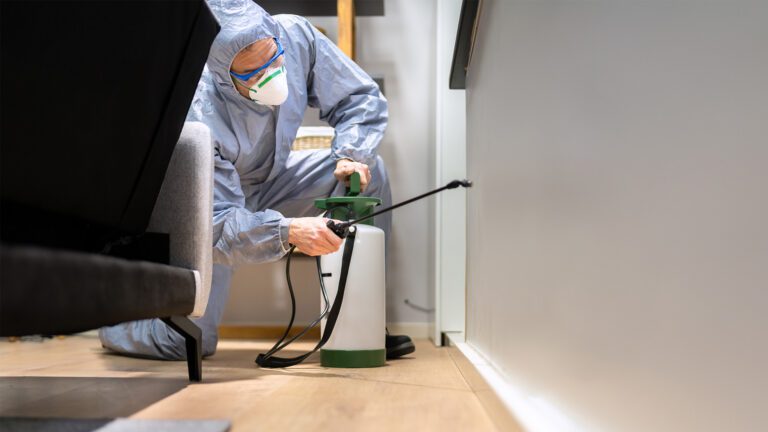
Today, modern pest management operates with great care and concern, dedicated to protecting people from pests without destroying ourselves or our environment in the process. This shift has led to rigorous regulation, extensive education, and the development of methods beyond chemical control.
A quality pest management company today is dedicated to rigorous technician training in Integrated Pest Management (IPM) techniques. These methods integrate cultural controls, mechanical exclusion, sanitation improvements, physical barriers, and targeted chemical applications.
The key to modern efficacy is precision: inspection and identification of the target pest down to the exact species of ant or roach is critical. This scientific approach determines which controls to employ, ensuring client safety while achieving the goal of elimination. A reputable pest management company should always stay abreast of the latest techniques, provide a clear plan of action, manage client expectations, and outline necessary client cooperation. Central Arkansas Pest Services is committed to these standards.
Any content, resident submissions, guest columns, advertisements, and advertorials are not necessarily endorsed by or represent the views of Best Version Media LLC (BVM) or any municipality, homeowners associations, businesses, or organizations that this publication serves. BVM is not responsible for the reliability, suitability, or timeliness of any content submitted, inclusive of materials generated or composed through artificial intelligence (AI). All content submitted is done so at the sole discretion of the submitting party.