A quick glance at any news website or your email will quickly yield headlines like “Older Americans are ‘Unretiring’ to Keep Up with Costs of Living” or “More than Half of Recent Retirees Have Regrets About How They Saved for Retirement.” With so much uncertainty in the economy and no idea of when things will stabilize, there has been a noticeable shift in thinking about the long term and what that looks like for seniors.
While inflation has cooled from recent highs, prices have not returned to pre-pandemic norms. Health care costs continue to rise and many homeowners are discovering that maintaining an aging house – especially in the PNW’s damp winters and increasingly hot summers – can be more unpredictable and expensive than anticipated. The combination of multiple realities converging is prompting seniors to seek greater clarity around monthly expenses and the long-term support that they may need.
Adding to the complications is longevity itself. Many people retiring today can reasonably expect to live well into their 80s or 90s. That extended timeline makes flexibility and adaptability essential. Planning for the “golden years” now means more than scheduling vacations and happy hours. It means planning for future health changes, potential mobility limitations, and the need for additional support – all without wanting to sacrifice independence in the process.
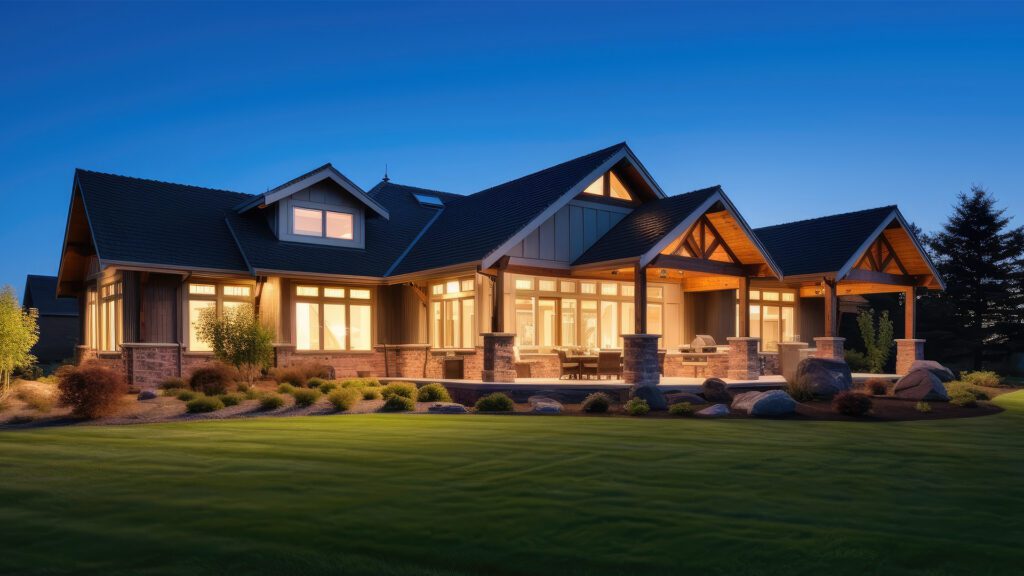
Some seniors have addressed all of the uncertainty in their lives by choosing to simplify their financial lives. They do this in the form of reducing maintenance responsibilities, consolidating expenses, or choosing living arrangements that offer more predictability. For some, this means downsizing their homes and choosing to move into a rambler style house. For some it means moving to 55+ communities where all of their neighbors are of a similar age and share similar concerns and have similar needs. Some choose to move to retirement communities, particularly those offering a range of living and care options.
What’s notable about these decisions is that that are proactive rather than being driven by fear or a situation that has occurred that demands a response. Seniors want to remain in control of their lives, reduce uncertainty for themselves and their families, and free up time and energy for what matters most to them – relationships, hobbies, wellness, and still contributing to society in meaningful ways. Looking at options in this light becomes a quality-of-life strategy rather than a financial exercise. Seniors are not waiting for life circumstances to force decisions. They are gathering information earlier, weighing their options, and choosing paths that align with both their values and their long-term realities.
Planning for longevity in an uncertain economy is less about trying to predict the future and more about creating viable options. By focusing on flexibility, predictability, and support systems, today’s seniors are demonstrating that thoughtful planning can be one of the most empowering decisions of all.
Any content, resident submissions, guest columns, advertisements, and advertorials are not necessarily endorsed by or represent the views of Best Version Media LLC (BVM) or any municipality, homeowners associations, businesses, or organizations that this publication serves. BVM is not responsible for the reliability, suitability, or timeliness of any content submitted, inclusive of materials generated or composed through artificial intelligence (AI). All content submitted is done so at the sole discretion of the submitting party.