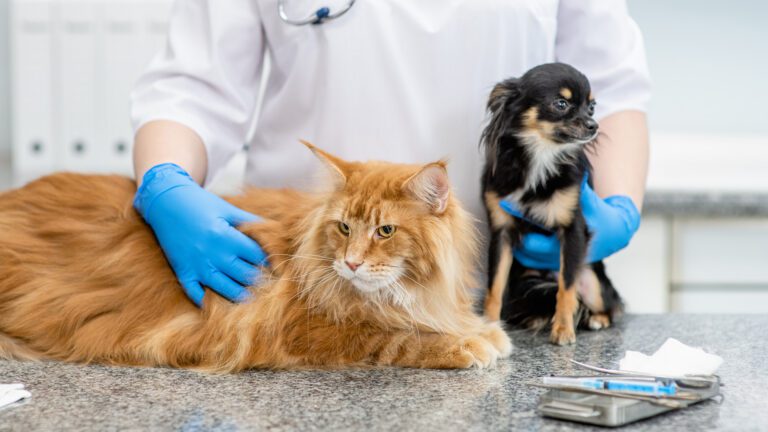
Spring in Texas brings warmer days, greener grass, and more time outdoors. It also marks the beginning of allergy season—not just for people, but for pets as well. While humans often associate allergies with sneezing and watery eyes, pets experience allergies very differently. In dogs and cats, spring allergies most commonly show up through the skin, ears, and paws.
The three most common causes of allergies in pets are fleas, food, and environmental allergens such as grass and pollen. Understanding how each of these affects pets can help owners recognize problems early and respond before discomfort becomes severe.
Fleas are the most common cause of allergic reactions in pets, and they are often underestimated. A pet does not need to be covered in fleas to have a reaction. For allergic animals, a single flea bite can trigger an intense immune response to the flea’s saliva, leading to days or even weeks of itching and inflammation. In Texas, flea populations rebound quickly in spring as temperatures rise. Pets with flea allergies often show itching near the tail base, hair loss along the back, or red, irritated skin that appears suddenly. Even pets that live primarily indoors can be affected, as fleas are easily carried inside on clothing or other animals.
Food allergies receive a lot of attention, but they are far less common than flea or environmental allergies. When food allergies do occur, they usually cause symptoms year-round rather than only in spring. These pets may experience chronic ear infections, ongoing skin irritation, or itching that does not improve when seasons change. Food allergies tend to develop slowly over time and are most often related to proteins the pet has eaten regularly for months or years, not newly introduced foods.
Environmental allergies are especially common in the spring and are closely tied to grass, pollen, and increased outdoor exposure. Pets with environmental allergies typically do not sneeze. Instead, they may lick or chew at their paws, develop redness between the toes, experience recurring ear inflammation, or rub their face against furniture and carpets. Because these allergens come from the environment, symptoms often worsen during certain times of year and improve during others.
Spring is a major turning point for pets in Texas. Warmer temperatures, increased humidity, and longer days create ideal conditions for both fleas and environmental allergens. Many pets that were comfortable during the winter months may suddenly begin itching, licking, or developing ear and skin issues as spring arrives. Itching is not simply a nuisance—it affects a pet’s comfort, sleep, behavior, and overall quality of life. If a pet shows signs of ongoing itching, skin irritation, or ear problems, contacting a veterinarian can help identify the underlying cause and guide appropriate next steps to keep pets comfortable through the season.
Any content, resident submissions, guest columns, advertisements, and advertorials are not necessarily endorsed by or represent the views of Best Version Media LLC (BVM) or any municipality, homeowners associations, businesses, or organizations that this publication serves. BVM is not responsible for the reliability, suitability, or timeliness of any content submitted, inclusive of materials generated or composed through artificial intelligence (AI). All content submitted is done so at the sole discretion of the submitting party.