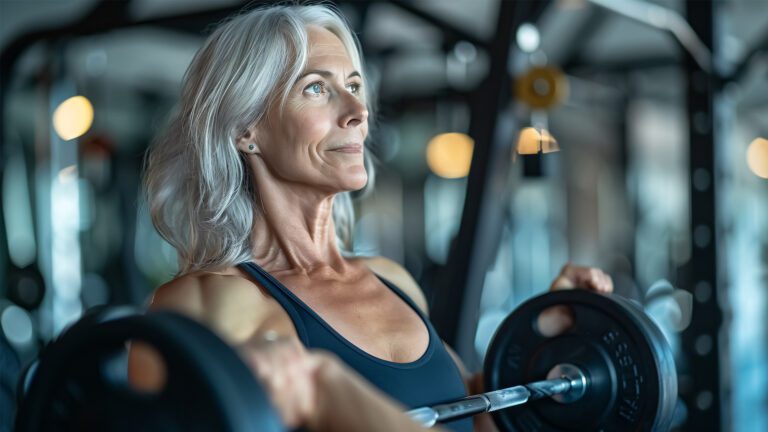
For years, older adults were told to slow down, lift light weights (if at all), and avoid more challenging strength training. Today, research shows the opposite is true. Strength training is one of the most effective ways to support strength, independence, and health as we age.
As we get older, we naturally lose muscle, strength, and bone density. This process, known as sarcopenia, can begin as early as our 30s and speeds up with age. By the time someone reaches their 70s, they may have lost 30-40% of their muscle without action. This loss increases the risk of falls, fractures, chronic disease, and loss of independence. While aging is unavoidable, the speed and severity of this decline are strongly influenced by how we exercise.
What Research Shows
Strength training works because it activates fast-twitch muscle fibers, which are essential for balance, power, and fall prevention—and are the first fibers lost with age.
One major study, the LISA study, followed adults in their early 70s. Those who completed just one year of strength training maintained their leg strength for up to four years afterward. In contrast, those who did moderate exercise or remained inactive continued to decline. This shows that strength training can create long-lasting protection, not just short-term gains.
Another landmark study, the LIFTMOR trial, focused on older adults with low bone density, including post-menopausal women. Participants safely performed strength training and saw improvements in bone density at the spine and hips, along with better strength and function. These findings challenged the belief that weight training is unsafe for aging bodies.
It’s Never Too Late to Start
Research consistently shows that adults in their 60s, 70s, and even 80s can build strength when trained properly. Muscle remains adaptable throughout life. What accelerates decline is not age itself—but inactivity.
Strength training improves blood sugar control, metabolic health, and cardiovascular function. It has also been linked to better brain health and coordination. Most importantly, strength allows people to stay independent—getting up from the floor, carrying groceries, climbing stairs, and recovering from a fall.
The Takeaway
Strength training is not a trend. It is a proven, science-backed strategy for aging well. While no one can stop the aging process, building and maintaining strength helps determine whether later years are enjoyed with confidence, independence, and vitality.
My studio, MaxStrength Fitness in Montgomery (opening late March), focuses on 1:1 coach-led strength training for busy and active adults aged 40-and-older. If you are concerned about muscle loss, working hard to recover from a nagging injury, want to build strength to continue to excel in the activities you love and travel well into retirement, or just be able to spend quality time with active grandchildren, MaxStrength Fitness is the solution for you! Our continuous-tension training protocol delivers effective, efficient, and exceptionally safe results in just two twenty-minute sessions per week. Now who doesn’t have time for that as a critical investment in your health?
Contact us today at montgomery@maxstrengthfitness.com to book your initial consultation and receive a free month of training as a founding member!
Brian Gibson owns Montgomery’s MaxStrength Fitness franchise. Brian and his wife Darci are long-time Montgomery residents.
Any content, resident submissions, guest columns, advertisements, and advertorials are not necessarily endorsed by or represent the views of Best Version Media LLC (BVM) or any municipality, homeowners associations, businesses, or organizations that this publication serves. BVM is not responsible for the reliability, suitability, or timeliness of any content submitted, inclusive of materials generated or composed through artificial intelligence (AI). All content submitted is done so at the sole discretion of the submitting party.