As the ice melts on lakes and insects come to life, many migratory birds will flow into Minnesota. Water birds like pelicans, herons, egrets, and cormorants arrive to start fishing. Insect-eating birds such as warblers, bluebirds, and swallows begin to show up. Varieties of sparrows, cowbirds, and brown thrashers also fill in. As they arrive, we say goodbye to the adorable juncos who made winter more bearable with their cuteness!
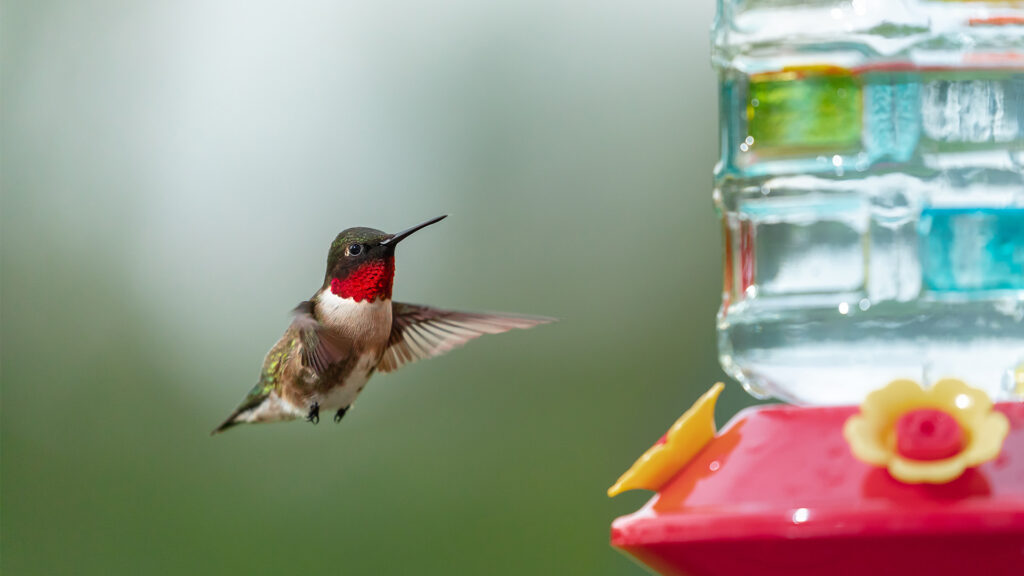
From a backyard bird feeding perspective, late April brings some vibrant color to our yards via ruby-throated hummingbirds and Baltimore orioles. These are often two of a backyard birder’s favorite visitors! We’ll cover hummingbirds in this article.
Ruby-throated hummingbirds start migrating from their winter stays in southern Mexico and Central America in February, crossing the Gulf of Mexico and working their way up the US east of the Rockies, some all the way into Canada. They are the only species of hummingbird we’ll get here in Minnesota, aside from a random stray. The first ones in Minnesota typically arrive during the last days of April, but May is when their populations really fill out.
Attracting hummingbirds to your yard can be accomplished with brightly colored feeders filled with nectar (sugar water). Nectar can be made at home via a 1:4 table sugar to water ratio. Boiling the water is usually necessary to dissolve the table sugar. Never use any other variety of sugar or sweetener other than plain table sugar, not even organic varieties. Ready-to-use and concentrate/powered form nectar can also be purchased to make things more convenient. You can make a larger batch and store the rest in the fridge for a week or two. Brightly colored flowers are also an excellent way to attract hummingbirds naturally, especially tubular flowers.
Keeping nectar fresh and hummingbird feeders clean is critical and cannot be overstated. Black mold is toxic and deadly to hummingbirds, and nectar that has sat too long can become syrupy, causing feeders to develop mold if left unchecked. Follow the chart on this page to know how often to change the nectar and always inspect feeders for mold, especially the hard-to-get-to parts. A 1:4 ratio of vinegar to warm water can be used to clean feeders. Rinse very well and let air dry before refilling. Special nectar brushes can help with hard-to-reach areas of some bottle-style feeders, and don’t forget to clean the feeding ports with a small pipe brush!
Five Fun Facts:
Only adult males have the ruby-red “throat”. It will look black until light hits it just right.
Hummingbirds are territorial with food, so they chase each other away from a feeder in a constant battle. Providing more small feeders spaced out vs one large one is a good choice.
Hummingbird nests are the size of a golf ball cut in half, and the eggs are the size Tic Tacs.
Ruby-throated hummingbirds weigh around 2-6 grams, which is equal to a penny or nickel!
Males are the first to arrive in spring and the first to leave in late summer. Females and juveniles migrate later, mostly by the end of September. This is so the youngsters can grow as much as possible before their first 2000-ish mile migration ahead!