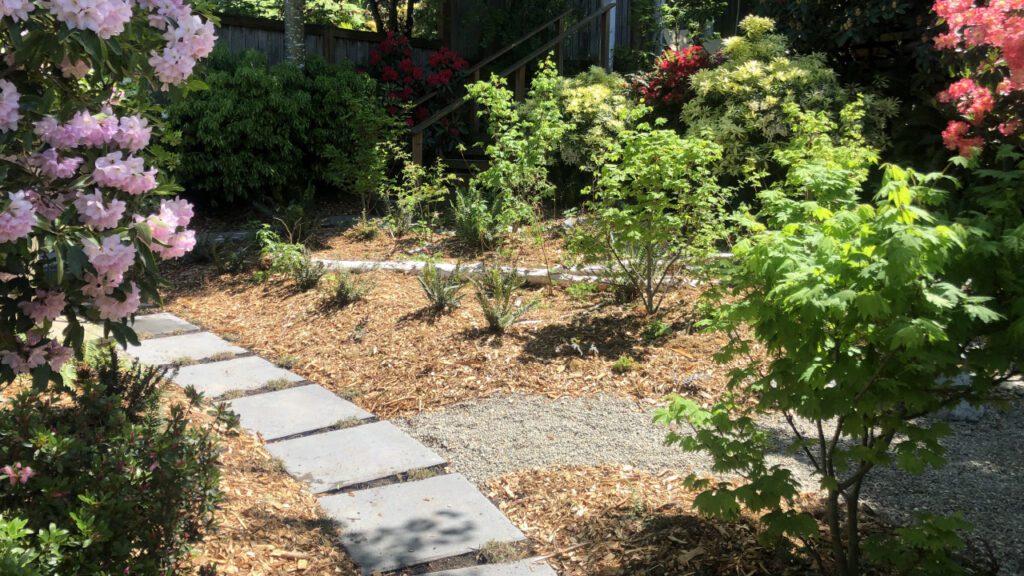
When I close my eyes and think of home, there’s a dampness on my skin from a light rain. Orange crocuses glow from the soil under a bigleaf maple tree. An Anna’s hummingbird zooms past my head while the pleasing tartness of red huckleberries spreads across my tongue. I feel peaceful, in awe of the life I’m surrounded by. This region is my home, and the creatures here, my neighbors. In the greenbelts around you, or the gardens you played in as a kid, what creatures were there? What colors, smells, sensations invoke a sense of home?
I imagine my ancestors and others leaving their homelands, traveling further west on this continent. Intentionally or not, their plant neighbors came with them. Brought for economic security, beauty, and as stowaways in their boots. I’m surrounded today by the descendants of these relationships. The 10’ tall rhododendrons of my childhood home were cuttings from a great aunt’s bush. Snowdrops in a client’s lawn could’ve initially come anywhere from France to Iran. Plants paint our landscapes, informing us of where we’ve been, and of relationships past and present.
While these plants are stunning reflections of our heritages and global trade, many of the creatures native here don’t know what to do with them. Some, like the black tailed bumble bee, find food in English lavender just as well as our native asters. While others, like the Taylor’s Checkerspot butterfly, have fewer plants they can rely on. Urban development and vast cropland separates our native plants and animals, making it difficult to find food, shelter, and mingle. Integrating native plants into our landscapes creates habitat corridors, ensuring connection and survival. When we get to know our neighbors, we can ensure all our needs are met.
Yet our region continues to change. Decreased annual snowfall, deforestation, urban sprawl… I find the multitude of crises we’re facing to be heartbreaking, overwhelming. What’s also true is that climates have always changed; people and plants have always adapted and migrated.
We can plant what works, and help others on this journey. Plant our resilient Garry oak, while helping more drought resistant populations of our western redcedar migrate north. Observe what works, adapt to what doesn’t. Help and support our neighbors.
Native camas can grow alongside the daffodils, our vine maples among the Japanese ones. We can deepen our relationships with the native plants here, as our ancestors did in their homelands. What feelings do you want to invoke in your garden? What lineages do you want to honor, and present relationships nourish? There’s no right or wrong sense of home. That’s something unique to each of us.