Most homeowners rarely think about their plumbing system — until something goes wrong.
Water flows. Toilets flush. Showers are hot. Life moves on.
But behind the walls of every home is a carefully designed system of pressure regulation, drainage, venting, and protection devices working every single day. When those systems are ignored, small issues can quietly turn into expensive repairs.
One of the most overlooked components in Southern Nevada homes is the pressure regulating valve (PRV). City water pressure can exceed 100 PSI in a home, while most residential plumbing systems are designed to operate safely between 60–80 PSI. Without proper regulation, excessive pressure stresses fixtures, water heaters, supply lines, and appliance valves.
High water pressure does not always cause immediate leaks. Instead, it slowly shortens the lifespan of everything connected to the system — from faucet cartridges to washing machines. In many cases, premature water heater failures and even slab leaks can be traced back to sustained high pressure over time.
Drainage and venting are just as critical. Plumbing drains do not rely on gravity alone — they require proper venting to allow air to balance pressure inside the piping. When vents are blocked or improperly installed, symptoms appear as slow drains, gurgling sounds, or sewer odors. These are early warning signs that the system is not operating as designed.
Water quality also plays a significant role in the longevity of plumbing systems. Hard water, common in our region, contains dissolved minerals that leave scale buildup inside pipes, on heating elements, and within fixtures. Over time, scale reduces efficiency and increases wear. In water heaters, especially, mineral accumulation forces the system to work harder to produce the same amount of hot water, increasing energy use while shortening equipment life.
Routine plumbing maintenance is not just about preventing inconvenience. It is about protecting infrastructure.
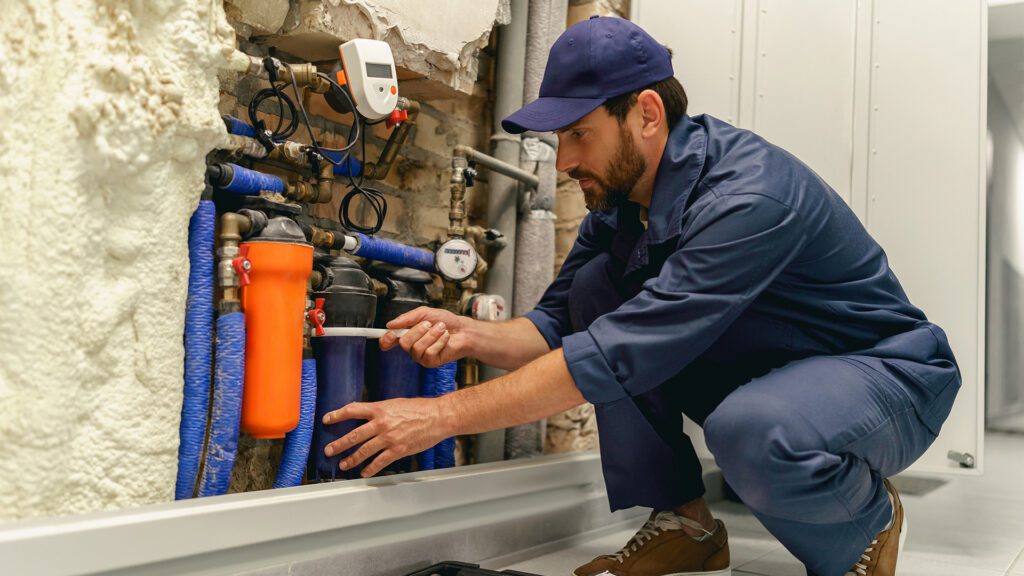
When we evaluate a home’s plumbing system, we approach it the same way we would approach our own family’s home. We check water pressure, inspect thermal expansion control, evaluate drainage integrity, confirm accessible shutoffs, and verify that safety devices such as expansion tanks and vacuum breakers are functioning properly. These components are not glamorous, but they protect your home from water damage — one of the most costly and disruptive issues a homeowner can face.
A properly operating plumbing system should be quiet, balanced, and stable. There should be no hammering pipes, fluctuating temperatures, or unexplained moisture. When systems are installed correctly and maintained proactively, they can serve families reliably for decades.
If you are unsure about your home’s water pressure, the condition of your water heater, or whether your plumbing system has been evaluated recently, a professional inspection can provide clarity. Often, small adjustments — such as pressure regulation or replacing aging supply lines — prevent major failures later.
Your plumbing system supports daily life: morning showers, family dinners, laundry nights, and everything in between. When it is functioning properly, you never have to think about it.
And that’s exactly how it should be.
Any content, resident submissions, guest columns, advertisements, and advertorials are not necessarily endorsed by or represent the views of Best Version Media LLC (BVM) or any municipality, homeowners associations, businesses, or organizations that this publication serves. BVM is not responsible for the reliability, suitability, or timeliness of any content submitted, inclusive of materials generated or composed through artificial intelligence (AI). All content submitted is done so at the sole discretion of the submitting party.