As people age, wrinkles and gray hair are expected. What often goes unnoticed, however, is a quieter change happening beneath the surface: the gradual loss of muscle mass, known medically as sarcopenia. This age-related condition affects millions of adults worldwide and plays a major role in declining strength, balance problems, and loss of independence later in life. Kassia Garfield, Owner of MaxStrength Fitness of Niceville, often talks about how quickly the changes happen. Garfield says, “I always feel like the bad guy, telling people walking isn’t enough. We have to add stress to the body, and “overload”. This is when we do more than normal, so the body adapts to new stress. This doesn’t happen with walking.”
Sarcopenia typically begins earlier than many realize. Research shows that adults start losing muscle mass as early as their 30s, with the rate of decline accelerating after age 60 to 10% a decade. By the time someone reaches their 70s or 80s, significant muscle loss can make everyday activities such as climbing stairs, carrying groceries, or getting up from a chair far more difficult. In your 80s, not losing muscle is a win. But anyone who puts the time into heavy resistance training can build muscle, at ANY AGE!
Muscle loss is not simply cosmetic. Skeletal muscle is essential for mobility, posture, and joint protection. It also plays a key role in metabolism, helping regulate blood sugar and maintain healthy body weight. As muscle mass decreases, the risk of falls, fractures, diabetes, and cardiovascular disease increases. Many research studies show that increase in muscle mass has long term effects on longevity, but also speeds recovery from surgery or cancer.
Several factors contribute to sarcopenia. Hormonal changes that occur with aging reduce the body’s ability to build and maintain muscle. Nerve signals that activate muscle fibers weaken over time. Chronic inflammation and inadequate protein intake also play a role. But perhaps the most influential factor is lifestyle, particularly physical inactivity. For some people it is a lack of knowledge (this is when you need to seek out some help!).
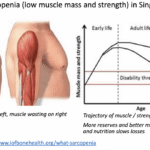
A comparison of muscle mass across the lifespan shows a stark contrast between people who remain physically active and those who do not. Individuals who engage in regular strength training tend to maintain a much higher percentage of their muscle mass well into older age. While some decline is inevitable, the slope is far gentler. In contrast, people who avoid resistance exercise often experience a steep drop in muscle mass after midlife, leading to greater weakness and functional limitations.
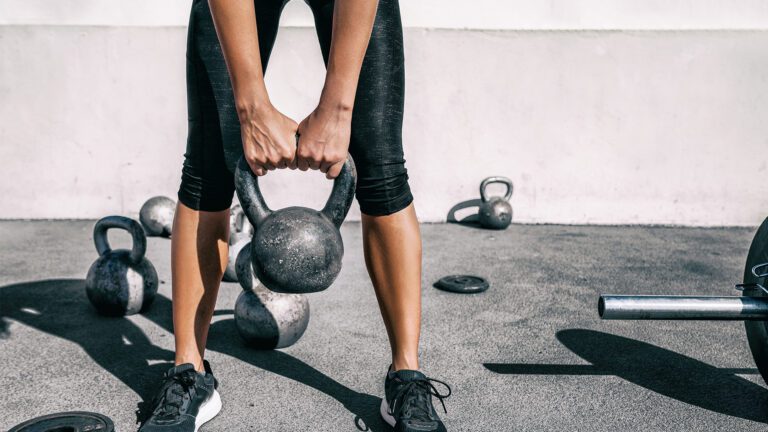
The good news is that sarcopenia is not inevitable. Studies consistently show that resistance training such as lifting weights, using resistance bands, or performing bodyweight exercises can slow, stop, and even partially reverse muscle loss at almost any age. Older adults who begin strength training see improvements in muscle size, strength, balance, and confidence, sometimes within just a few months. As a physical therapist, Garfield says, “Please just do something! It’s not going to get easier later, a little bit can go a long way. Some studies show even one year of intense training can increase muscle mass for four years after!”
Nutrition also plays a critical role. Adequate protein intake provides the building blocks muscles need to repair and grow. Experts recommend spreading protein intake evenly throughout the day, with particular emphasis on meals following exercise.
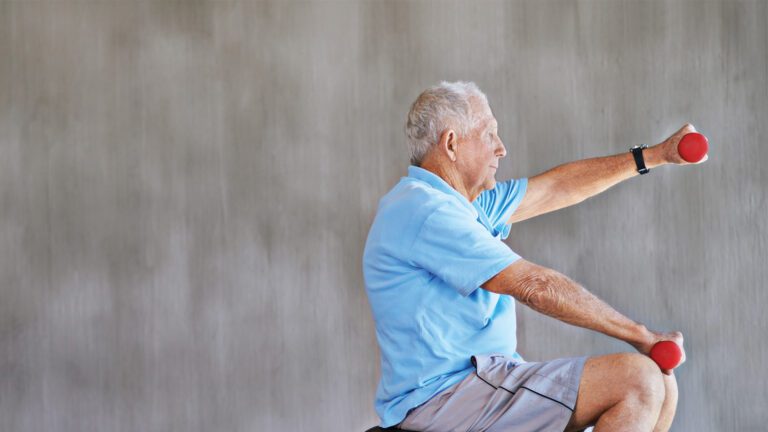
Perhaps most importantly, it is never too late to start. While muscle loss accelerates with age, the body remains remarkably adaptable. Even people in their 70s, 80s, and beyond can gain strength with the right training and guidance.
As awareness of sarcopenia grows, health professionals increasingly emphasize strength training as a cornerstone of healthy aging. The message is simple but powerful: while everyone loses some muscle over time, we have a say in how much we lose and how fast it happens. Staying active today can mean greater independence, mobility, and quality of life tomorrow.
If you are having a hard time fitting in a workout, try MaxStrength Fitness. We do effective, efficient, and safe 20-minute workouts, just twice a week. We deliver results with a science-backed program.
Any content, resident submissions, guest columns, advertisements, and advertorials are not necessarily endorsed by or represent the views of Best Version Media LLC (BVM) or any municipality, homeowners associations, businesses, or organizations that this publication serves. BVM is not responsible for the reliability, suitability, or timeliness of any content submitted, inclusive of materials generated or composed through artificial intelligence (AI). All content submitted is done so at the sole discretion of the submitting party.