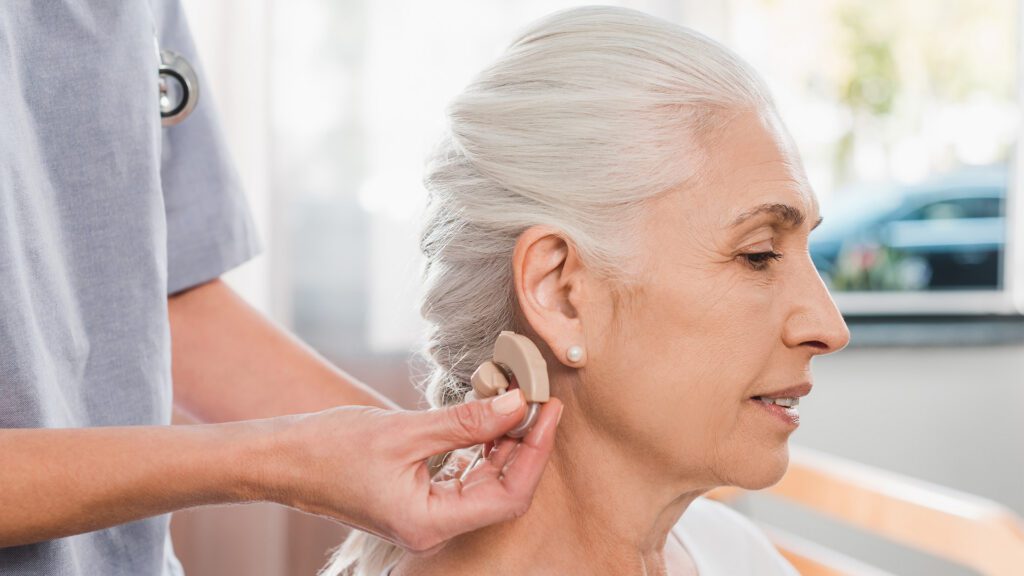
Hearing loss is often dismissed as an inconvenient part of aging. A little more volume on the TV. Asking people to repeat themselves. Avoiding noisy restaurants.
But what many people don’t realize is this: hearing loss is not just an ear issue — it’s a brain and whole-body health issue.
Research from Johns Hopkins University has revealed powerful links between untreated hearing loss and cognitive decline, balance problems, falls, and even dementia. The implications are significant — and encouraging — because hearing loss is one of the most treatable risk factors associated with these outcomes.
Let’s take a closer look…
The Dementia Connection
A long-term study that followed 639 adults for nearly 12 years found:
Mild hearing loss doubled the risk of dementia
Moderate hearing loss tripled the risk
Severe hearing loss made individuals five times more likely to develop dementia
This is not a small association. It’s a measurable, dose-dependent relationship.
Why Does This Happen?
Brain imaging shows that hearing loss may accelerate brain atrophy (shrinkage), particularly in areas responsible for processing sound and memory. When the brain receives less auditory stimulation, it doesn’t stay as active.
There are two additional factors at play:
1. Cognitive Load
When hearing declines, the brain must work harder just to decode speech. This constant “subconscious multitasking” drains mental resources that would otherwise support memory and higher thinking functions.
2. Social Isolation
People with hearing loss often withdraw from conversations and group settings because communication feels exhausting or embarrassing. Over time, reduced social engagement becomes a major contributor to cognitive decline.
Social connection keeps the brain stimulated. Isolation does the opposite.
Hearing Loss and Fall Risk
Your ears do more than help you hear — they help you balance.
As you walk, your auditory system picks up subtle environmental cues that assist spatial awareness. When hearing is reduced, those cues are muted. Meanwhile, your brain is already working overtime to process sound.
That extra strain can interfere with the mental processing required for safe movement, increasing fall risk.
Falls are one of the leading causes of injury in adults over 65. When we treat hearing, we may also be protecting mobility and independence.
Early Warning Signs of Hearing Loss
Hearing loss rarely happens overnight. It progresses gradually, and early symptoms are often subtle:
Difficulty hearing soft sounds (phone conversations, background speech)
Trouble understanding high-pitched voices (children, women)
Ringing in the ears (tinnitus)
Struggling in restaurants or group settings
Frequently asking others to repeat themselves
These symptoms often indicate damage to the delicate hair cells (stereocilia) inside the inner ear. Once damaged, these cells do not regenerate — which makes early intervention even more important.
Myths That Delay Treatment
Nearly 27 million Americans age 50+ have hearing loss — yet only one in seven uses hearing aids.
Why?
“My hearing isn’t that bad.”
On average, people wait 10 years before seeking help. During that time, communication becomes strained, isolation increases, and health risks grow.
“Hearing aids mean I’m old.”
The reality is quite the opposite. Staying socially engaged, confident in conversation, and mentally active keeps the brain healthier longer.
Modern hearing technology is discreet, advanced, and highly personalized.
“They’re hard to use.”
Today’s hearing aids are dramatically different from older models. Bluetooth connectivity, smartphone control, automatic sound adjustments, and trial periods make adaptation easier than ever.
The Bigger Picture: Hearing as Preventative Care
Untreated hearing loss is now recognized as one of the largest modifiable risk factors for dementia.
That’s an empowering message. Unlike genetics, we can’t change every risk factor. But hearing loss is something we can test, monitor, and treat.
Early intervention may help:
Preserve cognitive function
Reduce fall risk
Maintain independence
Strengthen relationships
Improve overall quality of life
A Proactive Approach
If you’ve noticed even subtle changes in your hearing, schedule a comprehensive hearing evaluation. There is no downside to testing. The sooner hearing changes are identified, the more options are available.
Hearing well isn’t just about sound.
It’s about staying connected.
It’s about protecting your brain.
It’s about living fully engaged in the moments that matter most.
And that is something worth prioritizing.
Any content, resident submissions, guest columns, advertisements, and advertorials are not necessarily endorsed by or represent the views of Best Version Media LLC (BVM) or any municipality, homeowners associations, businesses, or organizations that this publication serves. BVM is not responsible for the reliability, suitability, or timeliness of any content submitted, inclusive of materials generated or composed through artificial intelligence (AI). All content submitted is done so at the sole discretion of the submitting party.