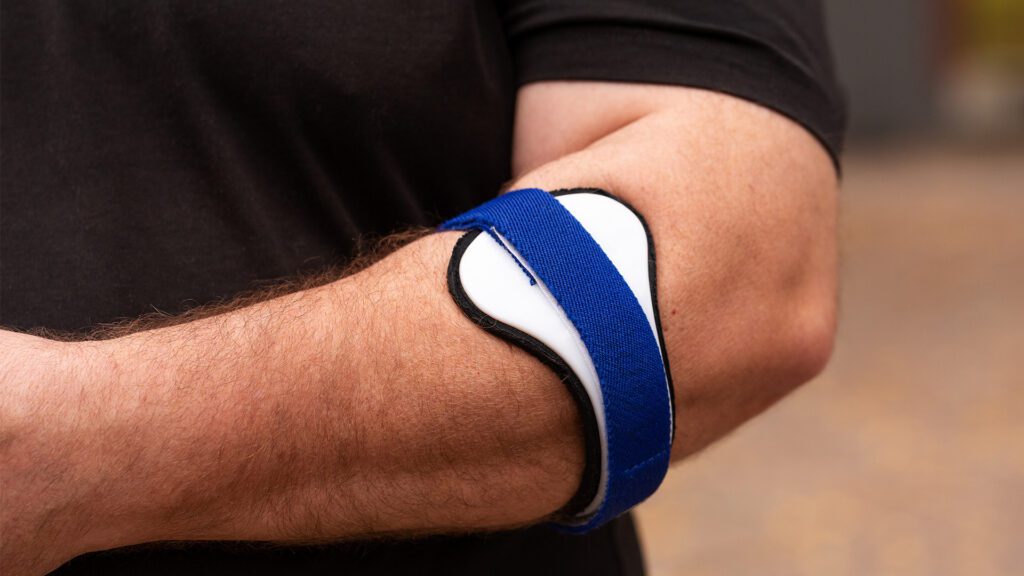
When people experience elbow pain, they may not think it’s a condition suitable for chiropractic care. But surprisingly, lateral epicondylitis, also known as “tennis elbow”, is a common condition often seen in a chiropractic office, and with proper treatment and management, it can respond well to conservative care.
Despite its name, tennis elbow accounts for only about 10% of annual cases. Sports or occupations that involve repetitive wrist extension, as well as frequent grasping and gripping (such as weightlifting), can result in this type of injury. I have also seen this condition in office workers caused by long hours of typing with the wrist in extension. Over time, this generally harmless activity can overload the common extensor tendon on the outer aspect of the elbow, leading to symptoms.
In athletes, symptoms are typically caused by poor mechanics or technique, as well as the use of new, altered, or improper equipment. Small changes, like tightening the strings or changing the grip on your tennis racket, can create new demands on the tendon, leading to overuse. Symptoms can range from mild discomfort, only presenting with heavy lifting or more vigorous activities, to more severe pain, where patients struggle to simply hold a cup of water or a coffee mug.
Current research has changed how we think about lateral epicondylitis, which is now understood as a degenerative tendon injury rather than an exclusively inflammatory one. This means that anti-inflammatories and rest alone are typically not enough to create a long-term fix. When evaluating a patient with elbow pain, it is critical to rule out other conditions that can mimic lateral epicondylitis. Conditions affecting the neck or shoulder could also cause elbow pain. Nerve irritation from the neck or rotator cuff tears of the shoulder can also mimic symptoms, so a thorough physical examination is critical for determining the root cause. If moving the neck or shoulder does not reproduce symptoms, it helps to rule out those regions as a primary source of symptoms.
Once neck and shoulder involvement has been ruled out, there are several common signs I look for to determine a true case of tennis elbow: pain along the lateral elbow with resisted wrist extension, tenderness over the lateral elbow, and decreased grip strength. But how can chiropractic care help with tennis elbow?
Addressing the elbow’s motion, as well as the regions above and below it, is often a good starting point. Extremity adjustments can help restore joint motion at the shoulder, elbow, and wrist. Assessing the spine for areas of limited motion is also important, since the nerves from the neck supply the muscles of the arm and forearm, and spinal motion can influence extremity movement and position in space. Manual therapy of the muscles along the outer aspect of the forearm is also commonly performed and can help reduce stress on the common extensor tendon. Instrument-assisted soft tissue mobilization can increase blood flow to the region, promoting healing and collagen remodeling within the tendon. Patients have also responded well to dry needling, helping to reduce local pain. But these are all passive therapies that require no physical effort or patient participation. In my experience, the most important part of resolving this condition is active therapy, in which the patient participates in their treatment through exercise, stretching, and activity modification. Research has consistently shown that exercise helps improve tendon healing and load tolerance. One go-to exercise is eccentric wrist extension, in which the wrist slowly lowers a weight under control, helping stimulate tendon repair.
If there is one thing I have found, it is that lateral epicondylitis can be very stubborn and frustrating for patients due to the persistence of symptoms. Most patients will experience symptom relief within 6-12 months, so being consistent with therapeutic exercises is important because it helps to stimulate tissue repair and remodeling, all of which take time, effort, and consistency. Modifying activities as needed, warming up before exercise, and resting when symptoms worsen are also important for preventing symptom worsening. If you have ever wondered how chiropractic care can help with your elbow or other extremity symptoms, don’t hesitate to reach out!