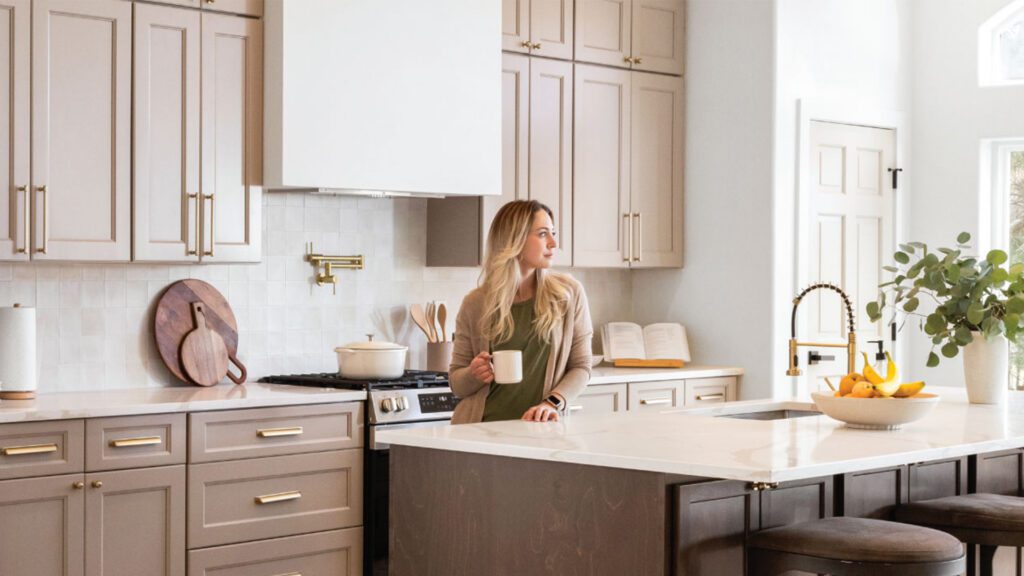
In 2026, I’m seeing kitchen-space planning shift in a very practical direction. Homeowners want kitchens that look beautiful, but they’re prioritizing layouts that reduce daily friction. The “trend” isn’t one specific shape; it’s planning a kitchen around how you actually move, cook, unload groceries, and gather, then designing storage and work zones to support that routine.
One of the biggest changes is the renewed focus on dedicated zones. Instead of one long stretch of counter trying to do everything, I’m planning clear work areas for prep, cooking, cleanup, and serving. That often means wider landing areas next to the range and refrigerator, and a prep zone that has its own trash, utensils, and drawers close by. When those items live where you use them, the kitchen instantly feels larger and calmer—even if the footprint never changes.
Pantry planning is also evolving. Walk-in pantries are still popular, but I’m designing more “pantry walls,” with full-height cabinetry that can include pullouts, appliance garages, and countertop space for small appliances. Homeowners love being able to close a door or pocket panels to keep the main kitchen looking clean. Beverage centers are another big request, especially for families. Moving drinks, glassware, and an ice maker or beverage fridge out of the main cooking path keeps traffic from cutting through the work zones.
Islands are getting smarter too. In 2026, the island is less about being huge and more about being useful. I’m seeing more islands designed with one primary job—prep, seating, or cleanup support—rather than trying to do all three poorly. Seating is still important, but many homeowners want fewer stools and more functional space, with wide walkways and comfortable clearances that don’t pinch circulation.
Another noticeable shift is how we think about “open concept.” People still love an open feel, but they’re asking for subtle separation—what I’d call “open, but organized.” That can look like a furniture-style hutch, a tall pantry run that frames the kitchen, or a change in ceiling detail or lighting that defines the space, without closing it off. The goal is to keep the connection to family and guests while reducing visual clutter.
If you’re planning a remodel or new build, this is exactly where a designer can add value early. At the Requarth Lumber Kitchen Design Showroom, we can talk through your wish list, map out the work zones, and help you choose a layout that fits how you live, then layer in cabinetry and storage that make the kitchen feel effortless every day. Call/text 937-224-1141 or email sales@requarth.com, to schedule a consultation.
Any content, resident submissions, guest columns, advertisements, and advertorials are not necessarily endorsed by or represent the views of Best Version Media LLC (BVM) or any municipality, homeowners associations, businesses, or organizations that this publication serves. BVM is not responsible for the reliability, suitability, or timeliness of any content submitted, inclusive of materials generated or composed through artificial intelligence (AI). All content submitted is done so at the sole discretion of the submitting party.