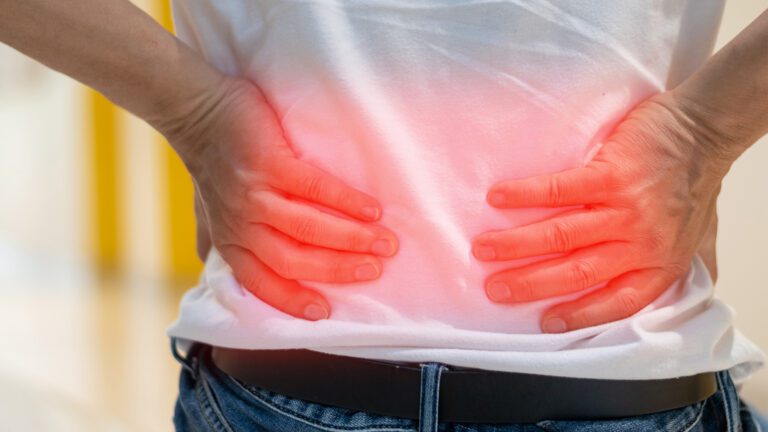
Low back pain (LBP) is one of the most common reasons people seek medical care, affecting millions each year. While causes vary, three of the most frequent diagnoses include spinal stenosis from degeneration, herniated discs, and sacroiliac (SI) joint dysfunction. Understanding the differences can help guide effective treatment—especially through physical therapy.
1. Spinal Stenosis (Degenerative Changes)
Spinal stenosis occurs when age-related changes, such as disc or spinal joint degeneration and arthritis, narrow the spinal canal, placing pressure on nerves innervating the low back and legs.
Top Symptoms:
- Pain or cramping in the lower back and legs (especially with walking)
- Relief when sitting or bending forward
- Numbness or weakness in the legs
How Physical Therapy Helps:
Physical therapy focuses on improving posture, increasing spinal mobility, and strengthening core muscles to reduce pressure on the spine. Flexion-based exercises are particularly helpful.
Common Exercises:
- Seated forward flexion stretch
- Core strengthening
- Lumbar traction
2. Herniated Disc
A herniated (or “slipped”) disc occurs when the soft inner material of a spinal disc pushes outward, compressing “pinching” nearby nerves.
Top Symptoms:
- Sharp or shooting pain down one leg (sciatica)
- Pain worsened by sitting, bending, or lifting
- Tingling or numbness in the leg or foot
How Physical Therapy Helps:
Therapy emphasizes reducing nerve irritation, improving posture, and restoring normal movement. Extension-based exercises are often used to centralize pain.
Common Exercises:
- Prone press-ups (McKenzie extensions)
- Standing lumbar extensions
- Core stabilization exercises (e.g., bird dogs)
3. Sacroiliac (SI) Joint Pain
The SI joints connect the spine to the pelvis. Dysfunction can occur from too much or too little movement, often due to injury, pregnancy, or asymmetry.
Top Symptoms:
- Pain localized near one side of the lower back or buttock
- Pain with standing, walking, or climbing stairs
- Tenderness over the SI joint
How Physical Therapy Helps:
Treatment focuses on stabilizing the pelvis, correcting muscle imbalances, and improving alignment.
Common Exercises:
- Glute bridges
- Clamshells
- Hip adduction squeezes (with a ball or pillow)
Final Thoughts
Although these conditions share the common symptom of low back pain, their causes and treatments differ significantly. A skilled physical therapist can accurately assess the source of pain and develop a personalized plan to reduce symptoms, restore function, and prevent recurrence, helping patients return to the activities they love. The therapists at FYZICAL Therapy and Balance Centers are the region’s experts in treating back pain and help thousands of people every year.
Any content, resident submissions, guest columns, advertisements, and advertorials are not necessarily endorsed by or represent the views of Best Version Media LLC (BVM) or any municipality, homeowners associations, businesses, or organizations that this publication serves. BVM is not responsible for the reliability, suitability, or timeliness of any content submitted, inclusive of materials generated or composed through artificial intelligence (AI). All content submitted is done so at the sole discretion of the submitting party.