Dentistry has undergone a great deal of innovation over the last 10 years. Two areas impacted are how teeth are fixed and how teeth are replaced with dental implants.
No longer do we cut down teeth automatically for crowns and bridges. Today’s focus is on minimally invasive techniques that preserve tooth structure. With people living longer these days, implant dentistry fabricates teeth that may last the patient’s lifetime.
What is Minimally Invasive or Bio-mimetic Dentistry?
Translated literally, bio-mimetic dentistry means to duplicate what is life-like. Nature has provided the most successful and ideal properties for our natural teeth. As dentists, we cannot do better than nature.
When fixing damaged, broken, and decayed teeth, the goal is to return the tooth to its original strength, function, and cosmetic appearance. Bio-mimetic dentistry accomplishes all of this in a conservative, strong, and minimally invasive approach. It is about tooth restoration and not tooth replacement.
Veneers
One of the biggest contradictions of modern restorative dentistry is that many cosmetic procedures require the removal of a lot of existing tooth structure before a final prosthetic can be made. If you think of cosmetic veneers, a lot of the time needless amounts of tooth structure are cut down to provide immediate gratification for the cosmetics.
These veneers may last up to 10-12 years, but could necessitate tooth fracture and root canals. The patient may not be aware of the long-term repercussions.
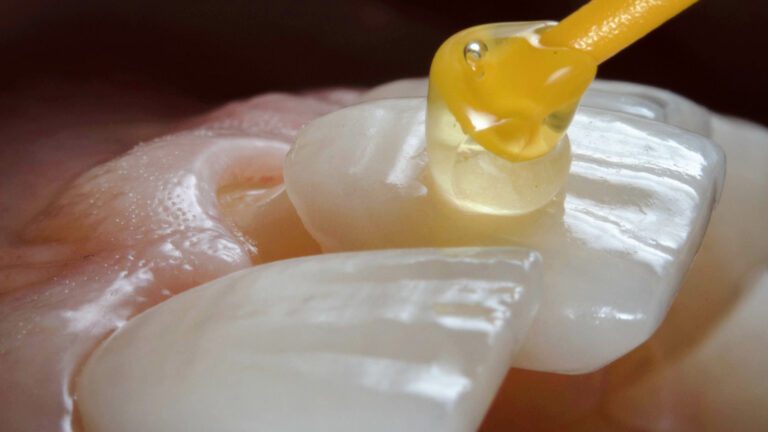
A better approach would be minimally invasive veneers where additive procedures are used, and we keep the teeth intact. There is less likelihood of root canal treatments, and we have restorations that will last longer.
Crowns
In order to fix a fractured tooth, existing dental paradigms demand that a portion of the target tooth must be cut down. Nowhere is this counterintuitive thinking more apparent than in the fabrication of a dental crown procedure.
Dental crowns are typically used when a tooth has suffered severe damage as a result of decay or trauma. Traditionally, the tooth is cut down into a tiny nub.
Ask yourself if your tooth had a small fracture, would you want to have it cut down for a crown? Crowns are aggressive and may necessitate root canals over a period of time.
A Better Way
At Anaconda Dental Art Institute, we like to use the most conservative and minimally invasive approach possible. What should be the goal of modern dentistry? Shouldn’t we want to save as much of the tooth as possible?
For more information, contact Anaconda Dental Art Institute in Camarillo at 805-386-3199 or online at www.anacondadental.com.
Any content, resident submissions, guest columns, advertisements, and advertorials are not necessarily endorsed by or represent the views of Best Version Media LLC (BVM) or any municipality, homeowners associations, businesses, or organizations that this publication serves. BVM is not responsible for the reliability, suitability, or timeliness of any content submitted, inclusive of materials generated or composed through artificial intelligence (AI). All content submitted is done so at the sole discretion of the submitting party.