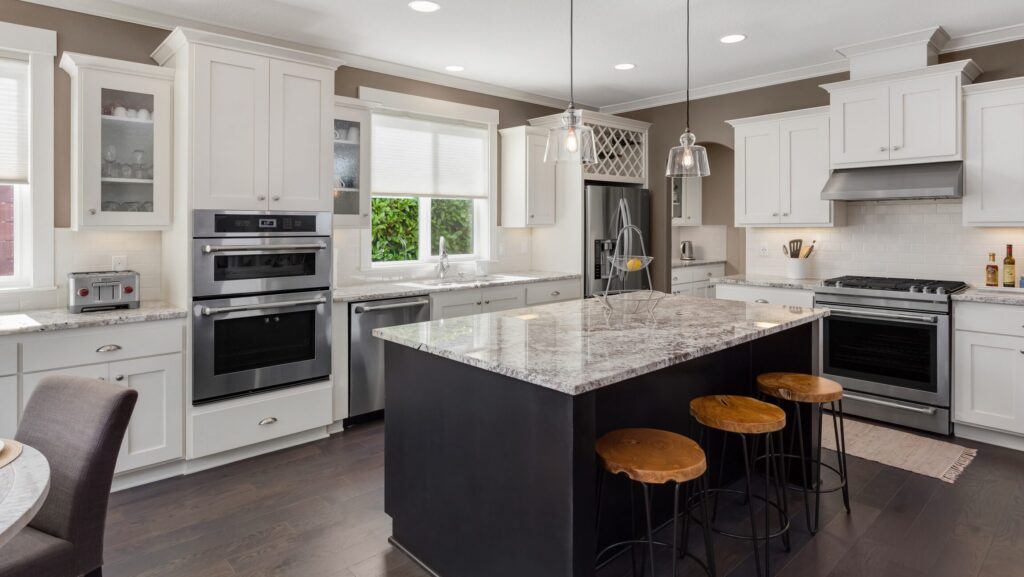
When planning a kitchen remodel, one of the most important early steps is deciding on your appliances and layout details before construction begins. Selections like a 36” gas range, a 36” wide refrigerator with an ice maker, or a built-in microwave may seem like small decisions at first, but they can have a major impact on the entire project timeline.
Even minor changes—such as appliance size or utility placement—can cause unexpected delays. For example, if cabinets are already built and it is later discovered that a water line was not planned behind the refrigerator, the entire project may come to a halt. Adjustments like this often require coordinating multiple trades, including plumbers, electricians, and painters, all of which can add both time and cost to a remodel.
That’s why it is important to begin the process by evaluating your current kitchen space. Stand in it and take note of your daily frustrations. What do you wish you had more of? What is missing or not working for your household? Instead of choosing appliances based on trends or magazine inspiration, focus on function and how the space will actually be used.
For example, counter-depth refrigerators are popular for their built-in look, but they often provide less storage space and come at a higher price. If maximum storage matters more to your household than a flush appearance, a standard-depth refrigerator may be the more practical and cost-effective choice. The same idea applies to ovens and ranges—features like convection cooking, air fry settings, and no-preheat options are great, but only if they will actually be used regularly.
Another shift in today’s kitchen design is moving away from matching every appliance to a single brand. While that was once the standard, many homeowners now mix brands to get the exact features they want. One brand may offer the ideal refrigerator, while another provides the perfect microwave drawer size or oven configuration. We are also seeing a rise in customized appliance finishes and hardware, such as bronze handles on stainless or matte appliances paired with coordinating cabinet accents. These personalized touches allow kitchens to feel more unique and cohesive.
Before beginning any remodel, it is helpful to create a clear list of priorities. Identify what you dislike about your current kitchen, what you need more of, and what you would love to add—while also considering your available square footage. In some cases, what seems like a dream feature may not be practical once space is fully evaluated.
Taking time to plan carefully can prevent costly changes later and ensure a smoother remodeling process. With the right guidance, homeowners can achieve a kitchen that is both functional and beautifully designed—without unnecessary delays or stress.
Thinking about a kitchen remodel? Give Hannah a call to schedule an appointment for a personalized quote and guided advice to help bring your vision to life.