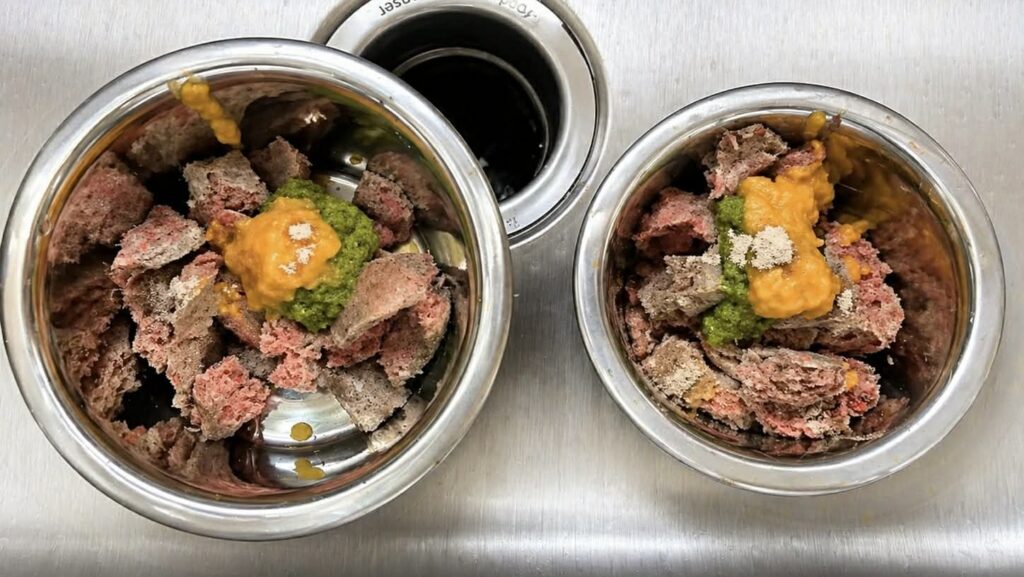
Fresh food can make a remarkable difference in the health of our dogs and cats, and it doesn’t have to be all or nothing. Many pet parents assume they must completely switch to raw or fresh feeding to see benefits, but even adding just 20% fresh, whole foods to your pet’s current diet can create meaningful improvements.
Dr. Anna Hielm-Björkman, a pioneering veterinary researcher at the University of Helsinki, has shown through her studies that incorporating even small amounts of fresh food into a pet’s diet can help reduce inflammation, improve important health markers, and support overall wellness. It makes sense, as no species was designed to thrive on a highly processed, synthetic diet.
Fresh feeding can start simply. Adding foods like blueberries, eggs, sardines, fresh greens, or other species-appropriate whole foods can be an easy first step. These foods provide natural nutrients, enzymes, and moisture that highly processed diets often lack.
For cats, fresh food is even more important. Cats are obligate carnivores, meaning their bodies are designed to thrive on animal protein and moisture-rich prey, not high-carbohydrate dry food. Unfortunately, dry kibble requires starches and carbohydrates to bind the pellets together, often leaving cats consuming diets made up of 20–60% carbohydrates they were never designed to digest. Cats also naturally get most of their hydration through food, not from a water bowl. Even with fountains and extra encouragement to drink, dry-fed cats often live in a constant state of mild dehydration because they are missing the 70%+ moisture found in fresh or canned food. This combination of excess carbohydrates and lack of moisture is one of the major reasons we commonly see diabetes, kidney disease, and urinary tract issues in cats. If your cat won’t eat raw or fresh-cooked food, canned food is still a far better option than dry.
The good news is that feeding fresh is easier than ever. Whether you choose raw or lightly cooked, there are now many excellent complete and balanced diets available for both dogs and cats – simply thaw and serve. When choosing a fresh food, look for brands that prioritize high-quality ingredients such as free-range, grass-fed, pasture-raised meats and organic produce. Ideally, nutrients should come from whole food sourcing rather than relying heavily on synthetic vitamins and minerals. It’s also important to avoid the high-carbohydrate fresh-cooked foods that are becoming increasingly common in today’s marketplace. Just because a food is labeled “fresh” does not automatically mean it is species-appropriate. Many fresh diets still rely too heavily on starches like potatoes, rice, peas, or lentils rather than prioritizing animal protein. Dogs and especially cats thrive best on diets centered around meat, organs, and healthy fats—not excessive carbohydrates.
Better nutrition doesn’t have to mean perfection—it simply starts with feeding fresher, more nourishing food whenever possible.
Any content, resident submissions, guest columns, advertisements, and advertorials are not necessarily endorsed by or represent the views of Best Version Media LLC (BVM) or any municipality, homeowners associations, businesses, or organizations that this publication serves. BVM is not responsible for the reliability, suitability, or timeliness of any content submitted, inclusive of materials generated or composed through artificial intelligence (AI). All content submitted is done so at the sole discretion of the submitting party.