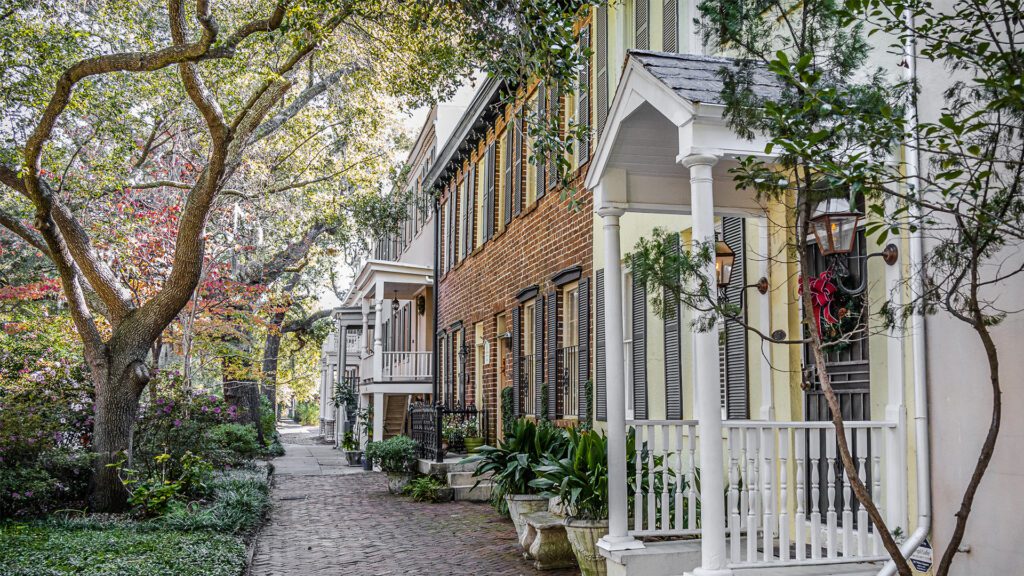
Lowcountry food is often romanticized through images of marshes at sunset, shrimp boats, community oyster roasts, and Southern recipes passed down through generations. But for me, Lowcountry cuisine carries a much deeper story.
Lowcountry cuisine didn’t just appear. It was built through survival, adaptation, memory, and brilliance brought here by enslaved Africans.
During the late 17th century, especially following the English settlement of Charleston, enslaved Africans from across West and Central Africa were forcibly brought to the Lowcountry, torn from their homelands.
According to oral history and tradition, one way they held onto their identity and sense of freedom was through seeds woven into their braided hair. Those seeds brought okra, African rice, black-eyed peas, watermelon, sesame (benne), sorghum, and hibiscus to the Lowcountry. Hundreds of years later, this is what inspires me each day to keep the richness of African heritage alive through our culinary experiences here at Ọkàn.
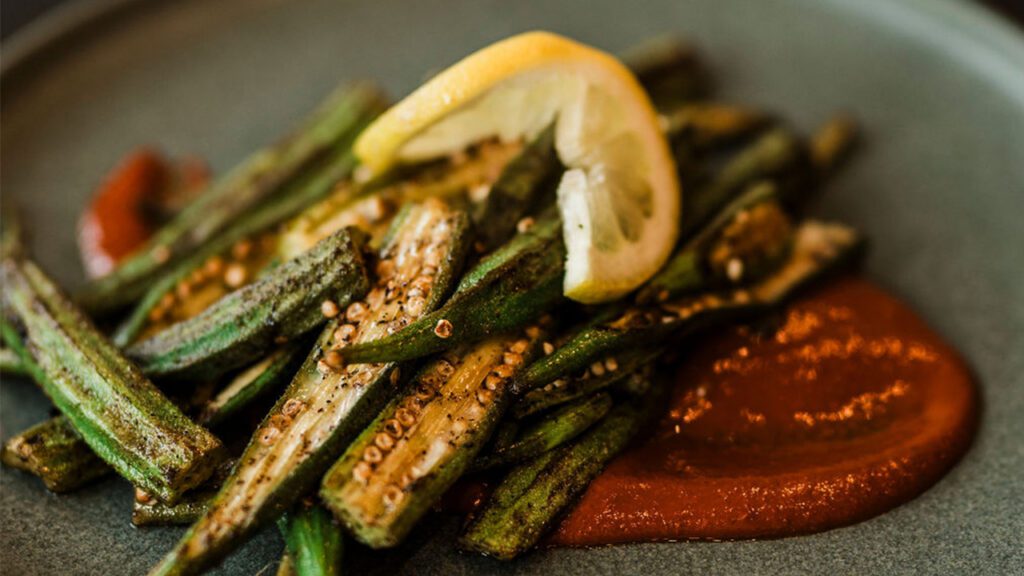
One of the clearest examples of this living culinary history can be found in something as simple as crispy okra.
I view the dish as far more than a Southern side item. For me, it is a direct continuation of West African traditions carried across the Atlantic by a people stolen from their homelands and determined to preserve pieces of home in an unfamiliar and hostile world. Today, okra is an essential ingredient in my restaurant. It represents the essence of the Lowcountry, and so we treat it with intention and respect.
We slice the okra lengthwise and char it hard over high heat to eliminate the sliminess that can sometimes occur, and to develop a deep smokiness and texture. We pair it with a swipe of harissa for subtle heat and warmth that enhances the natural flavor of the okra without overpowering it. To finish, we drizzle it with quality olive oil, flaky sea salt, and fresh lemon, bringing brightness and balance to the dish.
But okra didn’t make that journey alone.
Watermelon, like okra, originated in Africa. In time, it became part of the evolving food traditions of the Lowcountry, where African culinary practices merged with the rivers, marshes, and coastal resources of the South. Enslaved Africans, many of whom became highly skilled fishermen, shrimpers, and crabbers, began blending familiar ingredients from home with the seafood and natural resources surrounding them.
During the summer months at Ọkàn, we combine fresh, locally grown watermelon, blue crab, coconut vinaigrette, green onion, and flaky salt to create our Watermelon & Crab Salad.
For me, the dish represents both survival and creativity. Watermelon carries deep African roots, while blue crab reflects the coastal landscape enslaved Africans learned to navigate, work, and ultimately shape through their culinary traditions. Together, the ingredients tell a larger story of preservation and adaptation to a completely new world.
The contrast between the dishes is intentional.
Our crispy okra reflects continuity, holding tightly to inherited ingredients and techniques rooted in West African traditions. The Watermelon & Crab Salad reflects evolution—the way African culinary traditions merged with Caribbean influences and Lowcountry resources to create something uniquely tied to this region.
Together, these dishes embody the foundation of Gullah Geechee cuisine itself: a living legacy of survival, adaptation, and African heritage carried forward through flavor.
Any content, resident submissions, guest columns, advertisements, and advertorials are not necessarily endorsed by or represent the views of Best Version Media LLC (BVM) or any municipality, homeowners associations, businesses, or organizations that this publication serves. BVM is not responsible for the reliability, suitability, or timeliness of any content submitted, inclusive of materials generated or composed through artificial intelligence (AI). All content submitted is done so at the sole discretion of the submitting party.