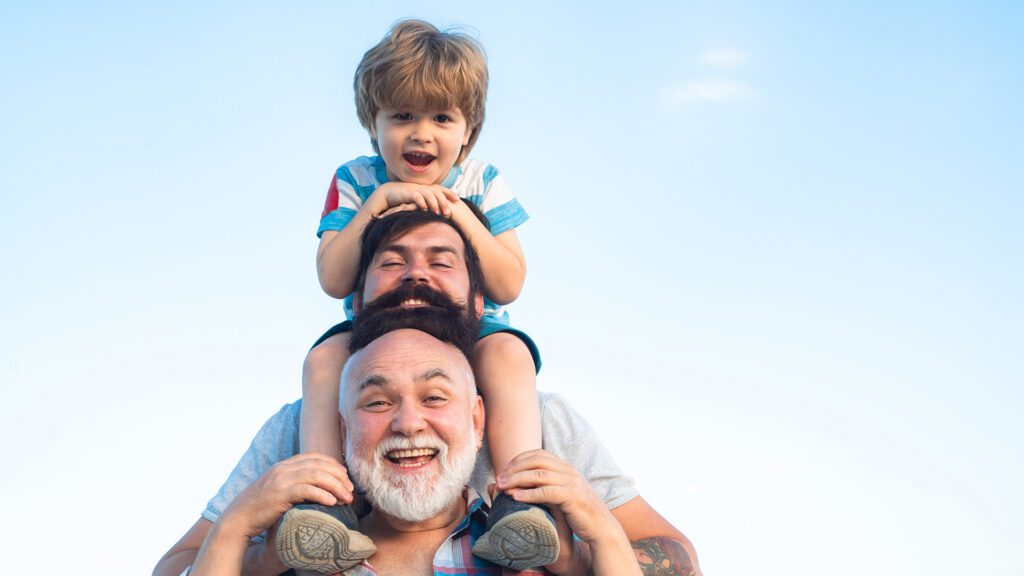
Father’s Day in Charlotte often looks familiar: time on the golf course, a good meal, and family gathered close. It’s a moment to recognize what fathers and caregivers have built—not just in careers or homes, but in the lives around them.
But there’s a quieter question worth asking: what are we modeling when it comes to brain health? With June marking the “Awareness Big Four”—Men’s Mental Health Month, Alzheimer’s & Brain Awareness Month, National PTSD Awareness Month, and Father’s Day, it feels like the right time to ask it.
People tend to think about brain health later in life, when memory slips or diagnoses arise. In reality, it’s shaped much earlier—by how we manage stress, how well we sleep, how often we fully recover, and how we handle daily cognitive demands. These patterns don’t just affect us; they become the “normal” our children grow up watching and repeating. And we have far more influence over these processes than we may realize.
Many adults today were raised to just push through. Rest was secondary. Stress was a given. Recovery wasn’t discussed. That mindset lingers, which is why subtle cognitive strain—brain fog, low energy, irritability, poor focus—is often dismissed as “just part of life” or “just aging.”
Much like generational trauma, brain health is influenced by what gets passed down behaviorally. Chronic stress, poor recovery, emotional reactivity, and burnout don’t stay contained—they shape family environments and expectations over time.
Similarly, Bessel van der Kolk, author of The Body Keeps the Score, showed how unprocessed stressors can imprint deeply on the body—shaping generations through repeated patterns.
But these patterns matter more than they seem.
Research shows conditions like Alzheimer’s disease develop gradually over years, even decades. While not every memory lapse signals disease, factors such as chronic sleep disruption, cardiovascular strain, poor daytime energy production, and chronic stress all influence how the brain ages and functions.
The encouraging part: brain function is adaptable. At Better Brain & Body, we’re on the front lines of this work. Meaningful changes can be made now that influence our future health and the environments we create for our children. Advanced therapies, functional assessments, and brain-based exercises help patients optimize brain health and cognitive function.
When brain and body systems are properly supported, people commonly report sharper focus, quicker decision-making, better memory, greater stress resilience, clearer thinking, and steadier emotions. They also notice less mental fog, faster processing, more motivation, and easier calm in high-pressure situations.
Baseline cognitive testing and nervous system assessments like Vital Scan ANS+ evaluate how well the brain balances stress and recovery. Tools like BrainView NeuralScan Pro map brain activity tied to attention, memory, and processing—revealing functional changes before noticeable decline. These aren’t just diagnostics for Alzheimer’s, but they can clarify how the brain functions now—and where support is needed.
Brain health isn’t just about preventing future disease. It’s about how you show up today for your children tomorrow. And that example is what gets passed forward—long after the Father’s Day meal is over.
Meet with Dr. Brown for a 1-on-1 in-person strategy consultation to learn more about how Better Brain & Body may support you or a loved one. You can request this appointment on our website or by contacting our team at 704-752-8100.