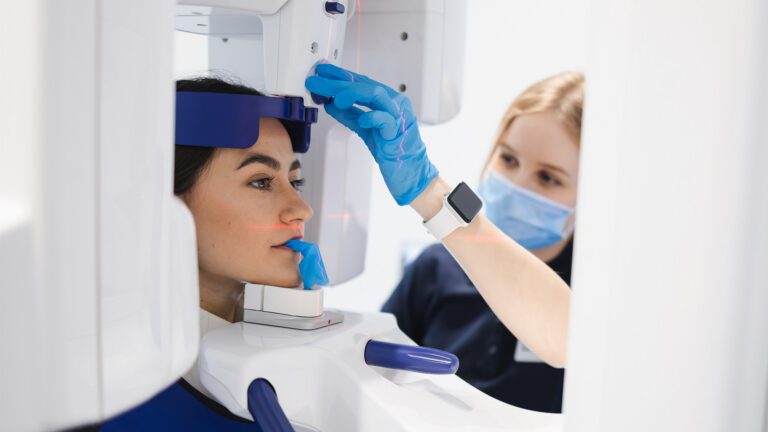
Dental CT scans, also known as cone beam computed tomography (CBCT), have been used in dentistry for many years. A dental CT scan creates a 3D image of the teeth, jaw bone, and surrounding structures. The amount of diagnostic information available from this type of imaging is invaluable. There are several indications for a dental CT scan, and my goal is to educate you on why this type of imaging may be useful for your dental treatment.
First, let’s start with how the 3D image is captured. Most of us have had a panoramic x-ray. This type of x-ray shows a large 2D image of the teeth and jaw bone including the temporomandibular joints (TMJ) and maxillary sinuses, as well as other structures. In most cases, the same machine that captures the panoramic image can also be used to capture the 3D CT image. Therefore, you do not have to go to a special imaging center, as long as this type of technology is available in the dental office. The image capture is quick and easy, and it can be viewed instantly by the dentist.
A CT scan can help detect infection, tooth fracture, bone fracture, or other oral pathology. Sometimes a 2D x-ray alone will not provide the detail necessary to make a definitive diagnosis. In contrast, a CT scan provides an enormous amount of information and things that simply cannot be seen on a regular x-ray can be visualized on the CT scan. For example some dental abscesses, or infections, will only show up on a CT scan and may never be diagnosed otherwise. This is very important as it will help prevent long term, chronic infections from going undiagnosed. These scans are even being used to diagnose and treat sleep apnea, TMJ disorders, and endodontic (root canal) problems.
Furthermore, CT scans are also a very important diagnostic tool in implant dentistry. The 3D image will allow the dentist to evaluate the quality and quantity of bone available as well as the proximity to important vital structures such as the nerves, blood vessels, sinuses, and other structures. Also, the CT scan can be used to virtually plan the implant surgery and ultimately create an implant surgical guide that can be used at the time of surgery to place the implants in precisely the exact location of the virtual plan.
The amount of diagnostic information obtained from a dental CT scan and the treatment planning capabilities is truly remarkable. I have been using 3D CT scan imaging for many years, and it is so useful that I could not imagine practicing dentistry without it. With the continued advancements in technology it is an exciting time for dentistry and dental CT scans have played a big part in the evolution.
Any content, resident submissions, guest columns, advertisements, and advertorials are not necessarily endorsed by or represent the views of Best Version Media LLC (BVM) or any municipality, homeowners associations, businesses, or organizations that this publication serves. BVM is not responsible for the reliability, suitability, or timeliness of any content submitted, inclusive of materials generated or composed through artificial intelligence (AI). All content submitted is done so at the sole discretion of the submitting party.