Long-term exposure to UV light has been linked to several serious eye conditions, including:
- Cataracts – A clouding of the eye’s natural lens that can blur vision over time.
- Macular degeneration – Damage to the retina that may affect central vision.
- Photokeratitis – Often described as a “sunburn of the eye,” causing pain, redness, tearing, and light sensitivity.
- Growths on the eye – Such as pinguecula or pterygium, often associated with sun and wind exposure.
- Skin cancer around the eyelids – The thin skin around the eyes is especially vulnerable.
Who Needs UV Protection?
The short answer: everyone. Children are especially important to protect because they spend more time outdoors and their eyes allow more UV light inside than adults. Adults who work outside, drive often, fish, golf, garden, boat, or enjoy sports should also be especially mindful.
What to Look for in Sunglasses
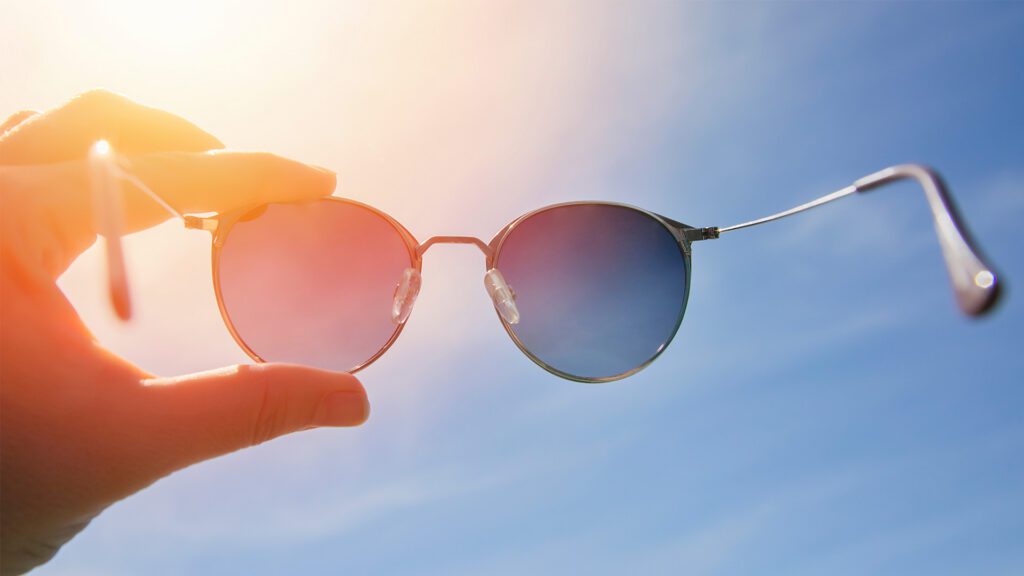
Not all sunglasses are created equal. When choosing eyewear, look for:
- 100% UVA and UVB protection
- Large lenses or wraparound styles for better side coverage
- Polarized lenses to reduce glare (great for driving and water activities)
- Consistent wear whenever outdoors, even on cloudy days
Darker lenses do not always mean better UV protection. The label matters more than the tint.
Don’t Forget Everyday Protection
Many prescription eyeglasses now include built-in UV protection, and photochromic lenses (that darken outdoors) can be an excellent option for daily wearers. Hats with wide brims can also help block overhead sunlight.
A Community Reminder
Healthy vision is something many of us take for granted until problems arise. Protecting your eyes from UV damage is one of the simplest and most effective habits you can build—for yourself and for your family.
This season, as you grab your sunscreen and head outside, make sure your sunglasses come too. Your eyes deserve protection for a lifetime.