“Did you remember to call the arborist about the tree leaning over the garage?”
“No, I forgot, I’ll call them later.”
Two days later … FLASH! CRASH! CRUNCH!
“Honey, I think you need to call the insurance company, too.”
When a major storm hits, headlines are often dominated by images of fallen giants resting on rooftops or tangled in power lines. For many homeowners, this feels like an unavoidable “act of God.” However, much of the structural failure we see during extreme weather is actually preventable. This is where the expertise of a Certified Arborist from Hill Treekeepers becomes your home’s best line of defense. Prevention isn’t just about crossing your fingers. Here is how professional arboricultural care mitigates risk long before the first gust of wind arrives.
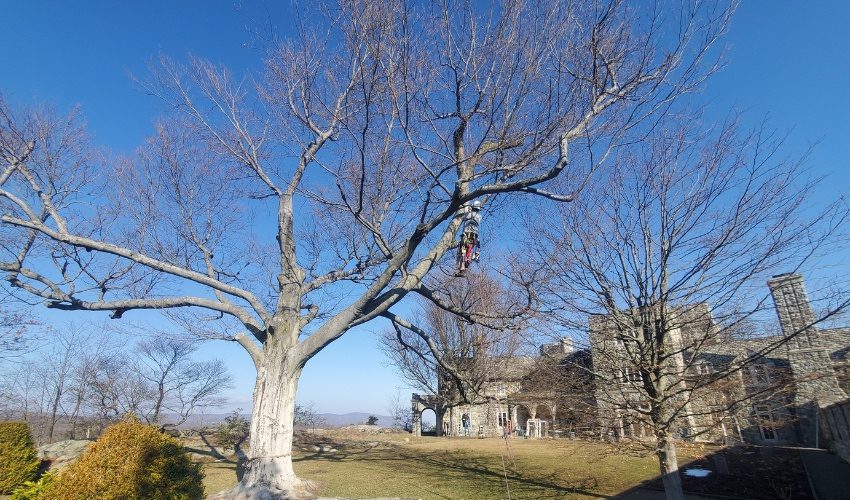
(Submitted by Chad Turner)
Identifying Invisible Defects
To the untrained eye, a tree might look lush and healthy. An arborist, however, looks at the tree(s) and site conditions, gathering relative information and history, such as drought, construction, or grade changes. They perform a visual inspection to identify structural flaws and symptoms of internal decay that the average person would miss, such as:
- Included Bark: V-shaped unions where two stems grow too close together, creating a weak point apt to splitting.
- Cankers and Fungi: Conks or mushrooms at the base of the trunk often signal root rot, meaning the tree’s roots are compromised.
- Aspect Ratio: The size of a lateral branch compared to the main trunk or parent branch, prone to failure.
- Cavities: Hollows that reduce the structural integrity of the main trunk.
Structural Pruning: Reducing Canopies
Large, dense canopies act like boat sails. During high winds, a thick canopy catches the air, putting immense torque on the trunk and root system. Arborists use a technique called crown thinning: selectively reduce or remove specific branches, preferably in the upper and outer canopy, to allow wind to pass through the tree rather than pushing against it.
Weight reduction pruning removes heavy growth from the ends of long, overextended limbs. This shifts the center of gravity back toward the trunk, making it much less likely for a limb to fail from storm loads.
Support Systems: Cabling and Bracing
Sometimes, a tree is worth saving despite a structural flaw. In these cases, arborists can install supplemental support systems.
- Cabling: High-strength steel or synthetic cables are installed between major limbs to limit their movement during a storm.
- Bracing: Threaded rods are bolted through a weakened crotch or trunk to prevent splitting.
These systems don’t eliminate the risk; rather, they lower the risk potential when combined with proper pruning to survive during storm events or are placed and designed to steer branches away from potential targets.
Critical Root Zone
A tree is only as strong as its foundation. Arborists help prevent uprooting by assessing the critical root zone. They can advise against trenching, construction damage, or soil compaction that kills critical roots; they can even improve soils if the root zone has already been impacted. Arborists might recommend improving soil ecology by increasing organic matter, soil aeration, and mulching to improve root health to help roots thrive and hold.
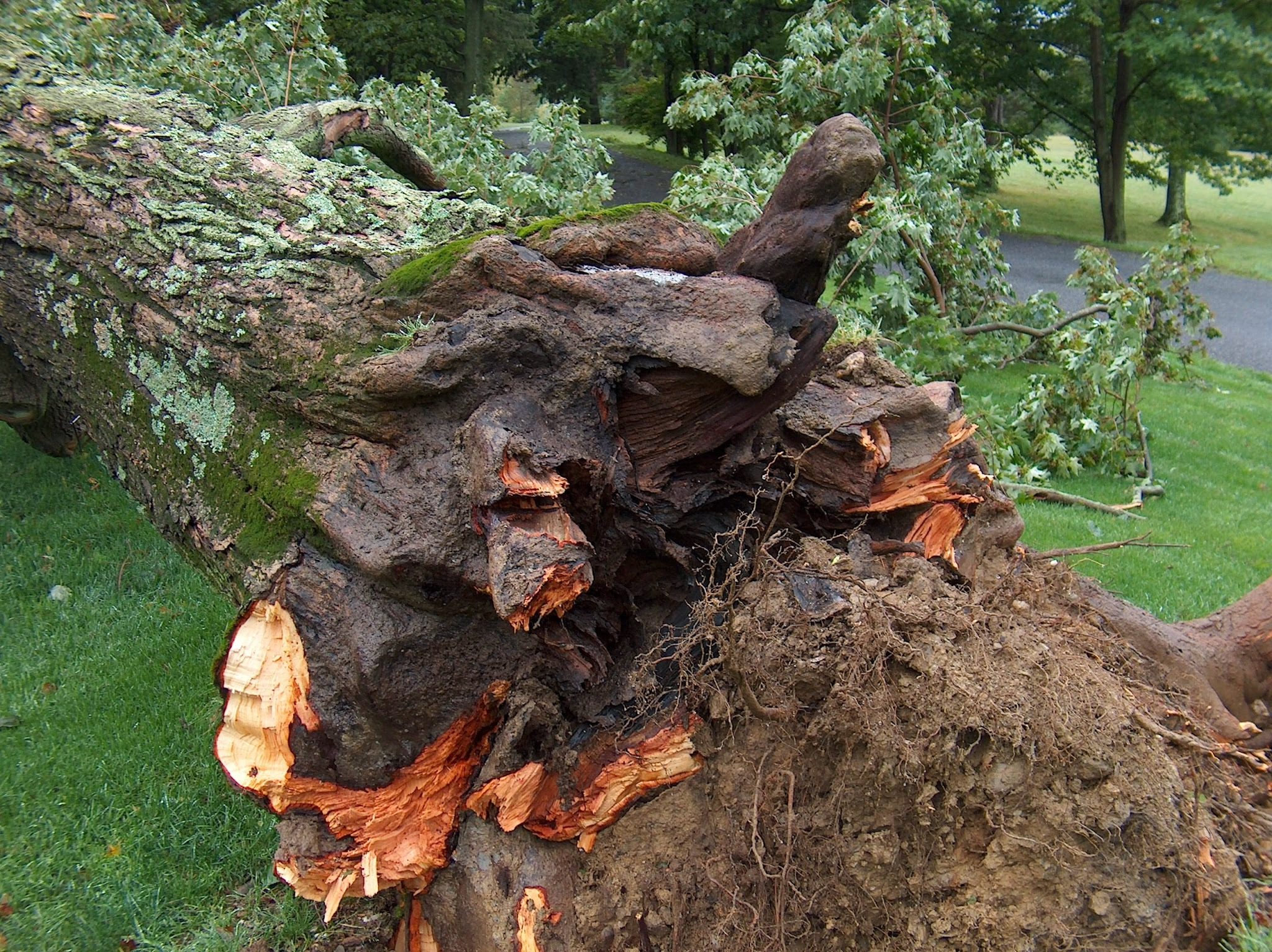
(Submitted by Chad Turner)
The Bottom Line
Waiting until a storm warning is issued is too late. An arborist provides a proactive assessment of your landscape, transforming your trees and shrubs from potential liabilities into valuable assets. By investing in professional tree care today, you aren’t just saving your trees — you’re protecting your home, family, and peace of mind. Estimates are free, and I guarantee we cost less than your insurance deductible.
Any content, resident submissions, guest columns, advertisements, and advertorials are not necessarily endorsed by or represent the views of Best Version Media LLC (BVM) or any municipality, homeowners associations, businesses, or organizations that this publication serves. BVM is not responsible for the reliability, suitability, or timeliness of any content submitted, inclusive of materials generated or composed through artificial intelligence (AI). All content submitted is done so at the sole discretion of the submitting party.