In a world that’s changing faster than ever, parents often ask: what skills will our children actually need? The answer isn’t memorization—it’s the ability to think, adapt, and solve problems. That’s where hands-on STEAM learning comes in. Rooted in Science, Technology, Engineering, Arts, and Mathematics, this approach blends disciplines in a way that mirrors real life: messy, creative, and full of possibility.
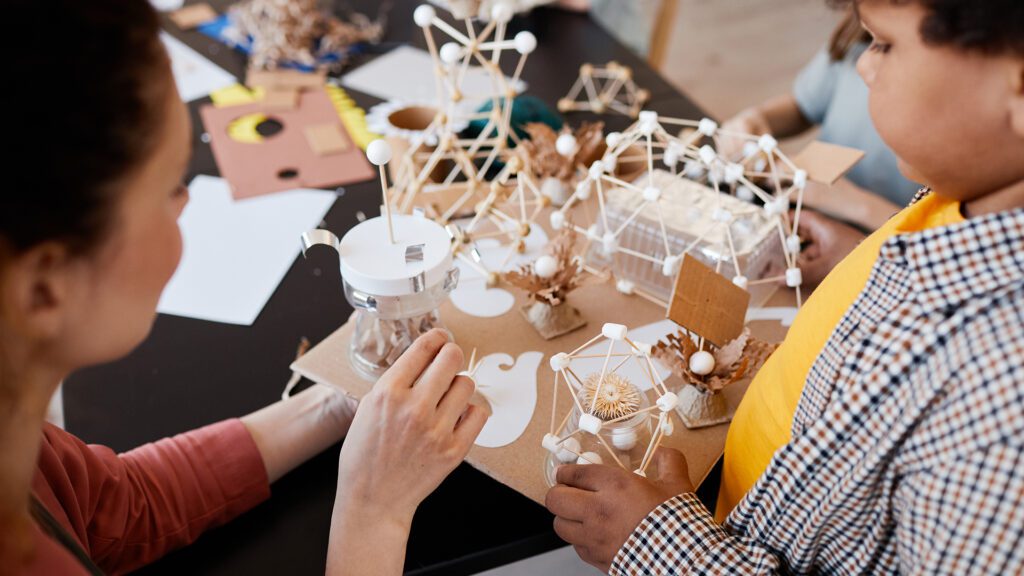
Unlike traditional models that separate subjects into neat boxes, STEAM invites children to explore how ideas connect. A child building a cardboard city isn’t just “doing art”; they’re experimenting with engineering, exploring spatial reasoning, and learning how design impacts people. Through hands-on experiences, kids learn to ask questions, test ideas, fail, and try again—and that process is where real learning happens.
At the heart of STEAM is problem-solving. When children are given open-ended materials—clay, wood, wire, paint, or found objects—they begin to think critically and independently. How can I make this structure stand? What happens if I mix these materials? Why didn’t that work? These small moments of curiosity build resilience, confidence, and independence over time.

(Submitted by Amber Scardino)
Equally important is the role of creativity. The inclusion of the arts transforms STEM into STEAM, emphasizing imagination as a powerful tool for innovation. The world doesn’t just need thinkers—it needs creators, designers, and visionaries who can approach challenges from fresh perspectives.
Hands-on STEAM environments also foster collaboration. Children naturally share ideas, negotiate roles, and learn from one another. These social problem-solving skills are just as essential as academic knowledge, preparing them for future workplaces that value teamwork and communication.
Perhaps most importantly, STEAM learning nurtures a mindset. It teaches children that there isn’t always one “right” answer and that mistakes are stepping stones, not failures. In a future where many jobs don’t yet exist, this mindset will be critical.
By giving children the freedom to explore, create, and think deeply, we’re raising more than students—we’re raising problem-solvers, innovators, and confident learners ready to shape the world around them.