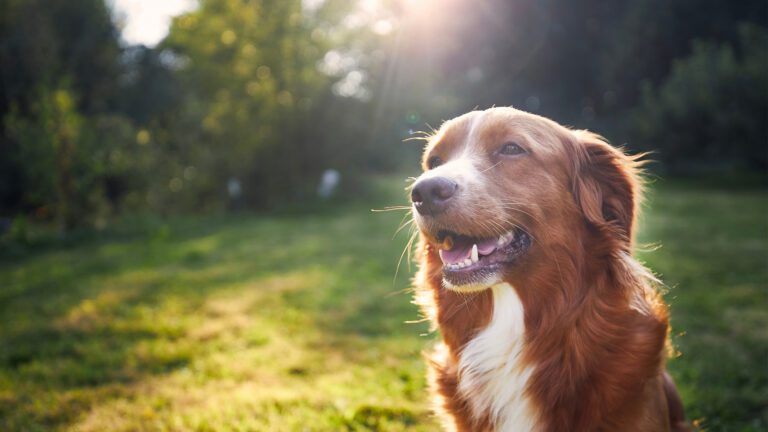
Every spring, as the snow melts and lawns begin to wake up, so does a familiar frustration: those brown spots scattered across otherwise beautiful green grass in the areas where you watch your pooch taking their morning constitutional while you sip your coffee. Not surprisingly, this is the time of year we get a surge of calls and emails asking if there’s something we can give dogs to “fix” their urine. After all, it seems only fair—your dog contributes to the yard, so shouldn’t they help maintain it too?
The common assumption is that dog urine is “too acidic,” so homeowners start applying lots of lime. Unfortunately, that’s not actually the culprit, and the extra lime can start binding other important nutrients the grass needs to thrive. The real issue is nitrogen. Dog urine contains a concentrated amount of nitrogen, which, in small amounts, acts like fertilizer (hence those bright green halos of grass around the brown spots). But when a dog repeatedly urinates in the same spots, the nitrogen load becomes too high and essentially “burns” the grass, leading to those brown patches. Female dogs are often blamed more simply because they tend to empty their bladder in one spot, delivering a bigger nitrogen dose all at once.
This is where we need to be cautious. Many products marketed to “fix” this issue involve giving your dog supplements intended to alter their urine chemistry. While these might sound harmless, they can interfere with your dog’s normal metabolism, urinary health, or digestive system. In some cases, they may even increase the risk of urinary problems, like bladder stones, that require surgery. While we are all homeowners ourselves who like a beautiful yard, veterinarians’ priority is your pet’s health—not lawn health. If something claims to “neutralize” urine, it’s worth asking what it might be doing inside your dog to achieve that effect. It’s usually bad news.
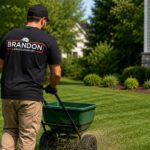
The safer and more effective solution is to treat the lawn, not the dog. Applying a low-nitrogen fertilizer can help balance out the high-nitrogen spots and promote more even growth. Doing some extra watering in the areas where your dog urinates can also dilute the nitrogen and prevent damage. In the end, a few brown spots are a small price to pay for the health of your dog. But with the right lawn care approach, you can keep both your pet and your grass in great shape.
Any content, resident submissions, guest columns, advertisements, and advertorials are not necessarily endorsed by or represent the views of Best Version Media LLC (BVM) or any municipality, homeowners associations, businesses, or organizations that this publication serves. BVM is not responsible for the reliability, suitability, or timeliness of any content submitted, inclusive of materials generated or composed through artificial intelligence (AI). All content submitted is done so at the sole discretion of the submitting party.