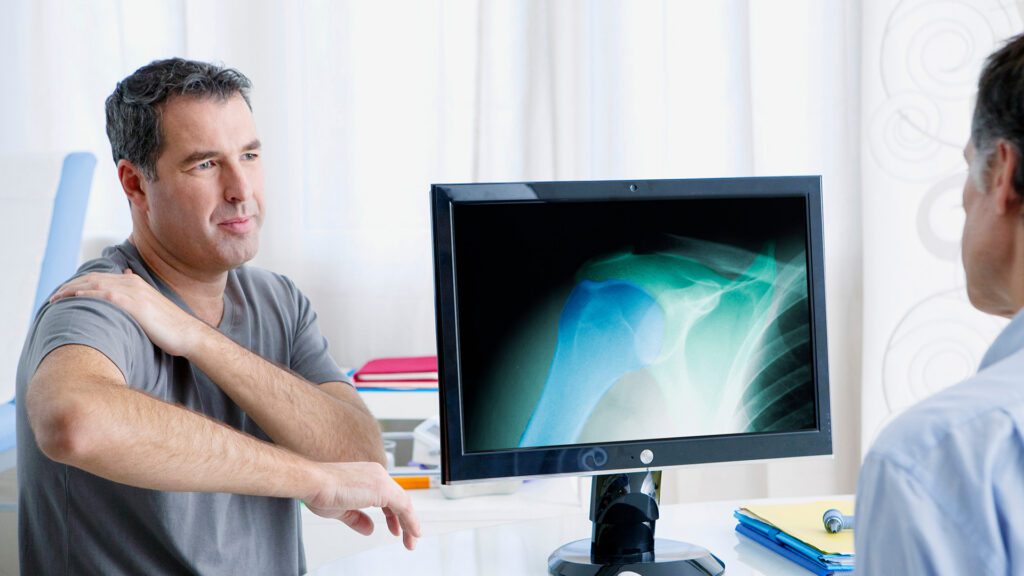
Most people think shoulder pain means something is “damaged.”
A torn rotator cuff. Arthritis. Bone spurs. Aging.
And while those things can absolutely matter, they often don’t explain the full story. In fact, research shows most adults over 50 have rotator cuff tears on MRI and no pain at all.
That surprises a lot of people.
What we’ve learned over the last decade is that shoulder pain is often less about “damage” and more about a mismatch between what the shoulder is being asked to do and what it currently has the strength, mobility, and tolerance to handle.
In other words: your shoulder’s capacity no longer matches the demands of your life.
That’s why complete rest so often fails.
Of course, irritated shoulders sometimes need to calm down first. But if all you do is avoid movement, stretch endlessly, or stop using the arm, the shoulder often becomes weaker, stiffer, and even more sensitive.
Modern rehab looks very different.
Instead of only focusing on pain relief, we focus on rebuilding capacity. And we’re leveraging technology with regenerative therapy tools that are proven to accelerate the process.
That means improving strength, restoring movement, calming sensitivity, and gradually returning people to the activities they love—whether that’s golf, tennis, gardening, swimming, lifting weights, or simply sleeping comfortably again.
One of the biggest misconceptions we see is that painful shoulders should avoid movement altogether.
In reality, most shoulders improve faster with the right movement and stimulus.
The key is knowing what to push, what to avoid temporarily, and how to rebuild without constantly flaring things up.
That’s exactly why we created our free guide:
“Reach for the Sky: A Modern Guide to Shoulder Pain Rehab and Lasting Recovery.”
Inside, we cover:
- Why shoulder pain keeps recurring
- What MRIs often fail to explain
- The biggest mistakes people make during recovery
- 4 practical strategies that can help calm pain and rebuild strength
To request your free copy, call our office at 209-532-1288 or email info@peakperformancecare.com.