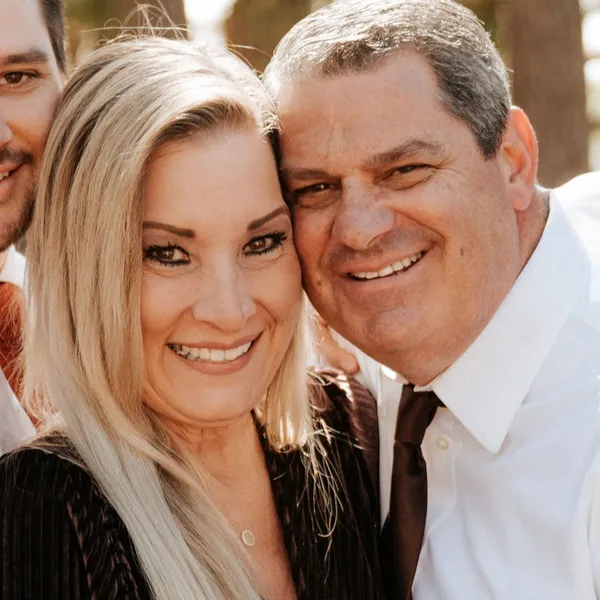
In late August of 2025, my beautiful wife Marta was in a bicycle accident. Her bike slid on a patch of mud on a trail, sending her into a steel beam. The impact knocked her unconscious, and those were some of the longest moments of my life. When she came to, she was in terrible pain, and I don’t know what we would have done without the aid of two wonderful “good Samaritans” who stopped to help while I went to get our vehicle.
From her pain, I assumed she had broken her collarbone, which was serious enough. Then we learned her neck was also broken, though the bone itself had held together. She had also suffered a severe concussion, which she is still working through today. She was expected to make a full recovery, but we knew the road ahead would be long and hard.
What followed taught me things I hadn’t expected to learn.
I watched how quickly a strong, capable person can lose physical function when forced into stillness. Simple things become complicated. Getting dressed. Reaching for something on a shelf. Finding a position that doesn’t hurt. The world shrinks fast when your movement is severely limited, and the person caring for you carries more than they usually realize.
Caring for Marta was not a burden. It was a privilege. I would have done every bit of it and asked for nothing in return. I became a driver, a scheduler, a helper with things that used to take care of themselves. Doctor visits, physical therapy, trips to the pharmacy. The days start to blur. And through all of it, you keep going because you love this person and you feel that your care is an expression of that love.
But even when you want to do it all, that isn’t always possible. Reaching out to others isn’t a retreat from love. It is an expression of it. It also gives people who genuinely want to help a way to do so.
That experience helped me understand more deeply than I ever had before the joy, and pain, in caring for someone not for weeks but for months and years on end, an aging parent, a spouse with a chronic illness, a sibling who can no longer manage alone. It is an enormous weight and exhausting in ways that are hard to describe until you have lived it.
If you are in that role, here are signs worth paying attention to. You are not sleeping, even when you have the chance. Your own health is slipping because there is no time or energy left for it. You feel irritable or short-tempered in ways that aren’t like you. You have stopped seeing friends or doing the things that used to restore you. You feel guilty for needing a break, which usually means you needed one a while ago. You are running on empty and pretending you aren’t.
Noticing these things is not a failure. It is not a sign that you love your family member any less. It is a sign that you love them enough to be honest about what you can sustain.
We were fortunate. Marta had close friends who showed up. Family who lived nearby and stepped in without being asked. We also used “Wasatch Caregivers” employees to help during that stretch. I genuinely don’t know how we would have managed without all of them. Not everyone has that kind of support waiting in the wings.
If you are caregiving without a safety net, please hear this: there comes a point where going it alone is no longer serving you or the person you are caring for. Getting outside help is not giving up. It is one of the most loving decisions you can make.
That is exactly where Wasatch Caregivers comes in. Our goal is to support families like yours, so that you can keep showing up for the people you love, without losing yourself in the process.
You do not have to do this alone. Reach out. Let someone help carry this with you.
Any content, resident submissions, guest columns, advertisements, and advertorials are not necessarily endorsed by or represent the views of Best Version Media LLC (BVM) or any municipality, homeowners associations, businesses, or organizations that this publication serves. BVM is not responsible for the reliability, suitability, or timeliness of any content submitted, inclusive of materials generated or composed through artificial intelligence (AI). All content submitted is done so at the sole discretion of the submitting party.