When planning a remodel or new construction project, homeowners often focus on cabinetry, lighting, flooring, and finishes long before window coverings enter the conversation. Yet, window treatments play a critical role in the comfort, the functionality, and the visual refinement of a home.
Architects carefully design windows to frame views, introduce natural light, and establish balance throughout a space. What is frequently overlooked is how those windows will function once the home is lived in. Privacy, glare control, UV protection, automation, and room darkening should all be considered during the planning stage — not after construction is complete.
Even small dimensional changes can affect:
- shade clearance
- mounting depth
- drapery stack-back space
- and light gaps
Early collaboration between architects, contractors, and window treatment specialists is essential to avoid unnecessary limitations.
Planning Concealed Motorized Shades or Drapery
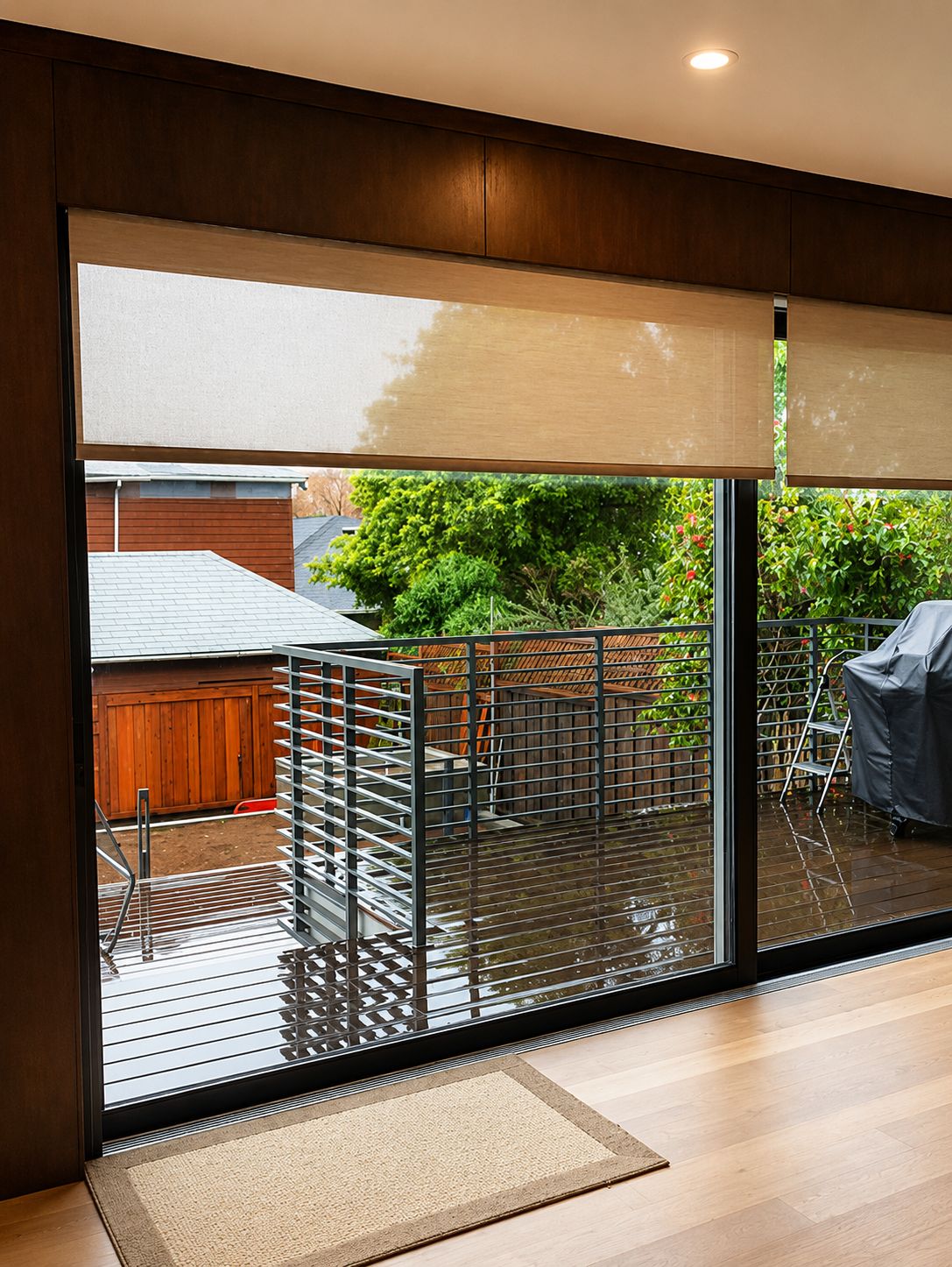
One of the most requested features in luxury homes today is the ability for shades and drapery hardware to disappear entirely when not in use. Recessed ceiling pockets and concealed cabinetry details allow motorized shades to remain hidden when not in use, preserving clean sightlines and a more refined overall appearance.

(Submitted by Pat Benson)
In this project, we collaborated with the contractor during construction to specify the exact dimensions and electrical locations required for automated solar shades. Because the planning happened early, the shades disappear seamlessly beneath a walnut cabinetry panel, maintaining the minimalist design intent of the home.
(Submitted by Pat Benson)
Without this level of coordination prior to framing and drywall, achieving the same result later would have required significant reconstruction.
Small Details, Major Challenges
Window treatment planning is not only about aesthetics — it also requires careful coordination with finish details throughout the construction process — not just during the initial planning stage.
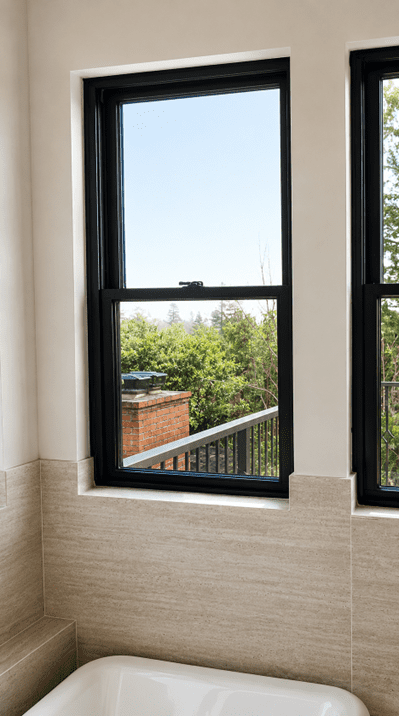
In this bathroom, the tile wraps around the window extended into the jamb depth, leaving insufficient space for a properly mounted shade. While the finished tile work is beautiful, the reduced clearance complicated the installation and limited the available window treatment solutions.
(Submitted by Pat Benson)
A discussion about window treatment requirements before drywall and tile installation could have avoided these limitations without compromising the design.
Architectural Details Matter
Window coverings are never one-size-fits-all. Large expanses of glass, corner windows, arches, and multi-slide doors often require custom planning that affects framing, trim details, drywall returns, and structural support.

(Submitted by Pat Benson)
In this installation, careful coordination between the builder and window treatment design team allowed for two treatments within a single opening, combining the need for complete nighttime darkness with daytime sun and UV filtering. The result balanced the functional needs of the client with the architectural style of the home.
Early Collaboration Creates Better Results
When architects, contractors, interior designers, and window covering specialists collaborate early in the process, the result is a home where architecture, lighting, furnishings, and window treatments work together seamlessly.
In luxury design, it is often the details considered early that make the final result feel effortless.
To see more collaborations with architects and builders, visit www.mixmontclair.com or contact us to schedule a complimentary one-hour in-home consultation.
Any content, resident submissions, guest columns, advertisements, and advertorials are not necessarily endorsed by or represent the views of Best Version Media LLC (BVM) or any municipality, homeowners associations, businesses, or organizations that this publication serves. BVM is not responsible for the reliability, suitability, or timeliness of any content submitted, inclusive of materials generated or composed through artificial intelligence (AI). All content submitted is done so at the sole discretion of the submitting party.