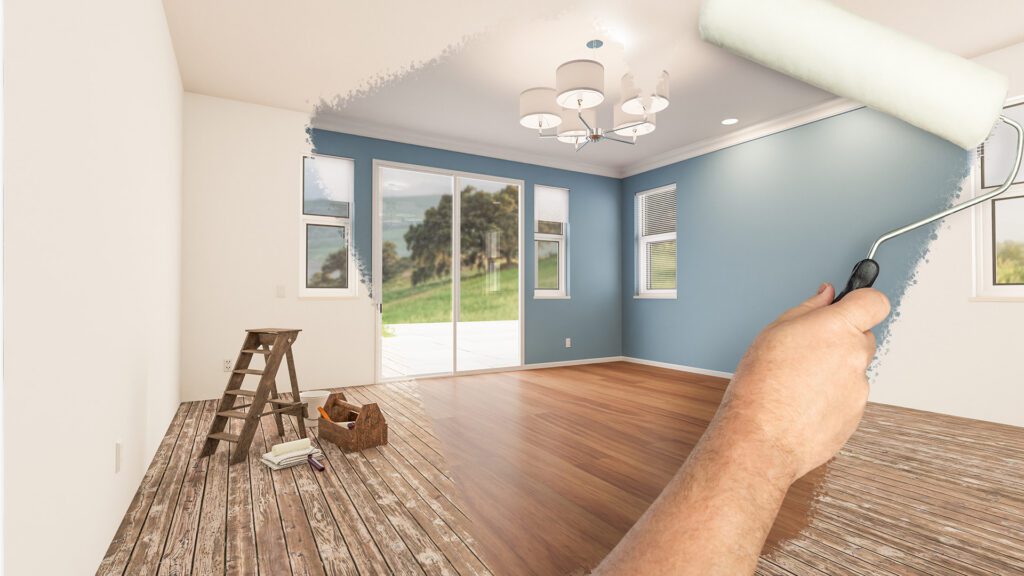
Artificial intelligence is quickly making its way into the world of interior design, and I am excited to dive into exactly how homeowners and designers are beginning to use this evolving technology in real projects.
From testing paint colors on a photo of your home to generating inspiration images for kitchens, bathrooms and living spaces, AI has made design ideas more accessible than ever before. But while AI can be an incredibly helpful tool, it is important to understand both its capabilities and its limitations before relying on it too heavily for real-life design decisions.
As both a designer and business owner, I have embraced AI as a tool within my company. In many ways, it allows us to work more efficiently, explore concepts more quickly and visually communicate ideas at a faster pace. At EYD, we have used AI to help clients visualize updates within their actual homes by layering ideas directly onto photographs of their existing spaces.
One of the greatest advantages of AI is speed. Traditionally, creating a detailed 3D rendering can take many hours of technical work. AI can generate conceptual images in a fraction of the time, helping clients react to ideas earlier in the process. For cosmetic projects especially, this can be a wonderful starting point for inspiration and collaboration.
Designer Tip: Areas Where Homeowners Can Successfully Use AI
- Exploring paint colors on their home
- Creating inspiration images
- Experimenting with color palettes
- Visualizing landscaping ideas
- Exploring furniture layouts
- Brainstorming cosmetic updates
However, AI also comes with significant limitations, and this is where homeowners need to proceed carefully. AI does not understand building codes, accurate measurements, traffic flow or construction realities. It frequently alters architectural details unintentionally, creates unrealistic proportions, and generates designs that may look beautiful in an image but would fail in real life.
Designer Tip: Areas Where AI Should NOT Be Trusted Alone
- Cabinetry dimensions and layouts
- Construction drawings
- Appliance clearances and spacing
- Lighting placement heights
- Structural changes
- Tile layouts and measurements
- Material coordination and undertones
- Building code requirements
A contractor cannot build directly from an AI-generated image, and AI simply cannot replace professional drawings, technical expertise or years of design experience. Great design is about far more than producing pretty images. A well-designed home requires thoughtful problem-solving, functionality, scale, balance and an understanding of how a family truly lives within a space.
The future of interior design is not designers versus AI. It is designers using AI thoughtfully to create better experiences for clients. When paired together correctly, AI can enhance creativity, improve communication and streamline the design process while still relying on the expertise of a professional designer to ensure the final result is functional, cohesive and timeless.
These insights only scratch the surface of homeowners using AI, common mistakes to avoid, and real examples of how we are incorporating AI into the EYD design process. To read the full post, visit https://www.elizabethyagerdesigns.com/blog or call us at (217) 342-2244 to schedule a consultation.
Any content, resident submissions, guest columns, advertisements, and advertorials are not necessarily endorsed by or represent the views of Best Version Media LLC (BVM) or any municipality, homeowners associations, businesses, or organizations that this publication serves. BVM is not responsible for the reliability, suitability, or timeliness of any content submitted, inclusive of materials generated or composed through artificial intelligence (AI). All content submitted is done so at the sole discretion of the submitting party.