Balance isn’t only about standing on one leg without falling. Balance is an integration of three sensory systems working together in real time. And the more we know about how to travel this integration pathway the better our balance becomes. Visual, Vestibular ,Proprioception – Sensory systems of Balance. Balance requires the brain to integrate information from three sensory systems, each providing distinct information about body position and movement in space.
The Visual System: The role of vision in balance control is pretty obvious. Try balancing with your eyes closed and what a difference!
The Vestibular System: The vestibular system comprises structures in the inner ear and is largely responsible for spatial awareness and balance. It helps determine rotation, gravitational pull, and motion sensing. When impaired, we experience dizziness and vertigo. The eyes send signals to the brain that help the vestibular system (inner ear) and the muscles know where they are so necessary adjustments can be made. The visual system gives us orientation, and the vestibular system gives us gravitational reference. Proprioception tells us where we are within space.
The Proprioceptive System: Proprioception is our sense of our body position in space. This information comes from receptors in our joints, muscles, tendons, and skin that signal to the brain about where our body parts are and how they’re moving. Unstable surfaces (e.g. Cobble stone street) reduce the precision of input, forcing the central nervous system to process more actively and adapt.
Balancing Challenges: To balance in Pilates requires that we connect with our breath. Breathing helps calm the nervous system, reducing fear and stress and significantly improve balance outcomes.
Beginner: Balance on one leg with eyes open, holding onto something stable with two hands Add gentle head turns.
- Progression 1: Same as above, holding on with one hand.
- Progression 2: Same as above, using only a finger or two for light support.
Intermediate: Balance on one leg with eyes closed, holding something stable, adding head turns.
- Progression 1: Progress to balance on one leg with eyes closed, with a light touch.
- Progression 2: Balance on one leg with eyes closed, no support. Add head turns.
Advanced: Take the challenge onto the moving reformer doing head turns and arm movement. Standing while moving on the reformer carriage challenges the visual and vestibular systems because the moving surface complicates the brain’s processing of where you are in space compared to a static position.
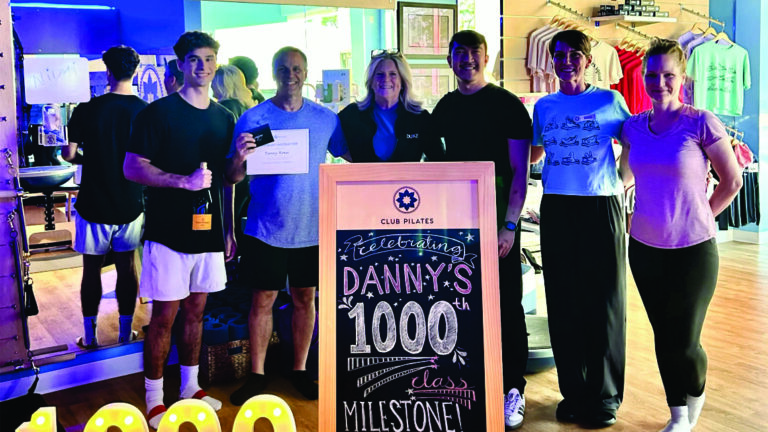
At Club Pilates Ancaster, we offer 4 levels of guided instruction from Beginner to Mastery. These levels are not simply about testing balance. They are about training integration of all three sensory systems. Each level challenges the visual , vestibular and proprioceptive systems, gradually strengthening the neuromuscular pathways that support balance.
Over time, what once felt unstable becomes manageable, and what once triggered fear becomes familiar. With consistent practice, our members experience remarkable improvements in balance and stability of movement. Practice with intention. Breathe calmly, controlling movement. Keep building the sensory pathway.
Any content, resident submissions, guest columns, advertisements, and advertorials are not necessarily endorsed by or represent the views of Best Version Media LLC (BVM) or any municipality, homeowners associations, businesses, or organizations that this publication serves. BVM is not responsible for the reliability, suitability, or timeliness of any content submitted, inclusive of materials generated or composed through artificial intelligence (AI). All content submitted is done so at the sole discretion of the submitting party.