Designing an outdoor living space or exterior kitchen is about more than creating a beautiful setting. The best spaces are planned with long-term performance in mind, especially when it comes to the countertop surface.
Why it matters to plan ahead
An outdoor countertop should handle the weather, support daily use, and maintain its appearance over time. That starts with selecting the right material and designing the layout with durability in mind. Every detail matters, especially when the surface will be exposed to the elements year-round.
Seams & miters
Whenever possible, it is best to plan a layout that avoids seams in the stone. While stone itself is durable, seams are often the first area to separate and need maintenance over time. In Wisconsin, freeze/thaw conditions can cause the ground and sub-structure to move, which means the countertop will move too. For that reason, drop-mitered or laminated edges are also not recommended for exterior countertops. Adhesives exposed to heat, cold, moisture, and sunlight can break down, making this detail less reliable outdoors than it is in an interior application. Homeowners and contractors should work closely with their stone fabricator before fabrication begins to determine the best layout for the project.
Material selection
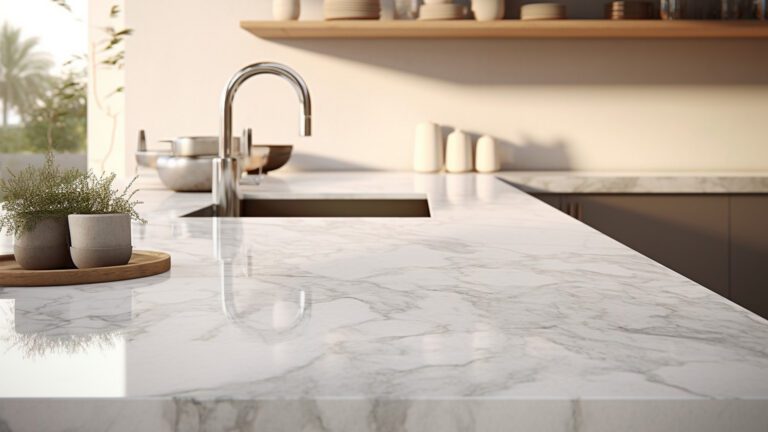
Natural stone remains one of the best choices for exterior countertops, especially granite. Granite is highly durable and not sensitive to acid, which makes it especially well-suited for outdoor use. Other natural stones, such as marble or onyx, can also be used outside, but they will not remain glossy. Over time, they will typically develop a matte finish.
Color selection is another important consideration. Stones with a lot of color variation or dramatic movement contain more mineral combinations that have not fully formed and may require resin fill to close natural gaps in the surface. While that can improve indoor appearance, UV exposure can discolor the resin over time and eventually cause it to fail.
Another factor to keep in mind is heat. Dark-colored stones, especially black granite, can become very hot in direct sunlight. UV exposure will also break down the sealer over time, so regular maintenance is important. Sealing natural stone in the spring is a simple step that helps protect the surface and preserve its appearance.
For homeowners considering alternative materials, large-format porcelain tile and ultra-compact surfaces are also excellent exterior options. These materials are well-suited for outdoor use because they do not rely on resin, unlike engineered quartz slabs. Many manufacturers now offer 2 cm and 3 cm thicknesses, which create the look of a more traditional stone countertop.
A well-designed outdoor kitchen or living space should feel as good as it looks. Choosing the right countertop material, carefully planning the layout, and understanding how the surface will perform outdoors all help protect the investment. With the right decisions up front, homeowners can enjoy a space that’s both beautiful and built to last.
Any content, resident submissions, guest columns, advertisements, and advertorials are not necessarily endorsed by or represent the views of Best Version Media LLC (BVM) or any municipality, homeowners associations, businesses, or organizations that this publication serves. BVM is not responsible for the reliability, suitability, or timeliness of any content submitted, inclusive of materials generated or composed through artificial intelligence (AI). All content submitted is done so at the sole discretion of the submitting party.