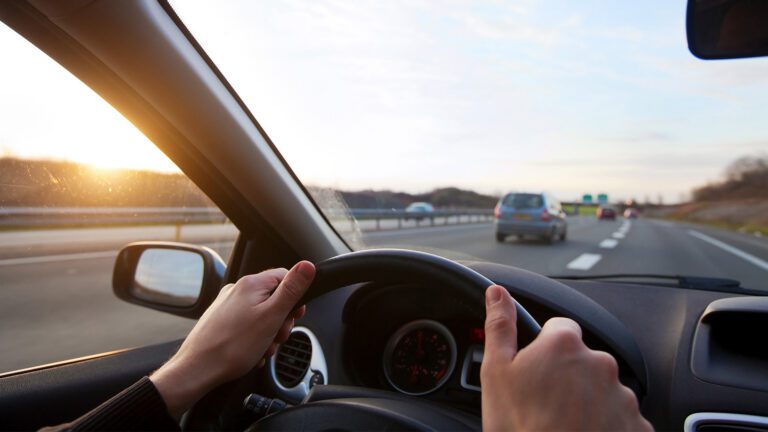
Considering how much time many of us spend behind the wheel, the importance of knowing when and how to stop a vehicle safely cannot be overstated.
Here’s a look at the four ways to safely stop your vehicle:
Lift your foot off the accelerator.
Removing your foot from the accelerator will gradually slow you down. This is the braking you use when parking, at which time you’ll mainly maneuver by tapping on the brake pedal.
Press on the brake.
This slows down your vehicle in relation to the degree you’re pressing. It is the braking you perform most of the time. There’s an art to learning exactly when and how to brake properly, and the best way to master it is by combining your awareness and timing with plenty of practice (see “Skill sharpening”).
Slam on the brakes.
This is the way to stop “on a dime,” and is used—for example—if a cyclist darts out in front of you. Parking lots, residential road-ways, country roads and countless other places will require you to stop like this to protect yourself and others.
Pull firmly on the emergency brake.
Using the emergency brake will stop the vehicle if you lose your regular brakes, which should rarely happen.
To employ this last-resort emergency braking method, give a quick, hard tug on the emergency brake handle or a quick, firm press on the emergency brake switch. To help avoid using this measure, keep your brakes tuned and have them checked the moment you hear high-pitched scraping.
You’ll likely be performing some of these navigational techniques just about every day for as long as you drive. Understanding proper braking while keeping your brakes and tires maintained will help keep you and others safe on the road.
Skill sharpening
An effective way to develop or brush up on braking skills is to find a large, empty parking lot. Designate a visual stopping point such as a sign or a tree, or use cones or markers, and move about 325 feet away from that point. Practice each of the four braking maneuvers several times—driving forward and in reverse.
Any content, resident submissions, guest columns, advertisements, and advertorials are not necessarily endorsed by or represent the views of Best Version Media LLC (BVM) or any municipality, homeowners associations, businesses, or organizations that this publication serves. BVM is not responsible for the reliability, suitability, or timeliness of any content submitted, inclusive of materials generated or composed through artificial intelligence (AI). All content submitted is done so at the sole discretion of the submitting party.