Electric bills have been climbing this year, and homeowners know exactly why. Infrastructure upgrades, rising material costs, increased energy demand, and strain on the grid from extreme weather are all playing a role. Most homeowners have already made adjustments. Lights are turned off more often, thermostats are set a little higher, and daily habits are more intentional. Still, the bill does not always reflect the effort.
In most homes, the issue is not just usage. It is control. You can be mindful of how much energy you use, but if your home is not set up to use that energy efficiently, you are still working against the system.
The good news is that you can regain control by making smarter adjustments to how your home uses power.
Start With What You Can Control
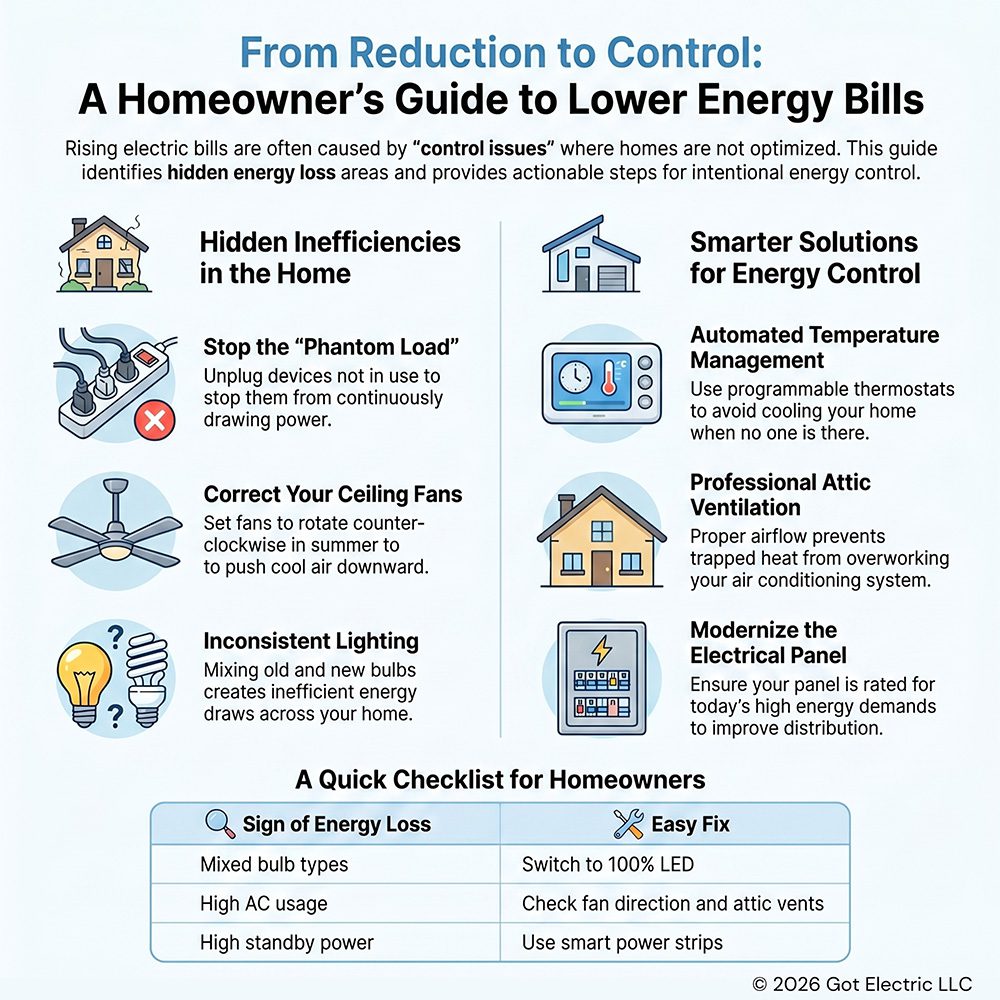
A few simple changes can reduce everyday energy waste without a major investment. Lighting is one of the easiest places to begin. Replacing older bulbs with LED lighting lowers energy use immediately and consistently.
Ceiling fans can also make a noticeable difference when used correctly. During the summer, fans should rotate counterclockwise to push cool air downward, helping your home feel comfortable without relying as heavily on air conditioning.
It is also worth addressing energy you are not actively using. Many devices continue to draw power even when turned off. Smart power strips or unplugging unused electronics can help reduce this hidden usage.
Temperature control is another area where small adjustments add up. A programmable or smart thermostat helps regulate cooling throughout the day, especially when no one is home.
Where a Professional Can Help
The largest opportunities to improve efficiency are often found in areas that are not visible day to day. A licensed electrician can help identify where your home may be losing energy and what improvements will make the greatest impact.
Electrical panels are a common starting point. Older panels are not always designed to support today’s energy demands, which can affect overall efficiency. Upgrading your panel can improve how your home distributes and uses power.
Air movement is another factor. Properly installed attic or exhaust fans can reduce heat buildup, easing the workload on your cooling system during warmer months.
Lighting can also be optimized beyond basic upgrades. Timers, motion sensors, and well-planned fixture placement ensure energy is only used when it is needed.
For homeowners considering an electric vehicle, installing a home charging station allows you to better manage when and how your home draws power, which can help stabilize long-term energy costs.
Small Improvements, Real Results
Lowering your energy bill is rarely about one major change. It is the result of several targeted improvements working together. When those improvements are tailored to your home and how you use it, the results become more meaningful.
Energy Check for Your Home
- Using older or mixed lighting types throughout the home
- Ceiling fans not set correctly for summer use
- Lights left on in unused rooms
- Heavy reliance on air conditioning for comfort
- Electrical panel not updated for current energy demands
- Devices drawing power when not in use
- No plan for managing EV charging at home
If you checked three or more, there may be opportunities to reduce your electric bill. A quick review from a trusted local electrician can help identify where your home is losing efficiency and what steps will make the most impact.
Call Got Electric today 301-515-8676 or visit us at gotelectric.net/contact/.
Any content, resident submissions, guest columns, advertisements, and advertorials are not necessarily endorsed by or represent the views of Best Version Media LLC (BVM) or any municipality, homeowners associations, businesses, or organizations that this publication serves. BVM is not responsible for the reliability, suitability, or timeliness of any content submitted, inclusive of materials generated or composed through artificial intelligence (AI). All content submitted is done so at the sole discretion of the submitting party.