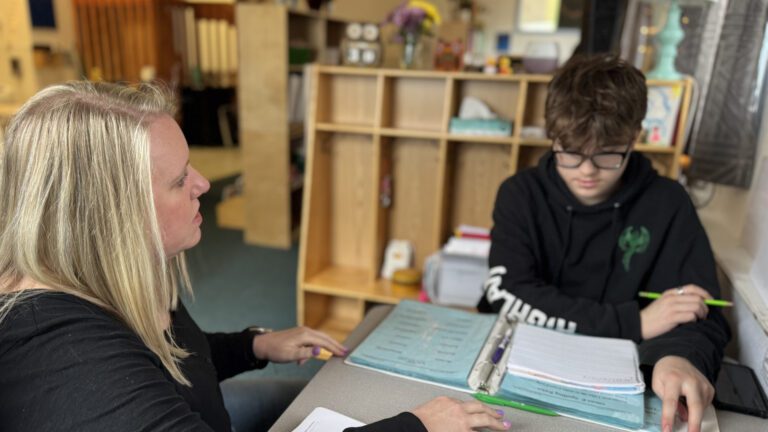
Language is the foundation for reading, writing, comprehension, and academic communication. Neurological (in the brain) language development plays a critical role in a child’s ability to acquire literacy (reading and spelling) skills later in life. When children experience delays or impairments in receptive language (understanding language) and expressive language (using language to communicate), they are at a significantly greater risk for literacy difficulties, including Dyslexia and other written language disorders. Early identification and intervention by a speech-language pathologist (SLP) can positively influence both communication development and long-term academic success.
Mixed receptive-expressive language disorder affects a child’s ability to understand spoken language and formulate meaningful responses. Neurologically, these difficulties are connected to how the brain processes phonology, semantics, syntax, and auditory information. Children with language disorders often struggle with phonological awareness, vocabulary development, sentence structure, and memory for verbal information. These are the same underlying neurological language processes required for the development of reading and writing. According to the American Speech-Language-Hearing Association (ASHA), spoken language skills provide the foundation for literacy acquisition, and weaknesses in oral language frequently contribute to later reading disabilities.
One of the most recognized literacy disorders associated with neurological language deficits is Dyslexia. Dyslexia is a language-based learning disorder characterized by difficulties with word recognition, decoding, spelling, and reading fluency despite adequate intelligence and instruction. Research shows that dyslexia is neurological in origin and often involves deficits in phonological processing. Diagnosis typically includes assessment of phonological awareness, language comprehension, decoding skills, rapid naming, and reading fluency by a multidisciplinary team that may include psychologists, educators, and speech-language pathologists.
Speech-language therapy can significantly improve language processing skills that support literacy development. SLPs target receptive and expressive language abilities such as vocabulary, listening comprehension, sentence organization, narrative skills, phonological awareness, and auditory memory. By strengthening these foundational language systems, therapy indirectly supports reading comprehension, spelling, writing organization, and classroom participation. Although literacy improvement may initially be considered a secondary benefit of language intervention, research demonstrates that improved oral language skills often lead to better academic outcomes overall.
Children who receive early intervention services are more likely to develop stronger literacy and educational skills than those whose language disorders remain untreated. Academic success relies heavily on understanding classroom instruction, expressing ideas clearly, reading efficiently, and writing coherently. Therefore, language therapy not only improves communication but also supports educational achievement, social participation, and self-confidence. In school settings, SLPs frequently collaborate with teachers and reading specialists to support students with language-based learning challenges and promote access to the curriculum.
In conclusion, neurological language development is deeply connected to literacy acquisition and academic performance. Mixed receptive-expressive language disorders can significantly affect reading and writing development, particularly when underlying phonological and language-processing deficits are present. Early diagnosis and intervention by speech-language pathologists are essential in reducing the long-term educational impact of language disorders and supporting children in reaching their full academic potential.
Any content, resident submissions, guest columns, advertisements, and advertorials are not necessarily endorsed by or represent the views of Best Version Media LLC (BVM) or any municipality, homeowners associations, businesses, or organizations that this publication serves. BVM is not responsible for the reliability, suitability, or timeliness of any content submitted, inclusive of materials generated or composed through artificial intelligence (AI). All content submitted is done so at the sole discretion of the submitting party.