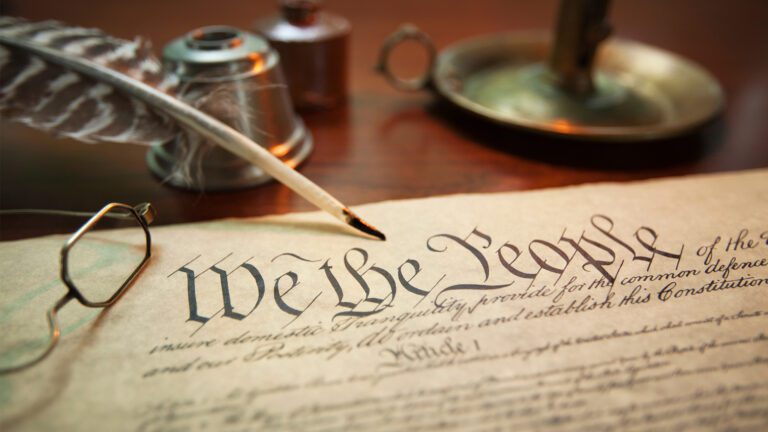
As America marks 250 years, lawyers tend to look back to Philadelphia — the Declaration, the Constitution, the men in the powdered wigs. But the meaning of the founding was never settled on parchment. It gets tested in courthouses, in criminal trials, in traffic stops, in the plain advice a lawyer gives a worried client across a desk. And more than once, that testing has happened right here. Some of the rights every American carries today were won in cases that bear Kentucky’s name.
Take Batson v. Kentucky. For generations, prosecutors — especially across the South — had a quiet trick. When a Black man stood trial, they would use their peremptory strikes to remove every Black juror, one by one, until the defendant faced an all-white jury chosen to convict. The courts looked the other way for decades. Then a Louisville case put the question squarely before the Supreme Court, and in 1986 the Court said no: striking jurors because of their race violates the Equal Protection Clause. Today, when a defense lawyer anywhere in the country stands up and says “Your Honor, that’s a Batson violation,” they are reaching for a Kentucky case. The rule that protects jurors and defendants alike — in Texas, in California, everywhere — carries our Commonwealth’s name. Kentucky didn’t lag behind on equal justice. Kentucky is where the line got drawn for the whole nation.
Then there’s Padilla v. Kentucky. José Padilla had lived here lawfully for decades and served this country as a soldier in Vietnam. When he pleaded guilty in a Kentucky court, his own lawyer told him not to worry about being deported. That was wrong, and it nearly cost him the home he had known for 40 years. In 2010 the Supreme Court held that the Sixth Amendment means what it says: your lawyer has to tell you real substantive stakes before you sign away your rights. A guilty plea only counts when it’s made with the effective assistance of counsel. The principle is simple and old — no one is above the law, and due process gives you a fair shake, and a fair trial. That is procedural due process, and it is a guiding light the world over.
Two and a half centuries on, these cases say something I believe about this place. The founders set out to form a more perfect Union — perfect being the work, not the starting point — and that work isn’t finished. The Constitution doesn’t keep itself. It takes lawyers, judges, juries, and ordinary citizens to make its promises real. Kentucky has been doing that work, and doing it for everyone. We’re not at the back of that line. More than once, we’ve been at the front.
Any content, resident submissions, guest columns, advertisements, and advertorials are not necessarily endorsed by or represent the views of Best Version Media LLC (BVM) or any municipality, homeowners associations, businesses, or organizations that this publication serves. BVM is not responsible for the reliability, suitability, or timeliness of any content submitted, inclusive of materials generated or composed through artificial intelligence (AI). All content submitted is done so at the sole discretion of the submitting party.