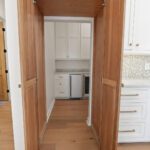
When a homeowner or builder transitions from choosing “boxes out of a catalog” to hiring a local millwork expert, they aren’t just buying cabinets. They are commissioning custom architectural elements. While mass-produced cabinets rely on standard increments (usually 3-inch jumps) and filler strips to mask gaps, a true millwork house views cabinetry as a seamless extension of the structure.
This article pulls back the curtain on the engineering, collaboration, and regional expertise required when partnering with a local millwork expert for high-end cabinet fabrication.
1. The Anatomy of Millwork Construction vs. Production Cabinets
The primary differentiator between a factory-built cabinet and a local millwork product lies in the core engineering and raw material selection. Mass-market cabinets often prioritize shipping weight and material yield; millwork experts prioritize structural integrity and environmental longevity.
|
Feature |
Mass-Produced Stock Cabinets |
Local Custom Millwork |
|
Sizing & Fitting |
Standard 3″ increments; relies heavily on filler strips. |
Sized down to the 1/16th of an inch; built to match specific wall contours. |
|
Case Construction |
1/2″ particleboard or thin MDF panels with stapled backing. |
3/4″ furniture-grade plywood or high-density core panels, doweled or pocket-screwed. |
|
Sourcing Control |
Commodity timber from global supply chains; variable moisture baseline. |
Hand-selected, locally acclimated hardwoods (e.g., local walnut, rift-sawn white oak). |
|
Finishing Process |
Fast-curing, UV-baked line finishes optimized for speed. |
Multi-step catalyzed conversion varnishes or hand-wiped oils applied in a dust-controlled environment. |
2. The Four Pillars of the Millwork Process
Building cabinets through a local millwork house is a highly collaborative, cyclical process. It bridges the gap between architectural concept and physical installation.
Phase 1: Precision Field Scribing and Digital Laser Templating
No wall is perfectly plumb, and no floor is completely level. A local millwork expert doesn’t rely on architectural blueprints alone; they conduct detailed on-site laser measurements.
They account for the subtle bows in your drywall and irregularities in your subfloor. This allows them to build the cabinet slightly oversized at the edges so the installer can “scribe” (shave down) the wood on-site, ensuring a flush fit against the wall without ugly gaps or trim overlays.
Phase 2: Material Sourcing and Climate Conditioning
Wood is a hygroscopic material—it constantly absorbs and releases moisture, causing it to expand and contract. Global manufacturers build cabinets in one climate zone, ship them in a dark container across oceans, and expect them to perform perfectly in your home.
A local millworker sources lumber that has already been dried and conditioned to your regional relative humidity (RH) baseline. For example, if you live in a high-humidity coastal region or an incredibly dry mountain climate, the local artisan adjusts their joinery tolerances and grain selections specifically to counteract that local movement.
Phase 3: Structural Bench Joinery
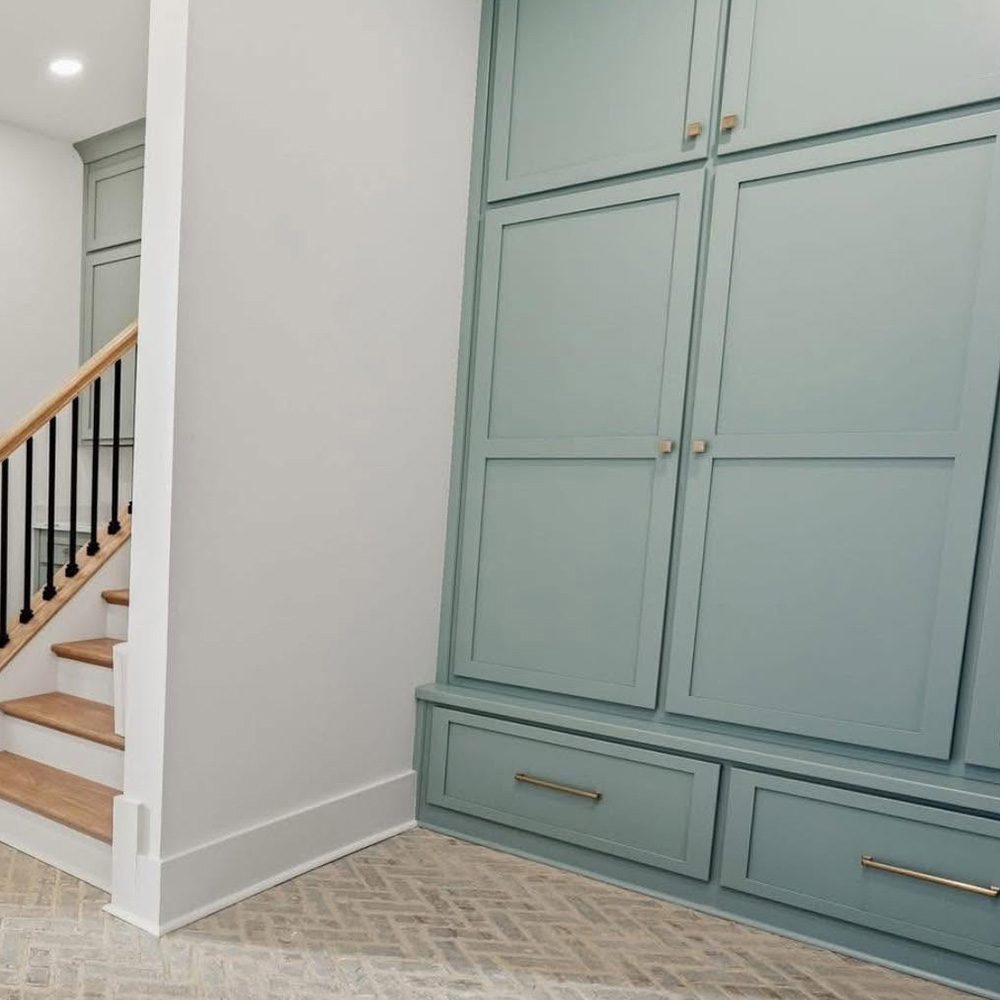
In a local shop, cabinets are built using robust box construction techniques. Instead of relying on glue and plastic corner brackets, millwork experts use deep dado joints (grooves cut into a board to receive the edge of another), blind mortise-and-tenon connections, or heavy-duty doweling.
Back panels are typically a solid 1/2-inch or 3/4-inch thick, allowing the cabinet to be securely anchored directly to wall studs at any point, rather than relying on a flimsy hanging strip.
Phase 4: Seamless Integrated Installation
The best cabinet box is only as good as its installation. Local millwork houses often employ their own dedicated installers rather than third-party subcontractors. These craftspeople understand how the shop floor builds the units. They handle complex integrations—such as concealing structural columns within deep pantry towers, flushing out integrated appliance panels, or scribing continuous crown molding directly into uneven ceilings.
3. Designing for Micro-Functionality
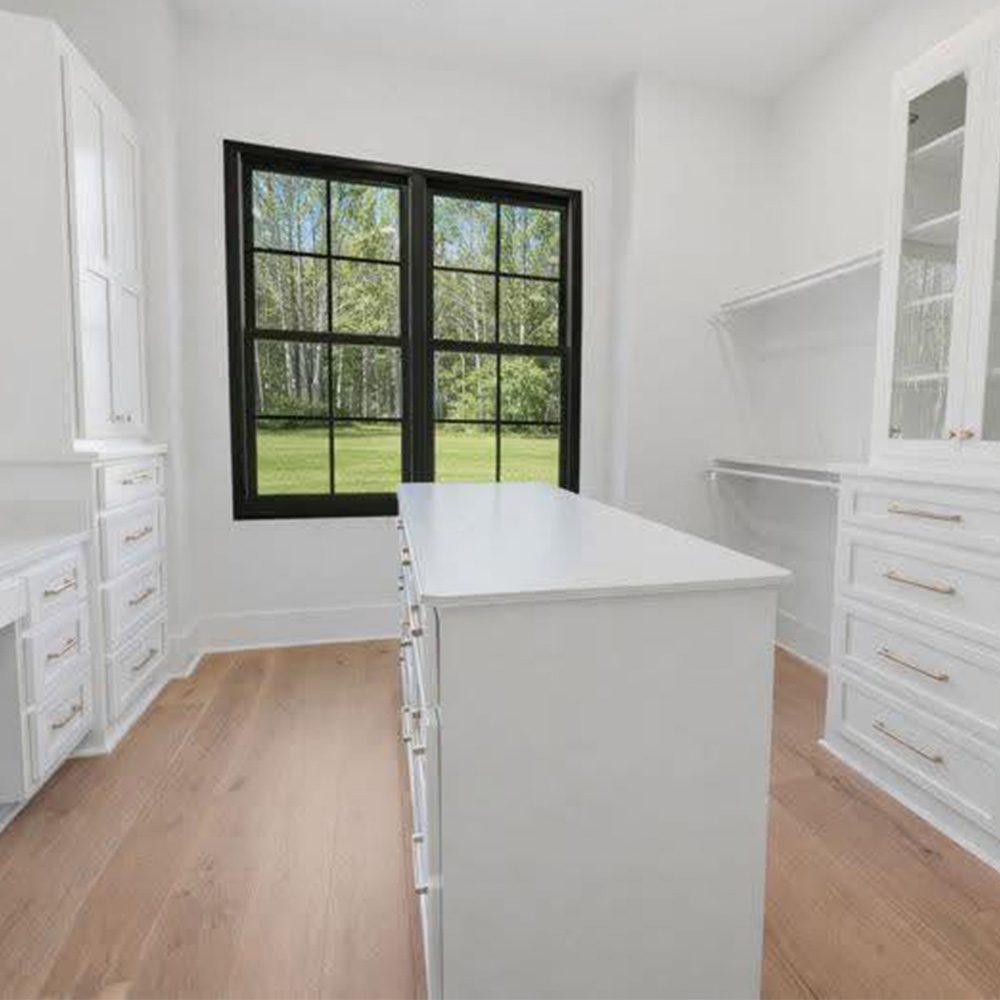
Working with a local expert unlocks tailored engineering options that stock lines can’t replicate. Because they build from scratch, you can collaborate on custom internal components:
- Integrated Appliance Concealment: Engineering custom panels that match the exact grain flow of surrounding cabinet doors, ensuring refrigerators and dishwashers disappear completely.
- Heavy-Load Engineering: Specifying heavy-duty drawer slides (rated for 100+ lbs) and reinforced bases for deep pull-out pantries or professional-grade cookware storage.
- Architectural Cohesion: Machining custom profiles for base moldings, door casings, and valances within the same shop, matching the cabinetry to the historic or architectural details of the rest of the building.
The Expert Takeaway: Choosing local millwork is an investment in architectural integration. By choosing a partner who understands the local climate, sources premium lumber, and templates down to the millimeter, you eliminate the visual clutter of filler strips and end up with heirloom-quality cabinetry that moves seamlessly with your home.
Any content, resident submissions, guest columns, advertisements, and advertorials are not necessarily endorsed by or represent the views of Best Version Media LLC (BVM) or any municipality, homeowners associations, businesses, or organizations that this publication serves. BVM is not responsible for the reliability, suitability, or timeliness of any content submitted, inclusive of materials generated or composed through artificial intelligence (AI). All content submitted is done so at the sole discretion of the submitting party.