Everyone can use universal design. It doesn’t matter if you are young or old. You could be short or tall, healthy or ill. You might have a disability. Or you may be a competitive athlete. Because of universal design, people who are very different can all enjoy the same home, and that home will still be a great fit for all – even if needs change in the future.
Universal design is defined as the design of products and environments to be usable by all people, to the greatest extent possible, without the need for adaptation or specialized design. Universal design can be incorporated into new home construction, and it is most often related to aging-in-place remodeling.
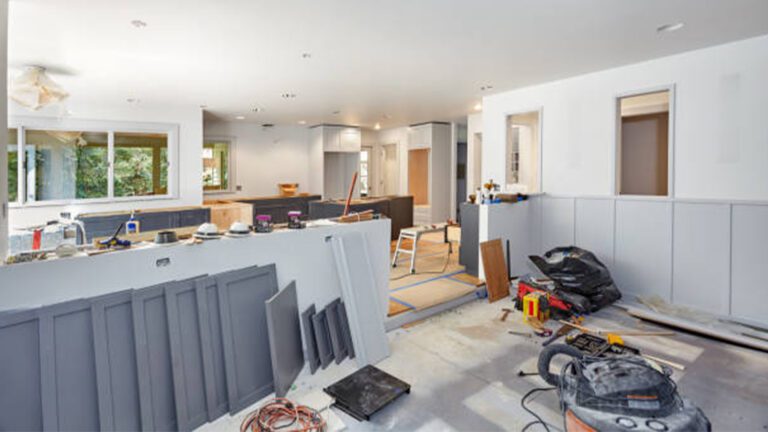
Even if everyone in your family is healthy and able bodied, you may want to give some thought to making universal design improvements. Why? The unexpected can happen at any time. A young, very healthy member of my household recently got into an accident that impacts mobility. We have two bathrooms and both of them have a “shower over tub” configuration. With the new injury, this young, healthy family member cannot get in and out of a shower, by stepping over the bathtub wall. Period. It could happen to any of us, at any time. The solution is to tear out the bathtub and create a stall shower only. It’s not a huge project, but it would have been much nicer to have it already in place and functional, rather than dealing with it at an already challenging time.
Here are some of the more common universal design features that are also incorporated into aging-in-place remodels:
No-step entry. No one needs to use stairs to get into a universal home or into the home’s main rooms.
One-story living. Places to eat, use the bathroom and sleep are all located on one level, which is barrier-free.
Wide doorways. Doorways that are 32-36 inches wide let wheelchairs pass through. They also make it easy to move large things in and out of the house.
Wide hallways. Hallways should be 36-42 inches wide. That way, everyone and everything moves more easily from room to room.
Extra floor space. Everyone feel less cramped and people in wheelchairs have more space to turn.
Some universal design features simply make sense for everyday living. Once you have them, you may wonder how you ever lived without them. For example:
- Floors & bathtubs with non-slip surfaces help everyone stay on their feet.
- The same goes for handrails on steps and grab bars in bathrooms.
- Thresholds that are flush with the floor make it easy for a wheelchair to get through a doorway. They also keep others from tripping.
- Good lighting helps people with poor vision, and it helps everyone else see better, too.
- Lever door handles & rocker light switches are great for people with poor hand strength. Most other people like them, too. Try using these devices when your hands are full and you’ll quickly experience the benefits.
Every home is unique. Please feel free to reach out to me at 925-964-5010 or via email at Lisa.Hopkins@Compass.com with questions or for a custom analysis. Even if you’re not planning to move, I’m happy to help by providing you with relevant data, enabling you to make a well informed decision. It’s never too early to start planning for success. In addition to having 35 years of experience as a Realtor®, I’ve also earned the designations of Certified Senior Advisor® and Seniors Real Estate Specialist®, elevating the services that I can provide to my mature clients.
Any content, resident submissions, guest columns, advertisements, and advertorials are not necessarily endorsed by or represent the views of Best Version Media LLC (BVM) or any municipality, homeowners associations, businesses, or organizations that this publication serves. BVM is not responsible for the reliability, suitability, or timeliness of any content submitted, inclusive of materials generated or composed through artificial intelligence (AI). All content submitted is done so at the sole discretion of the submitting party.