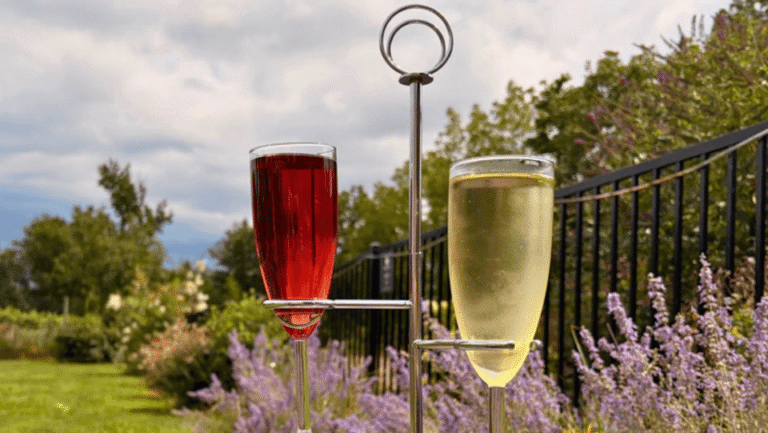
Maturing wine in oak barrels is essentially practiced in all the major wine producing areas in the world. Wine barrels are produced primarily from French, Hungarian, and American oak. The process of making barrels for the maturation of wine involves open air drying of the staves produced from the oak for 18-36 months followed by binding the staves together and toasting the wood before the barrel heads are installed. A mature oak tree will produce only two barrels, hence oak barrels tend to be pricy, starting at about $1000 per barrel.
Oak barrels are not only substantially more expensive than stainless steel tanks but also require more aggressive sanitation due to having a porous surface and very small opening to access the inside, a two-inch hole sealed with a silicone bang. We often use steam, ozone, and other chemical sanitizers to prevent spoilage microorganisms from growing inside the barrel. It takes a full day to sanitize, clean, and refill 6-8 barrels.
So, with all these difficulties and expenses, why do we bother with oak barrels? Most people attending my tour point to the oak flavor when I ask this question. The toasting of the oak as well as the interaction of the wood with wine create chemical reactions that convert lignin, the structural component of wood, to vanillin and other compounds that give wine typical oak aromas such as caramel, toasted coconut, and cloves. Oak flavoring is a double-edged sword, a little enhances the aroma and complexity, too much though, will overpower the aromas originating from the grapes, that give each wine its uniqueness.
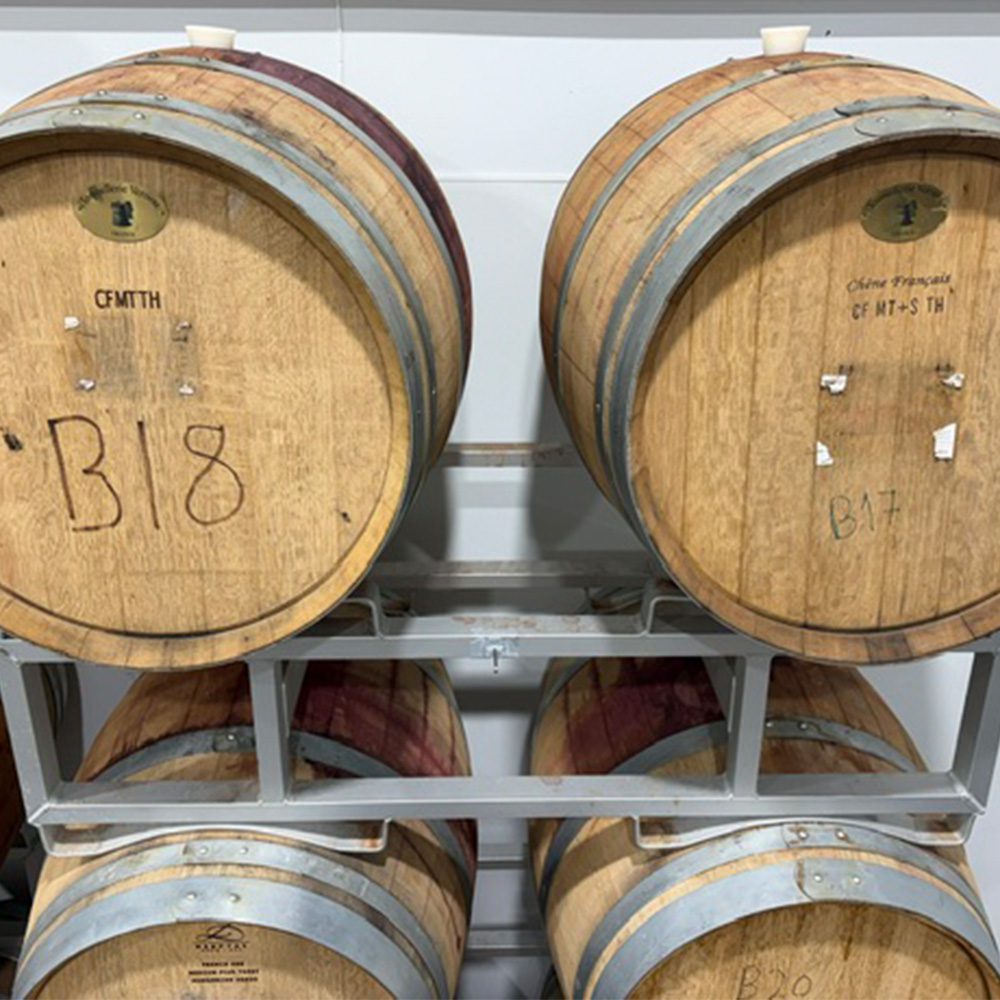
More important than the oak flavoring, however, is the partial permeability of oak barrels. Over a typical maturation period of 8-12 months, wine stored in a barrel will lose about 3-5% of its water and alcohol content, resulting in increased concentration of flavor compound and enhanced aromas and flavor. Typically, we will top off barrels with wine every other month to make up for the lost volume and prevent the development of empty head space leading to excessive oxidation. Having said that, the penetration of small amounts of oxygen through tiny gaps between the staves play an important role in the maturation of red wine. Red wines are rich in tannins and anthocyanins that give them their texture and color, respectively. Oxygen accelerates the rate the tannins and anthocyanins combine to form larger molecules (polymers). This process leads to the softening of the tannins and to a decrease in their bitterness resulting in smoother, more drinkable wine. At the same time, it stabilizes the anthocyanins imparting more durable and deeper color to the wine.
In addition to the essential role of oak barrels in the maturation of a quality red wine, they provide the perfect backdrop to enjoying dinner and a glass of wine. In fact, our barrel room is one of our guests’ favorite spots.
Any content, resident submissions, guest columns, advertisements, and advertorials are not necessarily endorsed by or represent the views of Best Version Media LLC (BVM) or any municipality, homeowners associations, businesses, or organizations that this publication serves. BVM is not responsible for the reliability, suitability, or timeliness of any content submitted, inclusive of materials generated or composed through artificial intelligence (AI). All content submitted is done so at the sole discretion of the submitting party.