You’ve probably seen the headlines lately. Whether it’s on the nightly news or scrolling through your social feed, the word “PFAS” is popping up everywhere. It sounds like something out of a sci-fi movie, but for homeowners here in Maryland it is a very real, very modern problem.
What Exactly Are PFAS…. and Why Are They “Forever”?
PFAS is short for per- and polyfluoroalkyl substances. That’s a mouthful, which is why everyone just calls them “forever chemicals.” They earned that nickname for a scary reason—they don’t break down. Not in the environment, and not in your body.
These man-made chemicals have been used since the 1940s to make things resistant to heat, water, and stains. Think about your non-stick pans, your waterproof jackets, stain-resistant fabrics, food packaging, and even the foam used to put out fires at airports. Because they are designed to be indestructible, PFAS can accumulate in groundwater, wells, rivers, and even public water supplies over time.
When you drink water contaminated with these chemicals, they don’t just pass through you. They bioaccumulate. That means they stay in your blood, liver, and kidneys for years.
“Studies reviewed by the EPA have linked long-term exposure to certain PFAS compounds with increased risks of health effects including immune system impacts, elevated cholesterol, thyroid and hormone disruption, developmental effects in children, reproductive concerns, and certain cancers.” (https://www.epa.gov/pfas/our-current-understanding-human-health-and-environmental-risks-pfas)
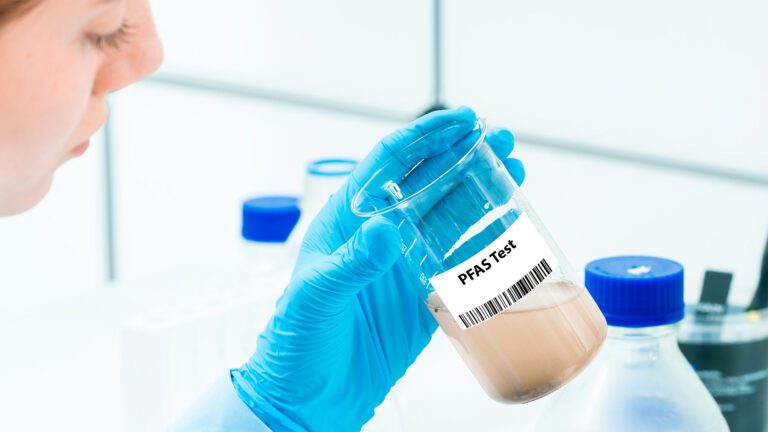
One of the biggest challenges with PFAS is that they are colorless, odorless, and tasteless, making them impossible to detect without proper water testing. For homeowners on well water, testing is often the only way to know whether PFAS contamination is present.
Why Your Current Filter Is Probably Failing You
We see it all the time. A homeowner buys a standard pitcher filter or relies on the little red light on their refrigerator door. You think you’re protected because the water tastes “cleaner.” But here is the hard truth: Most basic carbon filters are not designed to stop PFAS.
Standard filters are great at making water taste better by removing chlorine. They might even help with basic water hardness issues for a week or two. But PFAS molecules are tiny and stubborn. They slip right through basic charcoal setups. If you are relying on a grocery-store pitcher to protect your family from “forever chemicals,” you are essentially bringing a knife to a tank fight.
Furthermore, Maryland homeowners often deal with a “cocktail” of contaminants. It’s rarely just one thing. While you’re worried about PFAS, you might also have nitrates in water from local farm runoff or radium in water that naturally occurs in our local rock formations. A basic filter simply doesn’t have the “muscle” to handle these complex threats.
The Hidden Threats: Radium and Nitrates
While PFAS is the “hot topic” right now, we can’t ignore the old-school villains of Maryland water. If you are on a private well in Maryland, you have additional concerns.
Radium in Water
Radium is a radioactive gas that can dissolve into groundwater. It’s odorless, tasteless, and colorless. You won’t know it’s there unless you look for it. Long-term exposure to radium in water can increase the risk of serious health issues. A standard filter won’t touch this. You need specialized ion exchange or high-end reverse osmosis systems to pull these radioactive elements out of your life.
Nitrates in Water
If you live near agricultural land, nitrates in water are a common concern. Nitrates come from fertilizers and septic systems. For adults, they are a nuisance, but for infants, they can be incredibly dangerous, leading to “blue baby syndrome.” Again, your fridge filter is not a shield against nitrates.
Water Hardness: More Than Just Spotted Dishes
You might think water hardness is just an annoyance that leaves white spots on your shower doors. But hard water actually works against your filtration. When your water is “hard” (full of calcium and magnesium), it creates scale buildup inside your pipes and your water treatment equipment.
If you try to install a high-end PFAS filter without addressing your water hardness first, that expensive filter will clog up and fail way before its time.
Professional Grade Protection
So, if the pitcher doesn’t work, what does? To truly beat PFAS, radium, and nitrates, you need a multi-stage approach. Fortunately, advanced water treatment technologies such as activated carbon filtration and reverse osmosis systems can significantly reduce PFAS levels in drinking water. Professional-grade systems are engineered to handle the specific chemistry of Maryland’s water. Don’t guess; get your water tested to know exactly what you are dealing with.
High-Efficiency Reverse Osmosis (RO)
This is the gold standard. It forces water through a semipermeable membrane that catches almost everything, including those tiny PFAS molecules that other filters miss. Reverse osmosis systems are capable of removing a wide range of contaminants, including PFAS, nitrates, heavy metals, and dissolved solids, making them one of the most effective treatment options available.
Specialized Activated Carbon
Not the stuff in your pitcher, but larger tanks of high-grade catalytic carbon that have the “contact time” necessary to grab chemicals. These systems are particularly effective at reducing many PFAS compounds, chlorine, pesticides, herbicides, and other organic contaminants while preserving beneficial minerals naturally found in water.
Whole-Home Filtration
Why only filter the kitchen sink? You absorb chemicals through your skin in the shower and breathe them in through steam. Every drop in your house can be pure. A properly designed whole-home system treats water at the point it enters your home, helping protect your family, plumbing fixtures, appliances, and water-using equipment throughout the entire house.
If you’re concerned about the quality of your water, professional testing and treatment can help protect your family and provide peace of mind. You deserve water that is as pure as it looks. Stop settling for “good enough” filtration that misses the most dangerous chemicals. Contact us now to schedule your consultation and let’s get those “forever chemicals” out of your home forever.
Any content, resident submissions, guest columns, advertisements, and advertorials are not necessarily endorsed by or represent the views of Best Version Media LLC (BVM) or any municipality, homeowners associations, businesses, or organizations that this publication serves. BVM is not responsible for the reliability, suitability, or timeliness of any content submitted, inclusive of materials generated or composed through artificial intelligence (AI). All content submitted is done so at the sole discretion of the submitting party.