Every few decades, technology arrives promising to revolutionize entertainment. Radio was supposed to kill live performance. Television was supposed to empty theaters. Streaming was supposed to end concerts. And now artificial intelligence has entered the conversation with the same prediction: that machines may eventually replace artists.
But the truth is becoming clearer by the day — the more artificial the world becomes, the more audiences crave what is unmistakably human.
Recent neuroscience research from the University of Zurich found that live music activates the emotional centers of the brain more powerfully than recorded music. Audiences listening to live performances experienced stronger emotional synchronization and deeper neurological connection with performers than those listening to recordings.
Why? Because live performance is not simply about technical perfection. It is about risk, presence, vulnerability, energy exchange, and the unrepeatable magic of a moment shared between human beings.
Artificial intelligence can replicate patterns. It can imitate styles. It can even generate songs that sound emotionally convincing. But what it cannot replicate is lived experience.
AI has never fallen in love.
It has never experienced heartbreak.
It has never stood trembling before an audience of 80,000 people wondering if they could hold them in the palm of their hand.
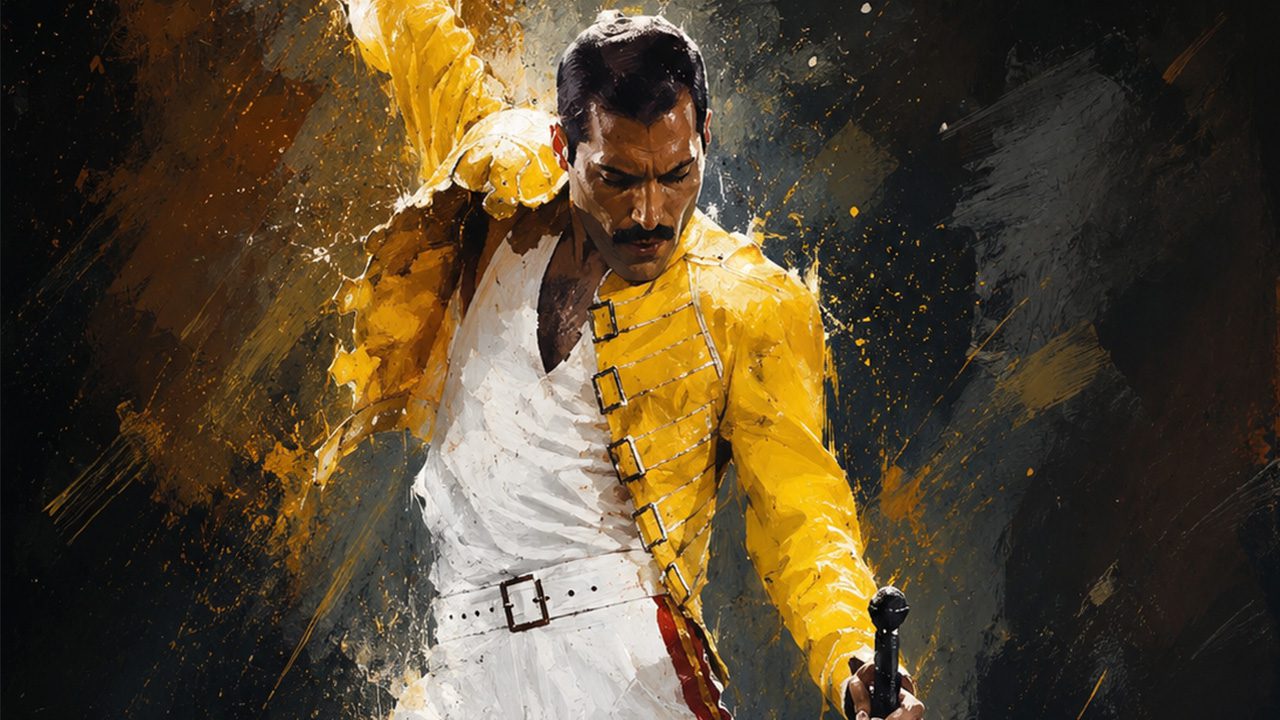
Which brings us to one of the greatest live performers in history: Freddie Mercury.
Submitted Photo
Freddie Mercury was not merely a singer. He was a force of nature. His genius with Queen came from a rare combination of vocal brilliance, theatrical instinct, emotional fearlessness, and absolute command of human connection. At Live Aid in 1985, he transformed Wembley Stadium into something spiritual. More than 70,000 people moved, clapped, and sang together as if connected by one heartbeat. Music historians still consider it one of the greatest live performances ever captured.
And here is the important distinction: Freddie Mercury’s power was not perfection. It was humanity magnified.
No algorithm can manufacture authentic magnetism because star quality is not data. It is presence. It is soul. It is the mysterious electricity certain artists create when their humanity meets an audience in real time.
Ironically, the rise of AI may actually increase the value of live performing arts. As audiences become flooded with synthetic music, digital replicas, and computer-generated content, authentic human artistry becomes more precious — not less.
People will always gather for concerts, theater, dance, comedy, and live storytelling for the same reason they always have: we are wired for connection.
And no machine, no matter how sophisticated, can replace the feeling of standing in a crowd while another human being moves your soul.
Any content, resident submissions, guest columns, advertisements, and advertorials are not necessarily endorsed by or represent the views of Best Version Media LLC (BVM) or any municipality, homeowners associations, businesses, or organizations that this publication serves. BVM is not responsible for the reliability, suitability, or timeliness of any content submitted, inclusive of materials generated or composed through artificial intelligence (AI). All content submitted is done so at the sole discretion of the submitting party.