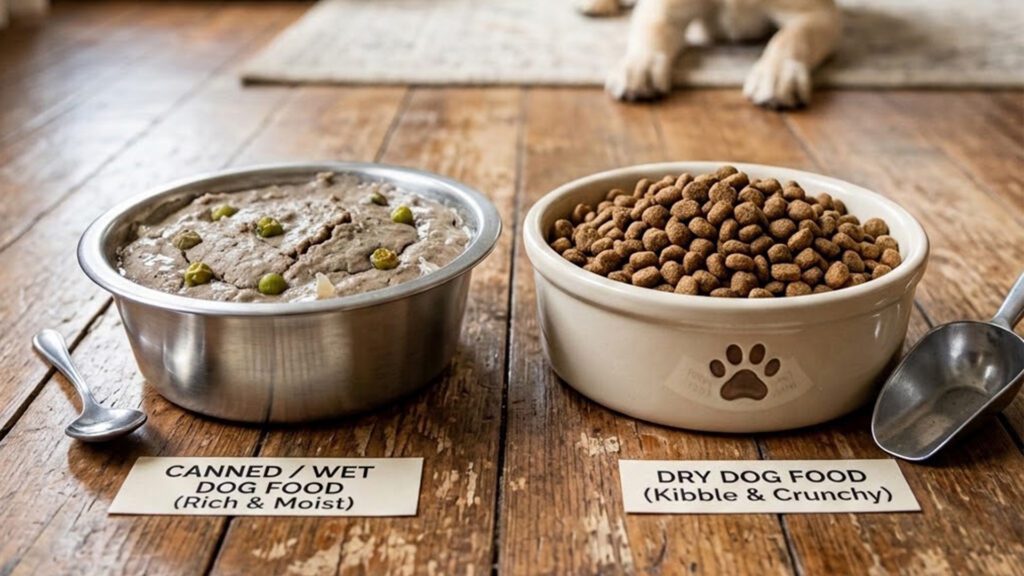
We see a lot of pet owners who have switched to canned food because they believe it automatically provides better nutrition. I completely understand where that comes from. For people, “fresh,” “moist,” and “not dry and crunchy” often feel healthier; most of us would rather eat a normal meal than a bowl of human kibble. However, pet foods do not work quite the same way. When you compare a good-quality dry food to the canned version of that same diet, the nutrition is usually very similar once you account for the water. The canned food is not usually some magical nutritional upgrade. In many cases, it is the same basic nutritional concept delivered in a softer, wetter, and much more expensive form. Canned food is not bad, and dry food is not magic. But for most healthy pets, canned food is usually more of a moisture, texture, and palatability upgrade than a true nutritional improvement.
When companies design these diets, the dry food is essentially made with most of the water removed while keeping the nutrients behind. That is why the bag looks so much more concentrated than the can. Canned foods often contain around 70% or more water, which means pet owners are paying a lot for moisture and packaging.
In one comparison we looked at, feeding the canned version of a similar diet cost about 570% more per 1,000 calories than feeding the dry version (roughly $300 more per month for a typical 50-pound dog eating high-quality food). Over the lifetime of a pet, that can add up to a very large amount of money spent mostly on water and the canning process.
There is also the dental side of the discussion. Regular kibble is not a substitute for brushing, dental diets, dental chews, or professional cleanings—I wish it were that easy. However, canned food has no real abrasive chewing benefit, and its softer, stickier texture can cause more plaque and tartar buildup. In some patients, especially those already genetically predisposed to dental issues, a canned-only diet may contribute to faster dental problems. Those dental cleanings and extractions can cost thousands of dollars and, in severe cases, may need to be repeated far more often than anyone would like.
That said, there are absolutely times when we recommend canned food. Older pets with changing taste buds may simply decide that their longtime favorite food is no longer acceptable, because apparently aging can turn even a Labrador into a food critic. In those cases, canned food can be a great way to improve appetite.
We also use canned diets for very specific medical reasons. Pets with kidney disease often benefit from more water intake to support hydration and kidney function. Cats and dogs with urinary crystals, bladder stones, or a history of urinary blockage may also benefit from the extra moisture, because more water through the system helps dilute the urine and reduce the chance of trouble brewing. For these patients, canned food can be an important medical tool.
The key is not to assume that every pet needs it. For a healthy dog or cat doing well on a complete and balanced dry food, switching to canned food is usually not providing better nutrition. It may just be providing more water, more cans in the recycling bin, and a much lighter wallet.
Any content, resident submissions, guest columns, advertisements, and advertorials are not necessarily endorsed by or represent the views of Best Version Media LLC (BVM) or any municipality, homeowners associations, businesses, or organizations that this publication serves. BVM is not responsible for the reliability, suitability, or timeliness of any content submitted, inclusive of materials generated or composed through artificial intelligence (AI). All content submitted is done so at the sole discretion of the submitting party.