Steve Marier, a Hugo native and the manager of Hugo Feed Mill and Hardware has been helping local residents for over 30 years with lawn and garden advice and solutions.
LAWN CARE:
How you decide to manage your lawn greatly depends on your lifestyle and your lawn goals. Decide what’s best for you and create a plan to have the lawn you desire. If your lawn is extremely stressed from the summer heat, it might not yet be the best time to start fertilizing, seeding, or killing weeds & crabgrass. Use your judgment, it may be better to leave it be for now and give your lawn time a little more time to recover before you start any projects.
Weed Control:
Early August to October 1st is the best time for weed control. Time of application will depend on what type of weeds need to be controlled. With the broadleaf weeds getting ready for winter it will take in the herbicide better, which gives you better control. Broadleafs like dandelion, plantain, and clover are best treated mid-August to mid-September. To control Creeping Charlie it is best treated between the end of August to the end of September while crabgrass, on the other hand, should be treated in early to mid-August. That will give us enough time to overseed our lawns.
Seeding:
August 15th to September 20th is the best time to seed new lawns, overseed, and patch bare spots. Take a good look at your lawn. Is there a crabgrass issue? Broadleaf issue? Is it patchy or are there large areas that need to be filled in? Answering these questions will help you decide when to seed and what to tackle first. August is a good time to take care of broadleaf and crabgrass issues. With proper timing that would allow you to seed this fall. From late summer to early fall, it’s easier for grass to get established since the nights are cooler and longer, and there isn’t much competition with annual grasses. For optimal results, do the above listed tasks before September 20th. It will give the grass enough time to grow this fall; then you can apply crabgrass preventer next spring. If you’re seeding a large area, consider renting our Hydro-seeder for optimal results with less effort. Prior to sodding or seeding, remember to apply our 10-10-20 as starter fertilizer.
Fertilizing:
If you prefer a low maintenance lawn (fertilizing once per year), late August is the perfect time. If you fertilize twice per year, the end of May to mid-June and late August to early September is the time to apply. Fall fertilizer should be applied at a rate of 1 pound of nitrogen per 1,000 square feet. Hugo Feed Mill’s brand, 25-0-15, is highly recommended, as it contains 50% slow-release nitrogen to over a longer feeding period. If you’d like to go the extra mile for a healthy lawn, contact us at the Hugo Feed Mill about having your soil tested to learn exactly how much fertilizer your lawn needs.
Core Aeration:
To lessen soil compaction and assist root zone access to moisture, mid-August to the end of September is the ideal time to aerate. Excess thatch (which looks like soft, dead grass) should be removed to support oxygenation of organisms (e.g., earthworms) who help breakdown the thatch. After aeration and along with your fall fertilizer, you may also apply Humic acid granular and gypsum if you have clay issues.
Mowing:
Grass should continue to be regularly mowed at 3-3 ½ inches tall. Until more moisture becomes available in the fall, this cutting height is best for your lawn.
GARDENING:
Maintaining:
During this time of the year, there isn’t too much happening. Continue to maintain the garden with regular watering, weeding, and harvesting. This will keep gardens producing through early autumn or later. Gardens need about 1” of water per week under normal conditions. During excessive heat, your garden will need more. If nature blesses us with a good rain that adds up to at least an inch, take a week off from watering.
Harvesting:
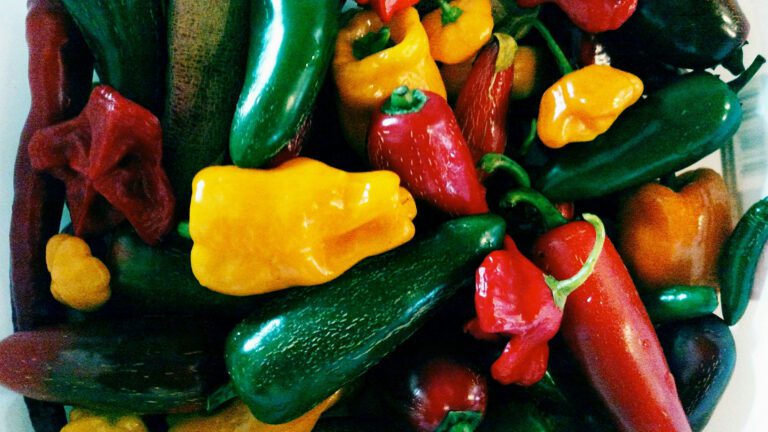
When I harvest peppers and tomatoes, I use a clipper as opposed to pulling on the fruit. This method is easier on the plant. Pick the vegetables as soon as they are ripe to encourage more produce. Remove any overripe produce, as this can attract wasps and picnic beetles to your garden. Be sure to consider donating excess produce to your local food shelf, neighbors, or learn ways to freeze, can, or dehydrate.
Journaling:
Right now, is a great time to revisit your gardening folder or journal. Make notes about what worked and what did not work as well as you had hoped. Perhaps your garden didn’t yield as much as you expected. Maybe there was a particular type of pepper or tomato that your family loved, make a note to plant more next year. Trouble shooting now will pave the way for improvements next season. It’s best to do so now, as the information is fresh in your mind.
As always, I and the rest of the crew at the Hugo Feed Mill are here to support you and answer any questions or concerns. We understand that maintaining your lawn and garden is as much an art as it is a science. We take the time to customize our recommendations based on your specific situation and goals.
Any content, resident submissions, guest columns, advertisements, and advertorials are not necessarily endorsed by or represent the views of Best Version Media LLC (BVM) or any municipality, homeowners associations, businesses, or organizations that this publication serves. BVM is not responsible for the reliability, suitability, or timeliness of any content submitted, inclusive of materials generated or composed through artificial intelligence (AI). All content submitted is done so at the sole discretion of the submitting party.