As we celebrate the United States’ 250th birthday I would like to share how we as a country has developed and promoted recycling practices throughout our history. As one of the world’s largest industrial economies, the nation has influenced how materials are collected, reused, and conserved, helping to shape global attitudes toward waste management and environmental responsibility.
Recycling in the United States dates to the colonial era when scarce resources encouraged the reuse of metals, paper, and textiles. During the nineteenth century, scrap collection became a common business practice, with individuals gathering discarded materials for resale and reuse. This early recycling activity laid the foundation for a more organized recycling industry.
A major turning point came during World War I and World War II. The federal government encouraged citizens to collect rubber, metal, paper, and other materials needed for military production. Nationwide campaigns promote conservation and recycling as patriotic duties, demonstrating how large-scale public participation could support national goals. Millions of Americans contributed recyclable materials, proving that coordinated recycling efforts could be highly effective. Another fitting reason to call them “the greatest generation.”
The environmental movement of the 1960s and 1970s further expanded recycling initiatives. Growing concerns about pollution, overflowing landfills, and resource depletion led to increased public awareness. The first Earth Day in 1970 inspired communities across the country to adopt recycling programs. Local governments began establishing curbside collection systems, making recycling more accessible to households and businesses.
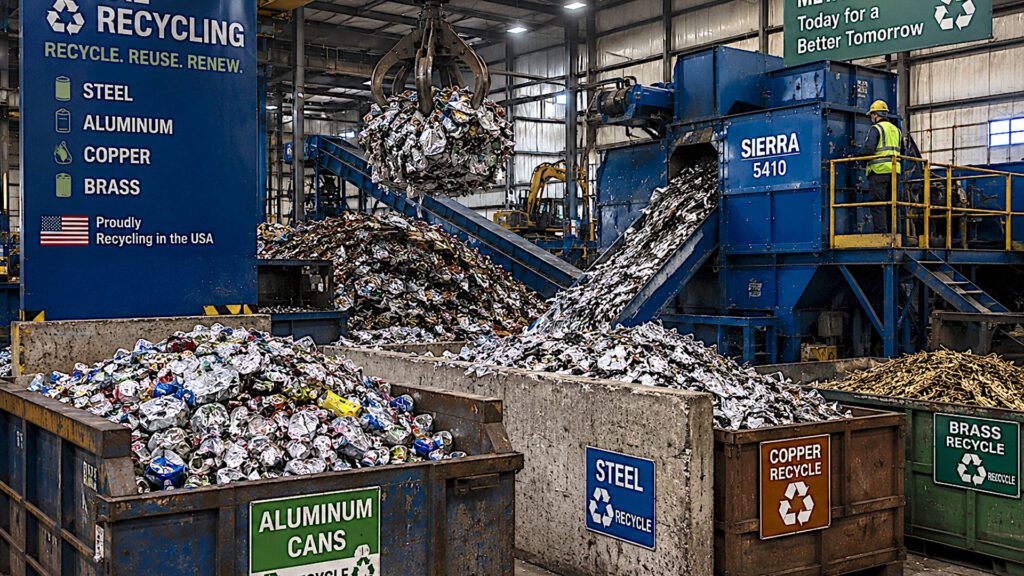
The United States also contributed through technological innovation. American researchers and companies developed advanced sorting equipment, processing methods, and manufacturing techniques that improved the efficiency of recycling operations. These innovations helped transform recycling from a small-scale activity into a major industry capable of handling millions of tons of material each year.
In addition, U.S. legislation and environmental policies have encouraged responsible waste management and resource conservation. Federal, state, and local governments have implemented programs that promote recycling, reduce landfill use, and support the market for recycled products.
Today, recycling remains an important part of American environmental policy and public life. Although challenges such as contamination and fluctuating market demand persist, the United States continues to invest in new technologies like artificial intelligence and sustainability initiatives. Its historic contributions—from wartime conservation drives to modern recycling infrastructure—have helped establish recycling as a vital tool for protecting natural resources and reducing environmental impact around the world.
Recycling Pays – Environmentally, Socially and Financially!
Any content, resident submissions, guest columns, advertisements, and advertorials are not necessarily endorsed by or represent the views of Best Version Media LLC (BVM) or any municipality, homeowners associations, businesses, or organizations that this publication serves. BVM is not responsible for the reliability, suitability, or timeliness of any content submitted, inclusive of materials generated or composed through artificial intelligence (AI). All content submitted is done so at the sole discretion of the submitting party.