
Most patients are familiar with routine blood tests ordered by their physician. Blood work provides valuable information about inflammation, infection, cholesterol levels, diabetes risk, and overall health. In dentistry, salivary testing is emerging as a similarly powerful diagnostic tool that helps evaluate a patient’s oral health and its connection to systemic wellness.
Saliva contains a wealth of biological information. In a quick in-office test, we can identify and measure specific microorganisms associated with gum disease, tooth decay, and oral inflammation. Recent research has shown that salivary diagnostics can identify harmful bacterial species linked to periodontal disease, including the “red complex” bacteria that is strongly associated with severe gum disease and tissue destruction. Salivary testing can also help clinicians monitor treatment effectiveness and track changes in a patient’s oral microbiome over time.
(Submitted by Dr. Anna Malone)
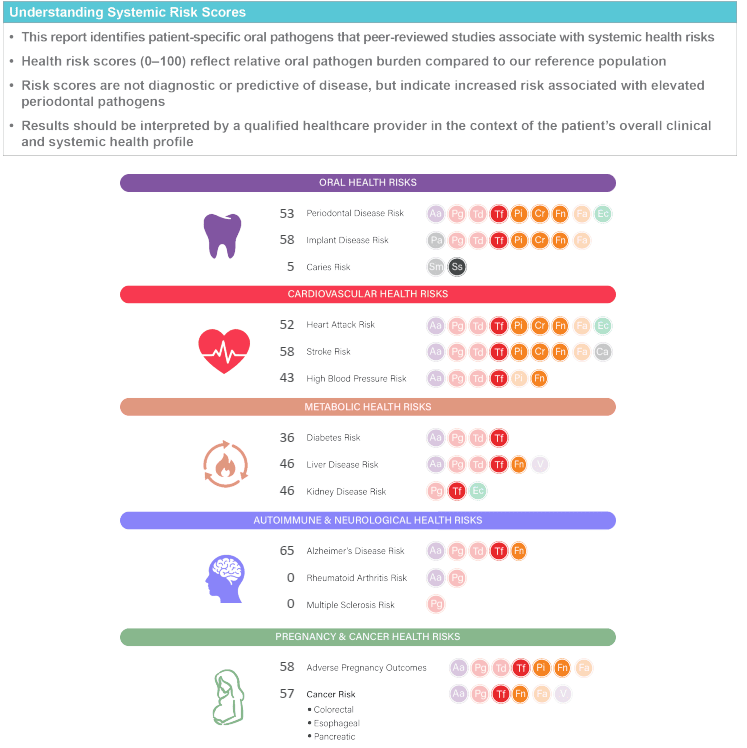
The importance of this information extends beyond the mouth. Periodontal disease has been associated with systemic conditions such as diabetes, cardiovascular disease, Alzheimer’s disease, adverse pregnancy outcomes, prostate and breast cancers, and other inflammatory disorders. Because the oral cavity is closely connected to the rest of the body, identifying and managing oral inflammation may play an important role in supporting overall health.The chart shows all of the bacterial pathogens that the salivary testing we use tests for, plus their associated systemic risks.
Like blood work, salivary testing provides objective data that helps dentists move beyond visual examinations and reported symptoms. By measuring specific biological markers, clinicians can better assess disease risk, tailor treatment plans to individual patients, and monitor how well therapies are working over time.
As healthcare increasingly emphasizes prevention and early intervention, salivary diagnostics are becoming an important tool in modern dentistry. These tests offer valuable insights into a patient’s oral environment, allowing potential issues to be identified earlier and supporting a more proactive approach to both oral and overall health.
Any content, resident submissions, guest columns, advertisements, and advertorials are not necessarily endorsed by or represent the views of Best Version Media LLC (BVM) or any municipality, homeowners associations, businesses, or organizations that this publication serves. BVM is not responsible for the reliability, suitability, or timeliness of any content submitted, inclusive of materials generated or composed through artificial intelligence (AI). All content submitted is done so at the sole discretion of the submitting party.