Why is a roofing and exteriors contractor writing an article about electrical work? Or is this about that 80’s movie about a robot who becomes “alive”? “Johnny 5 is alive!” (yeah, that dates me for sure). Wait, is this some amazing tie in to AI and its impacts on the roofing industry? How very topical. Yes, let’s see about that! Wait, what? This is about roofing ventilation? Whaaaaaat?
Ok, no one understands attic ventilation. Well, ok, only like six of us do. And only like three of us are actually contractors. And only one of us actually talks to homeowners. But I digress!
Attic ventilation makes or breaks your roof. A properly ventilated attic allows a shingle to last its full lifespan… 50 years! An improperly ventilated attic can cook the shingles and require replacement in as few as 12 years. No one thinks they care about their roof lasting 50 years… until they have to replace the roof a second time because they chose the lowest bid.
All that being said, what in the world does attic ventilation have to do with short circuits? Well, short circuit is an attic ventilation term! Let’s first start with proper attic ventilation. At its most basic level, attic ventilation requires equal parts intake and exhaust. If you have too much of either, bad things happen (like potentially a rain forest in your attic bad). Best case, you just cook the shingles and any equipment in your attic (ever wonder why that AC unit only lasted 10 years?).
Why are we even talking about attic ventilation, Michael? Ridge vent is the greatest solution of all time! Just put that on there and we don’t need to think anymore! Ah, I see you have talked to that “roofer” who knocked on your door and oh so nicely informed you that your roof has to be replaced! Ridge vent is fantastic, for roofs that have enough ridge.
Ok, but my roofer added ridge vent and kept my old vents too! So now we have ridge vent and so much more ventilation! We win! Alas…we get to learn what a short circuit is. How exciting!
Air takes the path of least resistance (the same way water does). In order to properly ventilate the attic, you need intake at the bottom of the roof and exhaust at the top. And, as previously mentioned, they should be equal. Think of a straw. One hole at the bottom, one at the top, both the same size. Perfect air flow! If you make either side bigger, do you get more in the straw? Nope! The design of straws have been the same since their invention in 1888. Imagine something so perfect that it has yet to be improved in 138 years!
Now, let’s cut a hole in the straw. Let’s cut that hole right next to the top of the straw. You can suck for the rest of your life and not finish your sweet tea! Remember, air takes the path of least resistance, and that means it will “suck” from the closest hole. Well, THAT is a short circuit.
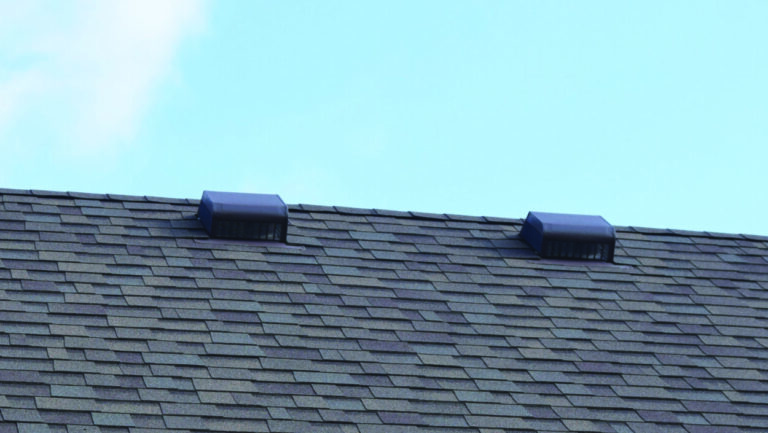
And every “extra” vent below your ridge vent is short circuiting your attic ventilation. Much like in our straw analogy, your ridge vent could be the world’s greatest exhaust point, pulling as hard as it can, and you will neverventilate your attic below those “extra” vents because those “extra” vents have now become your intake. So the top two feet of your attic are amazingly ventilated and those shingles will last forever! Unfortunately, the other 4000 square feet of roof will cook and need to be replaced within 15 years.
Well, my roofer has defeated you Michael! They added power vents! So I have my old vents AND power vents! Riiiiight, remember how air takes the path of least resistance? If you have one or more power vents combined with static vents (ie vents that are just holes),
then that tricky air does it again and short circuits the ventilation! The power vents pull air through those static vents and you are still only ventilating the top two feet of your attic/roof. In both of these scenarios, you were actually better off had your roofer left only the original (usually too little) ventilation. At least some air was cycling through the entire attic before!
The bottom line – roofing ain’t easy. Treating it like it is just a topping vs. a feat of engineering that, when done correctly, will last AT LEAST 50 years, is a huge disservice to yourself, especially when roofs are tens of thousands of dollars. You want the next roof to be your last? Oh, and the double super mega bonus if you are unlucky enough to have short circuited attic ventilation?
That “lifetime,” or “50 year,” or whatever manufacturer’s warranty you think you have is COMPLETELY VOID. It wouldn’t matter if the shingles crumbled to dust and it had absolutely nothing to do with the attic ventilation – improper attic ventilation is the ultimate “get out of jail free” card for the manufacturers. But good news… if you have a relatively new roof and the shingles haven’t started to degrade yet, you may be able to fix those ventilation issues and save both the warranty and your wallet!
Any content, resident submissions, guest columns, advertisements, and advertorials are not necessarily endorsed by or represent the views of Best Version Media LLC (BVM) or any municipality, homeowners associations, businesses, or organizations that this publication serves. BVM is not responsible for the reliability, suitability, or timeliness of any content submitted, inclusive of materials generated or composed through artificial intelligence (AI). All content submitted is done so at the sole discretion of the submitting party.