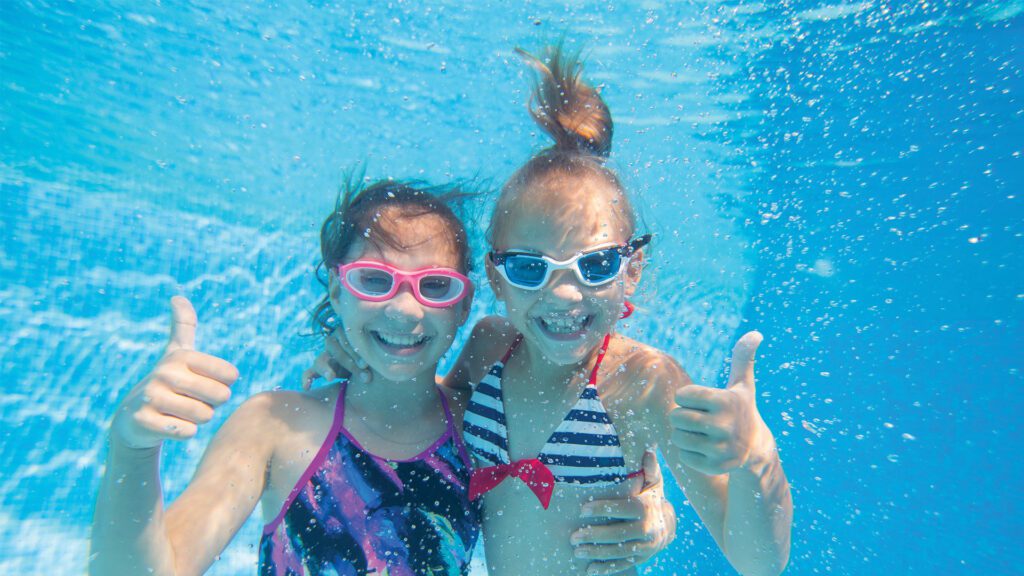
Summer in Wisconsin means water time — lakes, beaches, pools, and long sunny days. It’s one of the best parts of the season! It’s also the perfect time to take a quick moment to think about water safety for your family.
Many parents are surprised to learn that drowning is the leading cause of accidental death for children ages 1 to 4, and the second leading cause for kids ages 5 to 9. It can happen quickly — often in less than a minute — and in nearly 70 percent of cases, the child wasn’t expected to be in the water. While we often focus on kids, adults are also at risk in certain situations, so a few simple precautions can go a long way for everyone.
With more families enjoying time at home, backyard pools continue to be a popular way to cool off. They’re great, but they do come with added responsibility. If you have a pool at home, keep these basics in mind:
- Fence it in. For built-in pools, a four-sided fence (including a barrier between the house and pool) is the safest option. It protects not only your own children, but also neighbors and visiting friends.
- Empty small pools. Kiddie or inflatable pools should be drained when not in use. It only takes about six inches of water for a young child to drown.
Planning to spend time on a boat this summer? Don’t forget properly fitted life jackets. And remember — water wings and inflatables are toys, not safety devices. A few key reminders about life jackets (PFDs):
- Fit matters. A properly fitted PFD should be snug. If you lift your child by the shoulders of the vest, their chin and ears shouldn’t slip through.
- Test before you go. Try it out in the water first — especially for younger kids. Not all jackets keep a child’s face above water the same way.
- Use the right type. Some PFDs are designed for boating, others for water sports — make sure yours matches your activity.
- Supervision is still essential. A life jacket is not a substitute for watching your child.
Swimming lessons are another important layer of protection. Local programs through the rec department and area swim teams offer great options for all levels, from beginners to more competitive swimmers. But even strong swimmers need supervision — incidents can happen fast and often silently.
The most important safety tool is active, focused supervision. That means putting the phone down, staying within arm’s reach for younger kids, and keeping your attention on the water. If you’re with a group, consider designating a “water watcher” so someone is always responsible for keeping eyes on the swimmers.
It’s also worth knowing CPR. In an emergency, those first few minutes matter, and bystander CPR can significantly improve outcomes. Classes are widely available in the community if you’ve been meaning to learn or refresh your skills. Finally, a quick reminder: Alcohol increases the risk of both drowning and boating accidents, so be mindful when mixing the two.
Wisconsin summers are short — and meant to be enjoyed. With a little awareness and a few simple precautions, you can make the most of your time in and around the water while keeping your family safe. And don’t forget your sunscreen!
Any content, resident submissions, guest columns, advertisements, and advertorials are not necessarily endorsed by or represent the views of Best Version Media LLC (BVM) or any municipality, homeowners associations, businesses, or organizations that this publication serves. BVM is not responsible for the reliability, suitability, or timeliness of any content submitted, inclusive of materials generated or composed through artificial intelligence (AI). All content submitted is done so at the sole discretion of the submitting party.