Older homes have a certain kind of charm that is hard to recreate. Established neighborhoods, mature landscaping, real wood details, settled proportions, and the sense that a home has already lived a life all contribute to why people fall in love with them.
But when it comes time to remodel, older homes can also make contractors pause.
It can be frustrating to invite contractors to look at a home you love, only to feel the conversation stall or disappear. You may see the home’s potential clearly and already have a vision for how your family could live there better. However, from the homeowner side, a slow, vague, or missing response can feel confusing, especially when the project feels meaningful and worth pursuing.
That pause is not necessarily because the home is not worth improving. Often, it is because older homes ask more of the process. They require curiosity, experience, flexibility, and a willingness to solve problems that may not be visible at the first walkthrough.
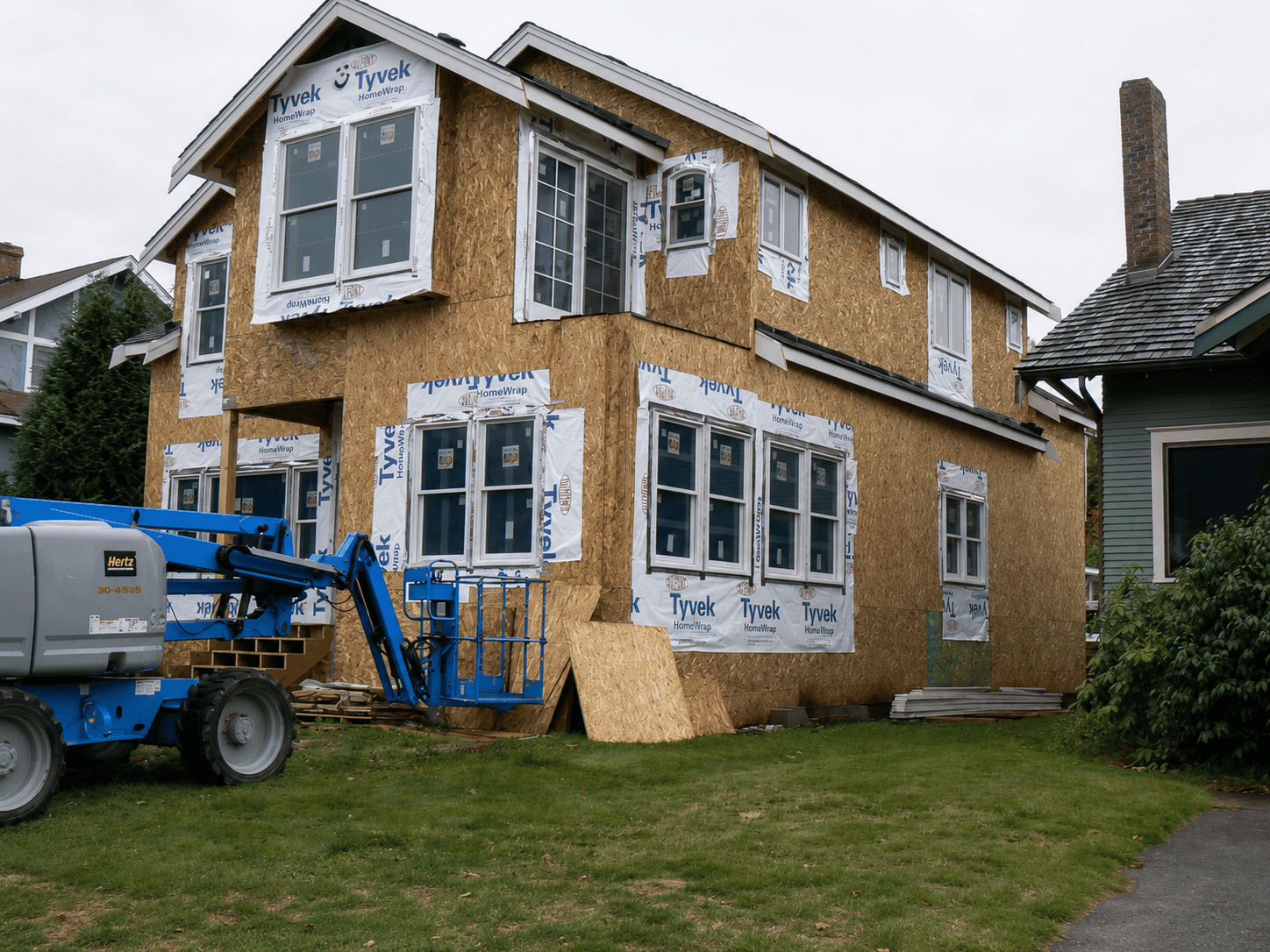
Credit: Evola Builds, LLC
In previous articles, we have talked about why developing the project first matters and why remodeling can cost more than homeowners expect. Older homes are where those two ideas become especially important.
In newer construction, many details are more predictable. Framing methods, electrical systems, plumbing locations, insulation, ventilation, and code requirements tend to follow more familiar patterns. In an older home, each layer may tell a different story. A previous owner may have remodeled one area. A past contractor may have solved a problem in a way that made sense at the time. Materials may have changed from room to room. What looks simple on the surface may become more complex once the walls are opened.
That complexity is one reason some contractors are hesitant to take on older-home remodels.
It is also one reason some projects seem to go quiet after an initial conversation. Sometimes what feels like ghosting is really a contractor realizing they cannot responsibly take the project further without a clearer scope, budget alignment, or discovery process. They may be concerned that the budget does not match the likely scope. They may not have the team, trade relationships, or project management structure needed for that level of work. Or they may simply prefer projects that are more straightforward and repeatable.
That does not mean anything is wrong with the house, the homeowner, or even the contractor. It may simply mean the project needs a different kind of approach.
This is why the right contractor fit matters so much. Older-home remodels tend to reveal decisions in layers. One choice affects another, and what begins as a simple update can quickly expand into questions about structure, systems, layout, finishes, code requirements, and budget.

Credit: Evola Builds, LLC
Without a clear process, the project can become reactive instead of intentional. Decisions start to drift, and both the homeowner and contractor can feel like they are constantly chasing the next problem instead of moving toward the original goal. That is where experience makes a difference. The right contractor is not just someone who can build. It is someone who has seen enough homes, conditions, and project challenges to organize the unknowns, communicate clearly, and keep the project moving in a direction that still serves the original goals. This is also why older-home remodels are a natural fit for the way we work at Evola Builds. We specialize in understanding what is already there, identifying what needs to change, and reimagining what the home can become. Modernizing an older home is not just about replacing finishes. It is about improving how the home functions, how it supports daily life, and how the new work connects respectfully with the existing structure.
Before construction begins, an older-home remodel often needs time for discovery, planning, scope definition, budgeting, and coordination. The more complex the home, the more important it is to slow down at the beginning. This allows the contractor, homeowner, designer, and trade partners to identify the major questions before the project is under construction and every decision becomes more expensive.
A well-developed project gives everyone a clearer path. It helps homeowners understand what is driving cost. It helps the contractor price the work more responsibly and reduce surprises.
Older homes are not easy, but they can be deeply rewarding. With the right process and the right team, they can be modernized in a way that preserves what people love while making the home work beautifully for the way they live now.
Any content, resident submissions, guest columns, advertisements, and advertorials are not necessarily endorsed by or represent the views of Best Version Media LLC (BVM) or any municipality, homeowners associations, businesses, or organizations that this publication serves. BVM is not responsible for the reliability, suitability, or timeliness of any content submitted, inclusive of materials generated or composed through artificial intelligence (AI). All content submitted is done so at the sole discretion of the submitting party.