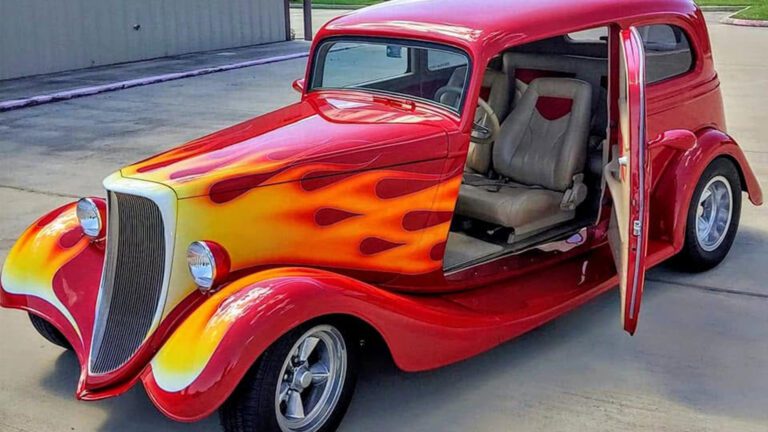
If you’ve lived in Southeast Texas for more than a week, you’ve probably figured out two things.
First, summer lasts about six months.
Second, the inside of a classic car can double as a slow cooker by mid-afternoon.
Every classic car owner has been there. You wash the car, polish the chrome, fire up that beautiful V8, and head out expecting the perfect Saturday drive. Twenty minutes later, you’re wondering if your jeans have permanently bonded to the vinyl seat.
That’s usually when someone says, “You ought to put air conditioning in that thing.”
And just as quickly, someone else replies, “Yeah… but I don’t want to ruin the car.”
After more than 30 years in the automotive industry, I’ve heard that conversation countless times.
The good news is that modern air conditioning doesn’t have to change the personality of your classic. When it’s engineered and installed correctly, the only thing you’ll really notice is that you’re enjoying your car a whole lot more.
One of the biggest misconceptions is that adding A/C will dramatically reduce horsepower. Yes, any belt-driven accessory uses a small amount of engine power—that’s simply physics. But today’s premium systems are far more efficient than the bulky factory units many enthusiasts remember. For most owners, giving up a few horsepower is an easy trade if it means arriving at dinner without looking like they just mowed the lawn in August.
Many classic car owners choose Vintage Air because it has earned a reputation as the industry’s leading climate control system for classic vehicles. But even the best system is only as good as the installation behind it.
The real difference isn’t the A/C system itself.
It’s the installation.
Every classic is unique. Brackets often need to be custom fabricated. Belt alignment must be precise. Wiring has to be integrated properly. The vents and controls should look like they belong—not like they were added over a weekend. A quality installation should feel as though the factory intended it to be there all along.
As an Approved Vintage Air Dealer and Installer, I follow the installation standards established by Vintage Air to ensure every system performs as designed while preserving the craftsmanship and character of each classic vehicle. That’s the difference between simply installing parts and engineering a solution.
Over the years, I’ve learned that the best upgrades aren’t always the ones that make a car faster. Sometimes they’re the ones that make you want to drive it more often.
Instead of checking the weather before grabbing the keys, you’re planning a Saturday morning cruise, a Cars & Coffee event, dinner with friends, or taking the grandkids out for ice cream. Those are the moments that make owning a classic so rewarding.
Classic cars are more than machines. They’re part of our family’s story. They connect generations, spark conversations, and create memories that last a lifetime.
A properly designed air conditioning system doesn’t change the soul of a classic.
It simply gives you more opportunities to enjoy it.
Because at the end of the day, a classic car wasn’t built to spend its life under a cover in the garage.
It was built to be driven.
About the Expert Contributor
Ronald “Hotrod Ronnie” Reihart has dedicated more than 30 years to the automotive industry. An Advanced Level ASE Master Technician with professional experience at both General Motors and Chrysler, he has owned and operated R/S Street Rods in Tomball for the past 18 years. As an Approved Vintage Air Dealer and Installer, his shop specializes in classic car restoration, custom fabrication, performance upgrades, and Vintage Air climate control systems. His philosophy is simple: every modification should enhance the driving experience while preserving the craftsmanship and character that make every classic unique.
Any content, resident submissions, guest columns, advertisements, and advertorials are not necessarily endorsed by or represent the views of Best Version Media LLC (BVM) or any municipality, homeowners associations, businesses, or organizations that this publication serves. BVM is not responsible for the reliability, suitability, or timeliness of any content submitted, inclusive of materials generated or composed through artificial intelligence (AI). All content submitted is done so at the sole discretion of the submitting party.