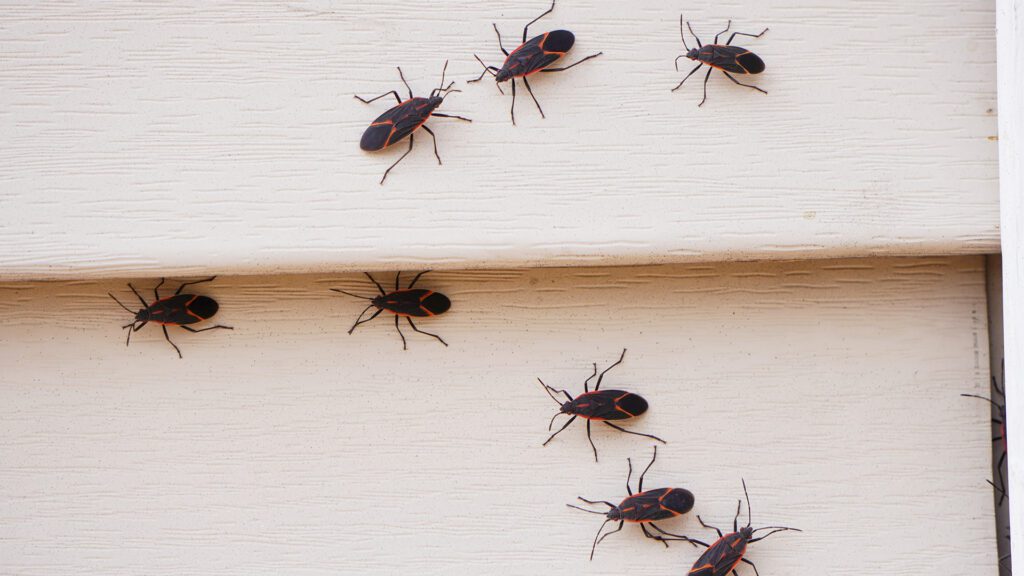
The fall invasion starts before winter
Boxelder bugs, brown marmorated stink bugs, multicolored Asian lady beetles, western conifer seed bugs and cluster flies are among the insects commonly found gathering on Michigan homes in late summer and fall. Warm, sunny exterior walls—especially on the south and west sides of a building—can attract large numbers before the insects work their way through gaps around windows, doors, soffits, vents and utility openings.
Most of these seasonal invaders are primarily a nuisance indoors. They are not moving in because a home is dirty, and many do not reproduce inside during winter. They are seeking dry, protected spaces such as attics and wall voids. Once established in those areas, they may reappear around windows, light fixtures and living spaces whenever indoor heat or a sunny winter day makes them active again.
Why timing matters
The best time to address fall-invading insects is before they cross the building envelope. After pests settle behind siding or inside a wall void, reaching them becomes more difficult and disruptive. A late-summer or early-fall exterior inspection can identify active gathering areas and the small openings that allow pests inside.
A professional fall service may include targeted treatment of likely entry zones and areas where insects are resting or congregating. The exact approach should depend on the pest, the property and current activity. Treatment is only part of the solution: door sweeps, intact screens, properly sealed utility penetrations and repaired caulking can make a major difference.
What quarterly service adds
A quarterly pest-management plan creates scheduled opportunities to inspect the property as pest pressure changes with the seasons. In fall, the emphasis shifts toward overwintering insects and exterior entry points. A winter visit may focus more heavily on indoor monitoring and conditions that support rodents or crawling pests. Spring and summer bring their own pressures, including ants, spiders, stinging insects, mosquitoes and ticks.
Quarterly service does not mean treating every property exactly the same way every three months. A thoughtful program follows Integrated Pest Management principles: identify the pest, inspect and monitor activity, correct contributing conditions, and apply targeted control measures when they are warranted. This approach helps homeowners respond to the pest pressure that is actually present rather than relying on a one-size-fits-all application.
Simple steps homeowners can take
Walk around the exterior before cold weather arrives. Look closely at door frames, window trim, siding transitions, soffits, vents and places where wires or pipes enter the building. Replace damaged screens and worn weatherstripping, seal appropriate cracks, and keep doors tight-fitting.
Indoors, a vacuum is often the simplest way to remove occasional boxelder bugs, stink bugs or lady beetles. Avoid crushing insects that may stain surfaces or produce an odor. Large numbers, repeated indoor activity or uncertainty about the pest are good reasons to request a professional inspection.
Fall pest prevention is ultimately about timing. The goal is not simply to react when insects appear on a windowsill in January; it is to reduce the opportunity for them to enter in September and October. A seasonal inspection, sensible exclusion work and a property-specific quarterly plan can help keep the change of seasons outside—where it belongs.
About the author: Brent Young is the owner of Brent’s Bugs LLC, a locally owned pest-control company serving homes, businesses and public facilities throughout Mid-Michigan. Learn more at www.brentsbugs.com.
Any content, resident submissions, guest columns, advertisements, and advertorials are not necessarily endorsed by or represent the views of Best Version Media LLC (BVM) or any municipality, homeowners associations, businesses, or organizations that this publication serves. BVM is not responsible for the reliability, suitability, or timeliness of any content submitted, inclusive of materials generated or composed through artificial intelligence (AI). All content submitted is done so at the sole discretion of the submitting party.