Fall on the North Shore brings cooler temperatures, changing leaves and, often, periods of heavy rain. While homeowners may think to clean gutters and check downspouts, two important systems also deserve attention before the wetter weather arrives: the main sewer line and the sump pump.
Both tend to stay out of sight when they are working properly. Unfortunately, problems often become apparent only when heavy rain puts them under greater stress.
“The worst time to discover a problem with your sewer or sump pump is during a major rainstorm,” says Andy Visconi, Plumbing & Sewer Professional at Cahill. “A little preventive maintenance can help identify an issue before it becomes an emergency.”

Submitted photo
Start With the Sewer Line
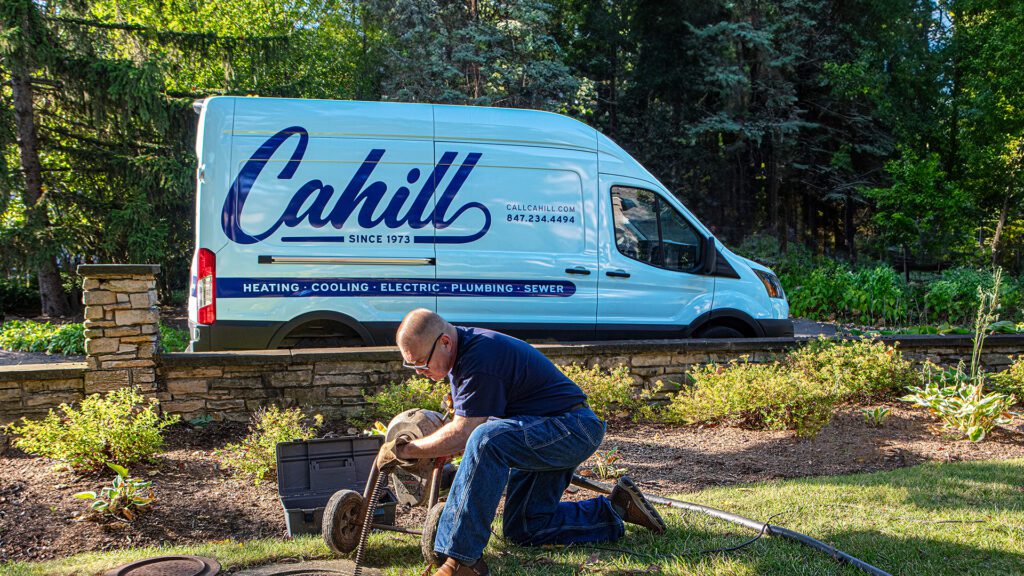
Over time, a home’s main sewer line can become increasingly restricted. This is especially common in older North Shore homes, where tree roots may enter through aging joints or small defects. Grease, debris and mineral buildup can also accumulate, while older cast iron can develop significant scale.
The process is often gradual. A sewer can continue draining even while an obstruction is developing. Slow drains, gurgling fixtures or a history of recurring backups can all be warning signs.
Sewer rodding uses specialized equipment to cut through roots and other obstructions and restore flow. Hydro jetting goes further, using high-pressure water to clean buildup from the interior walls of the pipe.
Which method is appropriate depends on what is happening underground.
“Sometimes rodding is all that is needed,” Visconi says. “Other lines benefit from a more thorough cleaning. The important thing is understanding the condition of the sewer before deciding what should be done.”
For homeowners who are unsure of their sewer’s condition, a camera inspection can be a useful first step. A specialized camera provides a look inside the line, helping identify roots, buildup, deterioration and damaged areas that would otherwise remain hidden.
Don’t Forget the Sump Pump
While the sewer carries wastewater away from the home, the sump system helps protect the basement from groundwater.
During dry weather, a sump pump may operate only occasionally. Following prolonged or heavy rainfall, it may suddenly need to run repeatedly for hours. That is not when you want to discover a stuck float, failing pump or problem with the discharge system.
A sump pump checkup can confirm that the pump activates properly, the float moves freely, and the check valve and visible discharge piping are functioning as intended.
Homes with a secondary pump or battery backup should have those components tested as well. Severe weather and power outages can occur together, leaving a standard sump pump unable to operate precisely when it is needed most.
Age should also be considered. Like any mechanical equipment, sump pumps eventually wear out.
“People tend to forget about the sump pump because it sits quietly in the basement,” Visconi says. “But when you need it, you need it to work immediately.”
Prepare Before the Rain
No maintenance can guarantee against every sewer backup or water problem. But checking these systems before the rainy season can uncover developing issues under controlled circumstances rather than during a storm.
To help North Shore homeowners prepare for fall, Cahill is offering a $79 sewer camera inspection, $75 off a sewer rodding or hydro jetting visit, and a sump pump checkup for $175.
For more information, call Cahill at 847-234-4494 or visit cahillplumbers.com.
Any content, resident submissions, guest columns, advertisements, and advertorials are not necessarily endorsed by or represent the views of Best Version Media LLC (BVM) or any municipality, homeowners associations, businesses, or organizations that this publication serves. BVM is not responsible for the reliability, suitability, or timeliness of any content submitted, inclusive of materials generated or composed through artificial intelligence (AI). All content submitted is done so at the sole discretion of the submitting party.