On the North Fork, the end of summer doesn’t necessarily mean the end of pool season. Warm September days can keep us swimming well beyond Labor Day, but eventually every Long Island pool owner has to start thinking about winter. A proper pool closing is more than simply putting on a cover—it is a step-by-step process designed to protect the pool, plumbing and equipment through the colder months and make the following spring opening easier and more cost-effective.
Don’t close too early.
It can be tempting to cover the pool as soon as summer winds down, but warmer water can encourage algae growth beneath the cover. A good rule of thumb is to wait until the water temperature is consistently around 65°F or below, while still allowing enough time to fully winterize the system before freezing temperatures arrive. For North Fork homeowners, that often makes early to mid-fall an ideal window.
Start with a clean pool.
Before winterizing begins, the pool should be thoroughly vacuumed and brushed so leaves, dirt and other organic debris are not left sitting in the water for months. The water should also be tested and properly balanced. Winter chemicals can then be added and brushed throughout the pool to help keep the water clear during the off-season. The condition of the water when the pool is closed can have a major impact on what you find when the cover comes off in spring.
Lower the water and protect the plumbing.
Once the pool is clean and prepared, the water level is lowered below the returns. All pool lines must then be thoroughly blown out to remove water that could freeze, expand and damage the plumbing. Swimming pool antifreeze is added and blown through the lines for additional winter protection. Afterward, the lines are properly plugged and winter gizmos are placed in the skimmers.
Winterize the equipment, too.
The equipment pad needs the same attention as the pool itself. Pumps, filters and other winter-sensitive equipment should be completely drained of water. Where appropriate, pumps are removed and stored in a protected area to help safeguard their mechanical seals through the winter.
Filter care depends on the type of system. A DE filter should be broken down and cleaned so the DE is washed out of the elements rather than draining to the bottom and hardening over the winter. Cartridge filters should also be broken down and cleaned, with an acid wash performed if needed, so debris and organic matter are not left to decay inside. Sand filters should be properly backwashed—typically for at least three minutes—and then fully drained to help prevent freeze damage.
Finish with a secure winter cover.
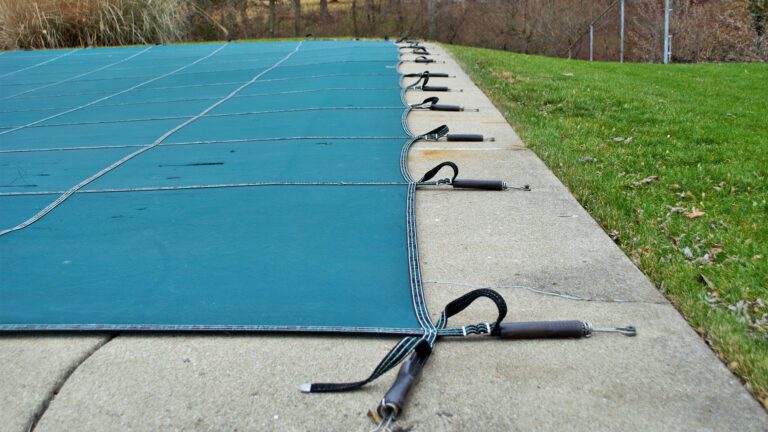
After the equipment has been drained and stored as needed, the filters are clean, and all winter plugs are in place, the winter safety cover can be secured over the pool. The cover helps keep leaves and debris out, but it is still worth checking it periodically throughout the off-season, especially after heavy rain, snow or storms.
The best way to think about winterization is simple: a good spring opening begins with a good fall closing. Taking the time to properly clean the pool, protect the plumbing, service the equipment and secure the cover helps protect the investment you have made in your backyard—and makes it that much easier to get back to enjoying another North Fork summer.
Any content, resident submissions, guest columns, advertisements, and advertorials are not necessarily endorsed by or represent the views of Best Version Media LLC (BVM) or any municipality, homeowners associations, businesses, or organizations that this publication serves. BVM is not responsible for the reliability, suitability, or timeliness of any content submitted, inclusive of materials generated or composed through artificial intelligence (AI). All content submitted is done so at the sole discretion of the submitting party.