When a Beautiful Tree Becomes a Safety Hazard
Fall is a beautiful time in Erie. As leaves change and trees prepare for winter, it’s also one of the best times to take a closer look at the trees around your home. Summer storms, drought stress, insects, and disease can leave trees weakened—and problems that seem minor now can become serious safety hazards when winter winds, snow, and ice arrive.
Here are five signs that it may be time to call a certified arborist.
- Dead or Hanging Branches
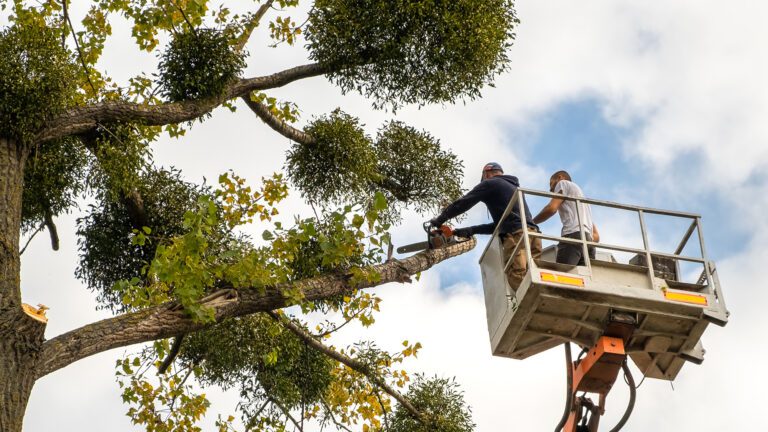
Dead branches aren’t always obvious, especially when they’re high in the canopy. Look for branches without leaves, peeling bark, or broken limbs hanging over your roof, driveway, sidewalks, or other areas where people gather. Even relatively small branches can cause significant damage when they fall. - Cracks in the Trunk
Vertical cracks, deep splits, or areas where the trunk appears to be separating deserve attention. Cracks can weaken the structural integrity of a tree and may indicate internal decay or damage. If you notice a significant crack—particularly on a large tree near your home—an arborist can determine whether the tree is structurally sound. - Mushrooms at the Base
Mushrooms growing around the base of a tree can sometimes be more than a harmless sign of moisture. Certain fungal growths may indicate decay within the roots or trunk. While mushrooms alone don’t necessarily mean a tree is unsafe, they’re a good reason to have the tree evaluated, particularly if other warning signs are present. - A Leaning Tree
Some trees naturally grow at an angle, but a tree that has recently begun leaning—or whose lean appears to be worsening—can be a serious concern. Pay attention to exposed or lifted roots, cracks in the soil, or movement around the root zone. These can indicate that a tree may be at risk of falling. - A Sparse Canopy After Summer
A noticeably thinner canopy can be a sign that a tree is stressed. Drought, pests, disease, root damage, and other issues can cause premature leaf loss or reduced growth. In Colorado’s challenging climate, trees may experience stress that isn’t immediately obvious.
Take a Closer Look Before Winter
Not every tree with one of these symptoms needs to be removed. In many cases, proper pruning, treatment, or other tree care can help preserve a healthy tree and reduce risk.
Fall is a smart time to have questionable trees evaluated before winter weather adds another layer of stress. If you’re concerned about a tree on your Erie property, an experienced arborist can assess its health, identify potential hazards, and help you determine the safest next step.
A beautiful tree is an asset to your property—but a tree with hidden structural problems can quickly become a liability. A little attention this fall can help keep your trees, home, and family safer through the seasons ahead.
Our Monster Tree Service team is ready to help you care for your trees before they become costly removals.
To book your free tree health assessment, please visit monstertreeservice.com/greater-boulder or call 303-532-7070 today.
Any content, resident submissions, guest columns, advertisements, and advertorials are not necessarily endorsed by or represent the views of Best Version Media LLC (BVM) or any municipality, homeowners associations, businesses, or organizations that this publication serves. BVM is not responsible for the reliability, suitability, or timeliness of any content submitted, inclusive of materials generated or composed through artificial intelligence (AI). All content submitted is done so at the sole discretion of the submitting party.