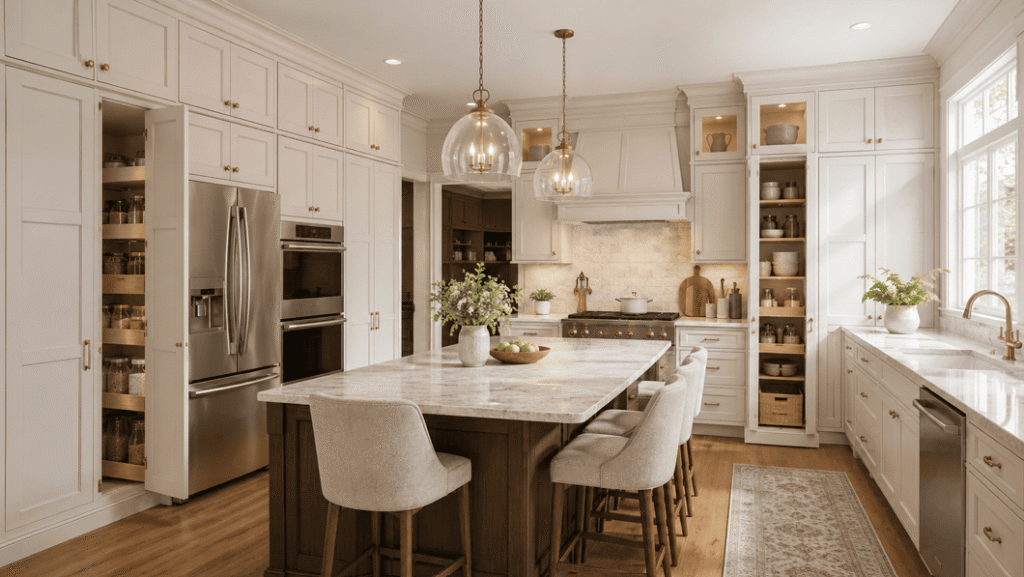
Kitchen storage is one of the biggest reasons homeowners begin thinking about new cabinets. A kitchen may have beautiful flooring, reliable appliances, and a comfortable layout, but when everyday items are crowded onto counters or tucked into hard-to-reach corners, the whole room can start to feel smaller than it really is.
Floor-to-ceiling cabinets are becoming a popular solution because they use vertical wall space that often goes wasted. Instead of stopping short of the ceiling, these cabinets extend upward to create a cleaner, more finished look while adding valuable storage for pantry items, cookware, dishes, small appliances, and seasonal pieces.
Why Floor-to-Ceiling Cabinets Are Growing in Popularity
Floor-to-ceiling cabinets are not popular simply because they look beautiful. They are popular because they solve a very real problem: not enough kitchen storage.
In many homes, the space above standard upper cabinets is either empty, boxed in, or used for decorative items that collect dust. By extending cabinetry all the way to the ceiling, that unused space becomes part of the kitchen’s everyday function. The result is a cabinet layout that feels more intentional, more organized, and more complete.
A full-height cabinet wall can also reduce counter clutter. When every item has a proper place, the kitchen feels calmer and easier to use. This matters in family homes where the kitchen often becomes the center of daily life, from breakfast before school to dinner preparation and weekend gatherings.
There is also a strong design benefit. Tall cabinets draw the eye upward, making the room feel more finished. In a smaller kitchen, they can help the space feel taller and more efficient. In a larger kitchen, they add structure and balance, especially around a refrigerator, pantry wall, or built-in appliance area.
Practical Storage Features Worth Considering
The outside of the cabinet creates the look, but the inside determines how useful it will be. Floor-to-ceiling cabinets can hold a lot, but without the right interior layout, some storage areas may become hard to reach or poorly organized.
Pull-out shelves are one of the most useful additions. They allow homeowners to access items at the back of deep cabinets without digging through everything in front. This is especially helpful for pantry cabinets, small appliances, pots, pans, and dry goods.
For the highest shelves, it is best to store items that are not needed every day. Seasonal dishes, holiday serving pieces, large roasting pans, and backup supplies are good examples. Everyday plates, glasses, mugs, and snacks are usually better placed at a comfortable height.
Final Thoughts
Floor-to-ceiling cabinets are a practical and beautiful choice for many Franklin County kitchens. They make better use of vertical space, add valuable storage, and create a cleaner built-in appearance. Whether used for a pantry wall, refrigerator surround, appliance storage, or a full kitchen design, they can help the room feel more organized and easier to enjoy.
Dick’s Cabinetry & Flooring has been helping local homeowners since 2013 with friendly service, knowledgeable guidance, and products the team personally stands behind. To start planning your project, request an estimate or visit the Chambersburg showroom to explore cabinet styles, finishes, and storage ideas in person.
Any content, resident submissions, guest columns, advertisements, and advertorials are not necessarily endorsed by or represent the views of Best Version Media LLC (BVM) or any municipality, homeowners associations, businesses, or organizations that this publication serves. BVM is not responsible for the reliability, suitability, or timeliness of any content submitted, inclusive of materials generated or composed through artificial intelligence (AI). All content submitted is done so at the sole discretion of the submitting party.